
Toronto’s festival logistics aren’t an obstacle; they’re a solvable puzzle. The key is to trade a pricey downtown hotel for strategic transit access.
- Outsmart price surges by staying in commuter-friendly neighborhoods and using the TTC/GO Transit system like a local.
- Secure tickets to “sold-out” events like TIFF by mastering last-minute tactics like rush lines.
- Navigate city-wide shutdowns during events like the marathon by using the subway as an underground bridge.
Recommendation: Shift your planning mindset from “being at the center” to “mastering access.” This operational playbook will save you money and stress, turning logistical hurdles into a strategic advantage.
Toronto is a city that lives and breathes through its festivals. From the global cinematic spotlight of TIFF to the vibrant rhythm of the Caribbean Carnival, the energy is electric. But for a traveler, that same energy can feel daunting. You see the headlines: sold-out hotels, paralyzed traffic, and ticket lotteries that feel impossible to win. The typical advice—”book early,” “stay downtown”—often leads directly into the most expensive and stressful traps. You’re right to be worried about the logistics; they can make or break a trip.
But what if you approached it differently? What if the chaos wasn’t something to endure, but a system to be understood and navigated? The secret to conquering Toronto’s festival season isn’t a bigger budget; it’s a smarter operational playbook. It’s about thinking like an event planner, identifying the pressure points, and using the city’s infrastructure to your advantage. This isn’t just about saving money; it’s about gaining control and turning potential logistical nightmares into a seamless experience.
This guide moves beyond the generic tips. We’ll dismantle the city’s biggest festival challenges one by one, providing you with the tactical knowledge to outsmart the crowds. We’ll cover everything from accommodation hacks and transit-judo to securing last-minute tickets and choosing the event that truly matches your energy. Get ready to master the city’s rhythm.
To help you navigate this comprehensive guide, here is a summary of the logistical challenges we will solve together, providing you with a complete playbook for your next Toronto festival adventure.
Summary: Your Toronto Festival Season Operational Playbook
- Why Hotel Prices Triple During the Second Week of September?
- How to Get TIFF Tickets Without an Industry Pass?
- Pride Parade or Luminato Festival: Which Event Suits Your Energy?
- The Traffic Trap That Paralyzes Downtown During Marathons
- When to Book Your Flight for Caribana to Save 40%?
- How to Secure Rooms During the Taylor Swift Era Tour Rush?
- When to Visit Yorkville to Spot Celebrities During TIFF?
- Toronto Caribbean Carnival: How to Experience the Grand Parade Like a Local?
Why Hotel Prices Triple During the Second Week of September?
The second week of September in Toronto means one thing: the Toronto International Film Festival (TIFF). This massive influx of industry professionals, media, and film lovers creates a perfect storm of demand for accommodation. Downtown hotels, particularly in the Entertainment District, respond with dynamic pricing that can feel punitive. In fact, a detailed analysis of accommodation costs shows that the average nightly hotel rate in September 2023 hit $412 USD, a staggering figure driven almost entirely by the festival.
Trying to compete for a room downtown is a losing battle. The winning move is embracing The Commuter’s Advantage. This strategy involves staying in vibrant, transit-accessible neighborhoods just outside the core, like The Annex, Leslieville, or Roncesvalles. Here, you can find savings of 30-50% on hotels or Airbnbs without sacrificing access. Your secret weapon is a TTC PRESTO card or day pass. For the cost of a coffee, you gain unlimited access to a subway and streetcar system designed to funnel people downtown efficiently.
The operational plan is simple: book your stay near a Line 1 or Line 2 subway station. From there, you’re a straight 15-20 minute ride into the heart of the festival action at King or St. Andrew stations. For an even more budget-friendly option, consider University of Toronto residences, which often have public availability until mid-September. By sidestepping the downtown price-gouging, you’re not downgrading your trip; you’re executing a smarter logistical plan.
How to Get TIFF Tickets Without an Industry Pass?
For the uninitiated, securing TIFF tickets can feel like an insider’s game. The official online sales are competitive and often sell out in minutes, leaving many travelers assuming they’ve missed their chance. However, the festival is built with a democratic spirit in mind, and the secret to getting in is knowing the on-the-ground tactics. Your best bet is the “rush line,” a time-honoured TIFF tradition.
Minutes before each screening, the festival releases any empty seats to the public waiting in a designated rush line. Success here requires a bit of patience and strategy. Arrive at least an hour early for popular screenings and be prepared to wait. It’s a fantastic way to soak in the festival atmosphere, chat with fellow film buffs, and often, to see the biggest films of the year for a fraction of the price. According to an insider’s guide to TIFF, even when early sales are gone, rush lines remain a viable way into almost any screening.
Beyond the rush line, keep an eye on the official TIFF Ticketmaster page for last-minute ticket drops, which often happen the day before a screening. Furthermore, a huge part of the festival happens for free on “Festival Street,” where a section of King Street is pedestrianized and features outdoor screenings, art installations, and a palpable buzz of excitement.

As you can see, the energy extends far beyond the four walls of a theatre. By combining the thrill of the rush line with the free festivities on the street, you can build a complete and exciting TIFF experience without ever needing an industry pass. It’s about being present and knowing where to look.
Pride Parade or Luminato Festival: Which Event Suits Your Energy?
Not all festivals are created equal. Planning a trip requires more than just picking a date; it demands “Energy Matching.” You need to align the event’s character with your own travel style. Two of Toronto’s early summer highlights, the Pride Parade and the Luminato Festival, offer a perfect case study. Though they sometimes overlap on the calendar, they deliver vastly different experiences.
The Pride Parade is a massive, high-energy spectacle of joy, activism, and community. It’s a street party on a grand scale, drawing hundreds of thousands to the Church-Wellesley Village and beyond. The energy is loud, celebratory, and immersive. This is an event you feel in your bones. It’s for the traveler who wants to be part of a vibrant, moving crowd, who thrives on sensory stimulation, and who wants to participate in a major cultural moment. The logistics involve finding a good viewing spot along the route and being prepared for crowds and limited mobility.
The Luminato Festival, on the other hand, is a multi-disciplinary arts festival focused on performance, media, and visual arts from around the world. While it has its large-scale public installations, its core is about curated experiences: a thought-provoking play, a groundbreaking dance performance, or a stunning art exhibit. The energy is more contemplative and intellectually stimulating. With a predicted event spend of over $80 million USD, its scale is significant but dispersed across various venues. This is for the traveler who prefers to engage with art on a more personal level and move between different ticketed events. Logistics here are about scheduling and venue-hopping, not navigating one massive crowd.
The Traffic Trap That Paralyzes Downtown During Marathons
Few events shut down Toronto like a major marathon. Key arteries like the Gardiner Expressway, Don Valley Parkway, and Lake Shore Boulevard become impassable for hours, creating what feels like an inescapable traffic trap. For a visitor, this can mean a missed flight, a cancelled reservation, or a day spent stranded. Trying to navigate this with a car or ride-share is a recipe for disaster. The solution lies in a piece of logistical judo: go underground.
The TTC subway system is your single greatest asset on marathon day. While the city’s surface is gridlocked, Lines 1 (Yonge-University) and 2 (Bloor-Danforth) continue to run, acting as subterranean “bridges” that cross the marathon route unimpeded. The key is to know your interchange stations. Bloor-Yonge and St. George stations are the two most critical points, allowing you to move from north-south to east-west and bypass the entire downtown core if needed.
Your operational plan for marathon day should be entirely transit-based. Before you leave, check the official City of Toronto website for a map of the route closures. Plan your day around unaffected neighborhoods that are easily accessible by subway, like Greektown on the Danforth (Line 2) or the shops at Yonge and Eglinton (Line 1). If you have a flight, the strategy is non-negotiable: use the UP Express from Union Station for Pearson Airport (YYZ) and allow at least 90 extra minutes. For Billy Bishop Airport (YTZ) on the island, access can be severely restricted; plan to arrive at the ferry terminal a full three hours early.
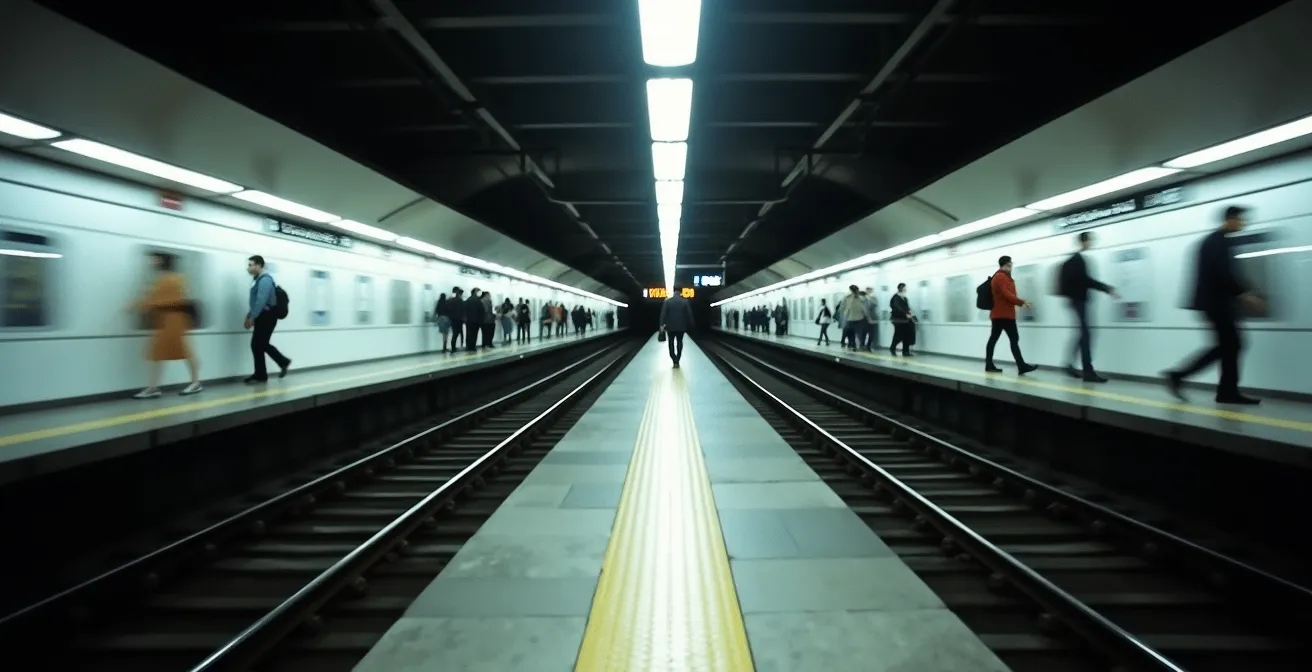
By thinking vertically (underground) instead of horizontally (on the street), you transform a city-wide paralysis into a minor inconvenience. This is the essence of outsmarting festival logistics.
When to Book Your Flight for Caribana to Save 40%?
The Toronto Caribbean Carnival (Caribana) is a three-week cultural explosion culminating in the spectacular Grand Parade in August. As one of the largest street festivals in North America, it draws a massive international crowd, and flight prices reflect that demand. Waiting too long can mean paying a significant premium. However, booking too early isn’t always the answer either. The key to price surge circumvention is timing and flexibility.
The sweet spot for booking flights is typically in the February to April window for the August event. This is when airlines have released their schedules but before the peak summer demand has fully set in. It’s crucial during this period to monitor fares from carriers like Caribbean Airlines and WestJet, which often release deals aimed at the diaspora community traveling for the event. The most powerful strategy, however, is to look beyond Toronto’s main airport.
Consider flying into alternative airports like Hamilton (YHM) or even Buffalo, New York (BUF). These routes can often be 30-40% cheaper than flying directly into Pearson (YYZ). While it adds a short ground transfer via GO Transit or a bus service, the cost savings are substantial. A $15 GO train ride from Hamilton or a $25 Megabus from Buffalo is a small price to pay for hundreds of dollars in airfare savings. Combining this with flying on off-peak days (like a Tuesday or Wednesday arrival instead of Thursday or Friday) will maximize your budget.
Your Action Plan: Flight Booking Timeline for Caribana Savings
- Set Price Alerts: In February-April, create fare alerts on multiple platforms for the August event to catch the booking sweet spot.
- Monitor Key Airlines: Keep a close watch on Caribbean Airlines and WestJet, which often have diaspora-focused sales and promotions.
- Expand Your Airport Search: Always include Hamilton (YHM) and Buffalo (BUF) in your searches to unlock potential 30-40% savings.
- Fly Off-Peak: Target Tuesday or Wednesday arrival and departure dates to avoid the expensive Thursday-Friday and Monday travel rushes.
- Calculate Total Cost: When considering an alternative airport, add the cost of ground transport (e.g., GO Transit, Megabus) to ensure the overall price is lower.
How to Secure Rooms During the Taylor Swift Era Tour Rush?
When a mega-event like the Taylor Swift Era Tour announces a multi-night run at the Rogers Centre, the entire regional accommodation market convulses. Downtown hotel rooms vanish in minutes or are priced into the stratosphere. This is the ultimate stress test for any traveler’s logistical skills. In this scenario, The Commuter’s Advantage isn’t just a good idea; it’s the only viable strategy.
Your operational plan must focus on the GO Transit network, Toronto’s regional rail system. Hotels in suburban cities with direct GO train lines—like Mississauga, Brampton, Vaughan, or Pickering—become your primary targets. These hotels are shielded from the intense downtown demand, offering rooms at a fraction of the price. The journey to Union Station, a short walk from the Rogers Centre, is a comfortable 30-45 minute ride. For major events, GO Transit schedules special late-night trains, eliminating any worry about getting back after the show.
Beyond hotels, expand your search. Join Toronto-specific Taylor Swift fan groups on social media, where you’ll find not only face-value ticket resales but also opportunities for room shares with other fans. Look for downtown condo rentals on Airbnb or VRBO, but be sure to verify they are run by local hosts, not commercial operators who will also inflate prices. A savvy move is to purchase a GO Weekend Pass, which offers unlimited travel for a very low flat rate, allowing you to explore the region without worrying about fare costs. This strategy transforms a “sold-out” city into a web of accessible and affordable options.
When to Visit Yorkville to Spot Celebrities During TIFF?
While much of your festival planning will be about logistics and budgets, there’s also room for the fun and glamour of it all. During TIFF, Toronto’s upscale Yorkville neighborhood becomes the unofficial playground for Hollywood’s elite. If celebrity spotting is on your agenda, timing and location are everything. You don’t need a special pass, just a good vantage point and a little insider knowledge.
The prime time for celebrity sightings is during the first weekend of the festival, from Thursday to Sunday. This is when most stars are in town for their premieres and press junkets. The key is to position yourself strategically. Forget waiting outside the major premiere venues like Roy Thomson Hall; security is tight, and crowds are immense. Instead, focus on the places where the stars relax, dine, and stay. The patios and cafes along Yorkville Avenue and Cumberland Street are prime territory for a casual afternoon coffee or late-night drink.
For those looking for a specific target, industry insiders know that certain hotels become unofficial headquarters. For years, the Bisha Hotel has been a major hub, hosting private portrait studios for top-tier publications in its exclusive suites. While you can’t get inside, positioning yourself at a nearby cafe can be a rewarding strategy. The goal is to be patient and observant. The atmosphere in Yorkville during TIFF is one of relaxed luxury, and you’re more likely to spot a star enjoying a quiet moment than fighting through a red-carpet scrum.

This part of your trip isn’t about a rigid schedule; it’s about soaking in the unique, glamorous atmosphere that only TIFF can bring to the city.
Key Takeaways
- Mastering Toronto’s festival season is about strategic planning, not a bigger budget.
- The “Commuter’s Advantage”—staying outside the core and using transit—is the single best way to save money and avoid stress.
- Every logistical problem, from sold-out tickets to traffic gridlock, has a tactical solution if you know where to look.
Toronto Caribbean Carnival: How to Experience the Grand Parade Like a Local?
You’ve booked your flight and secured your room; now it’s time to plan your on-the-ground experience for the Toronto Caribbean Carnival’s Grand Parade. This is the heart of the festival, a dazzling, day-long procession of music, dance, and spectacular costumes along Lake Shore Boulevard. But how you experience it can vary dramatically. A tourist watches from the sidelines; a local understands their options and chooses the experience that fits their vibe. Your final piece of the operational playbook is deciding *how* to engage with the parade.
Your options range from free and chaotic to paid and immersive. The most intense and arguably most authentic experience is to “play mas” by joining a masquerade band. This involves purchasing a costume (which can range from a few hundred to thousands of dollars) and becoming part of the parade itself, dancing the route with your band. It’s total immersion. For a more comfortable but still excellent view, you can purchase tickets for the official grandstands set up inside Exhibition Place. This gives you a reserved seat, access to amenities, and a guaranteed great view of the bands as they are judged.
The most common option is to find a spot along the free public viewing areas on Lake Shore Boulevard. This is where the biggest party is, but it’s standing-room-only and can get extremely crowded. If you choose this route, arrive early, bring water, and be prepared for a high-energy, packed atmosphere. This comparative analysis from Destination Canada’s travel guide breaks down the core choices clearly.
| Viewing Option | Cost | Experience | Best For |
|---|---|---|---|
| Ticketed Grandstand | $30-50 | Reserved seating, amenities, best views | Families, comfort seekers |
| Free Public Areas | Free | Standing room, crowded, high energy | Young adults, party atmosphere |
| Playing Mas | $200-2000 | Participate in parade with costume | Full cultural immersion |
| VIP Sections | $100+ | Premium viewing, food/drinks included | Groups, special occasions |
Ultimately, there is no single “best” way to experience the parade. The right choice depends on your budget, your tolerance for crowds, and your desire for immersion. By understanding these distinct options, you can move beyond simply watching the event and truly design your own perfect Carnival experience.
Now that you have the complete operational playbook, you are equipped to not just survive Toronto’s festival season, but to thrive in it. Start planning your trip today by applying these logistical strategies to the festival of your choice.