In summary:
- Master the 9 AM digital rush for last-minute deals, but be aware of the $5 online service fee per ticket.
- Choose your theatre wisely: the modern Princess of Wales offers superior legroom, while the historic Royal Alexandra provides intimacy.
- Strategic timing is everything: target Wednesday matinees for the best prices and avoid the September TIFF festival peak.
- Arrive at least 45 minutes before curtain to avoid the dreaded “Lobby Limbo,” as late seating is never guaranteed.
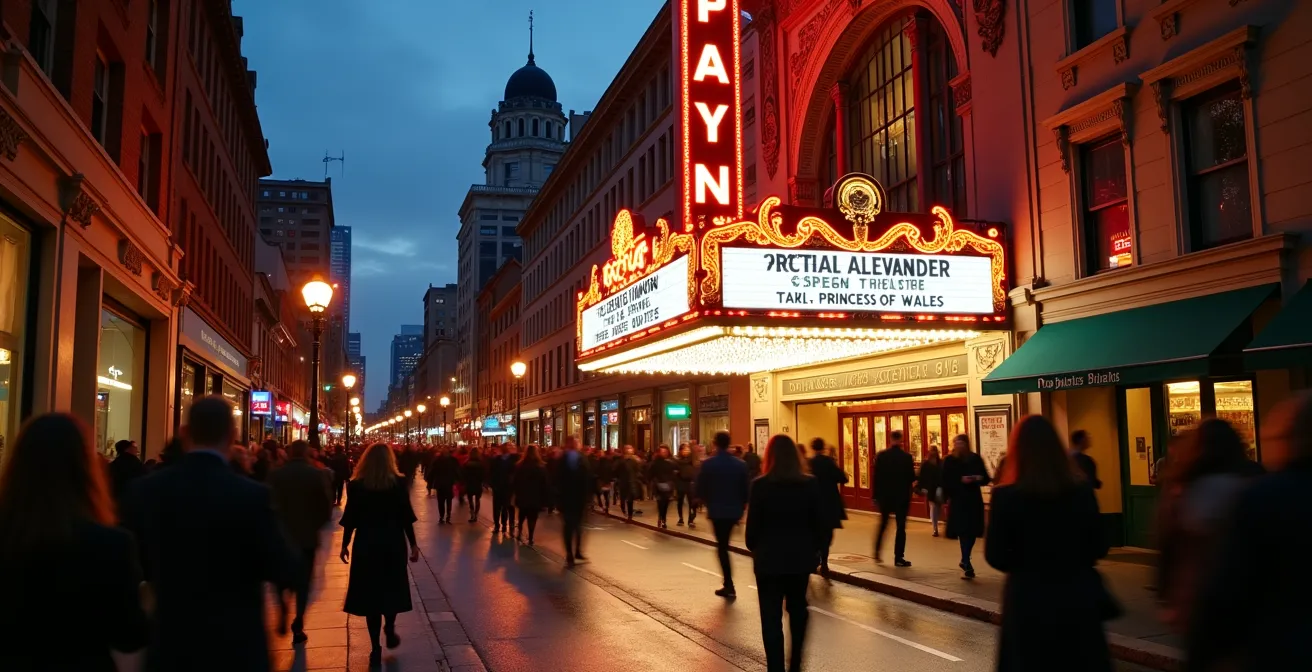
The lights dim, the overture swells, and for a few hours, you are transported. This is the magic of live theatre. But darling, let’s be frank: the price of a ticket for a world-class production like Hamilton or The Lion King can feel like a drama in itself. While many look to New York or London, the truly savvy cultural connoisseur knows that Toronto’s stage offers the same calibre of performance without the punishing expense. Yet, simply hoping for a deal is an amateur’s game. The common advice—to “check for sales” or “buy in advance”—barely scratches the surface of the city’s intricate theatre ecosystem.
Scoring affordable seats for a Mirvish production isn’t about luck; it’s a strategic art. It requires an understanding of the city’s rhythm, a feel for the unique personality of each venue, and a command of timing that would make a stage manager proud. This is not a list of flimsy tips. This is your playbook for transforming from a mere ticket-buyer into a master of Toronto’s Entertainment District. It’s about knowing why a Wednesday matinee is your secret weapon, how the very architecture of a theatre impacts your experience, and when the city’s own cultural calendar dictates your best move.
Forget frantic, last-minute searching. We are about to dissect the hidden mechanics of Toronto’s theatre world. From the digital dash for rush seats to the subtle etiquette that can make or break your evening, this guide will equip you with the insider knowledge to experience the best of the stage, for a fraction of the cost. The curtain is rising on your new strategy.
Contents: Your Guide to Mastering Toronto’s Theatre Scene
- Why Rush Seats Are Your Best Friend for Last-Minute Plans?
- Royal Alex vs. Princess of Wales: How to Choose Based on Legroom?
- Musical or Play: Which Genre Dominates Toronto’s Stage Scene?
- The Late Seating Rule That Can Leave You in the Lobby for 20 Minutes
- When to Choose a Matinee to Save 25% on Tickets?
- The Noise Mistake of Renting in the Entertainment District
- Panorama Lounge vs. Great Hall: Where to Wait for Your Train?
- Toronto Festival Season: How to Plan Your Trip Around Major Cultural Events?
Why Rush Seats Are Your Best Friend for Last-Minute Plans?
For the spontaneous and the bold, the rush seat is the quintessential gambit for a dramatic bargain. It’s the theatre’s thrilling answer to last-minute plans, offering a chance to see a top-tier show without the commitment of advance booking. This isn’t just about leftover seats; it’s a dedicated program designed to fill the house and inject a dose of accessible energy into every performance. The savings are significant; an analysis of Toronto deals shows that rush seats typically offer 30-60% off face value, turning a premium night out into a surprisingly affordable indulgence.
But success in the world of rush tickets demands strategy, not just speed. The game begins at 9 AM sharp on the day of the performance, when tickets are first released online. This digital-first approach means you can secure your spot from anywhere, but it comes with a caveat: a $5 service fee per ticket. For the purist looking to maximize every dollar, a trip to the box office eliminates this fee, answering the age-old question of where to find the absolute cheapest price. The key is to have a plan. Weekday performances from Tuesday to Thursday often have better availability than the perpetually in-demand weekend shows. And for truly sold-out productions, don’t forget the final ace up your sleeve: the 16 standing-room positions at the historic Royal Alexandra Theatre, a true theatre-lover’s badge of honour.
The Stable Alternative: The CAA Member Advantage
For those who prefer a guaranteed seat without the 9 AM scramble, the CAA membership program offers a compelling alternative. According to their benefits page, CAA South Central Ontario members receive up to 25% off select Mirvish shows. This partnership elevates the experience beyond a simple discount, providing exclusive perks like complimentary coffee, coat check, and access to the private CAA Lounges at the Princess of Wales and Royal Alexandra theatres. It’s the perfect strategy for those who value planning and a touch of pre-show luxury, proving that saving money doesn’t have to be a rush.
Royal Alex vs. Princess of Wales: How to Choose Based on Legroom?
A true aficionado knows that the theatre itself is a leading character in the evening’s performance. In Toronto, the choice often comes down to two titans of the stage, standing proudly across from each other on King Street West: the Royal Alexandra and the Princess of Wales. Your decision should be based on more than just which show is playing; it’s a strategic choice of experience. The primary difference? The eternal battle between historic charm and modern comfort, most acutely felt in the matter of legroom and sightlines. The Royal Alex, a 1907 Edwardian jewel box, is intimate and breathtaking, but its historic layout can mean tighter quarters. In contrast, the Princess of Wales, built in 1993, was designed for the modern audience, offering generous spacing and clear, unobstructed views from nearly every seat.
The architecture dictates the atmosphere. The Royal Alexandra enchants with its Beaux-Arts grandeur, cantilevered balconies, and ornate details, pulling you into a century of theatrical history. It feels special, a place of occasion. The Princess of Wales, with its vast 2,000-seat auditorium and contemporary design, is built for spectacle. It can house the largest, most technically demanding productions with an airy, spacious feel. This contrast is key to your strategic selection: are you seeking an intimate dramatic play that benefits from historic ambiance, or a blockbuster musical that demands a grand, modern stage? The table below breaks down the essential differences.
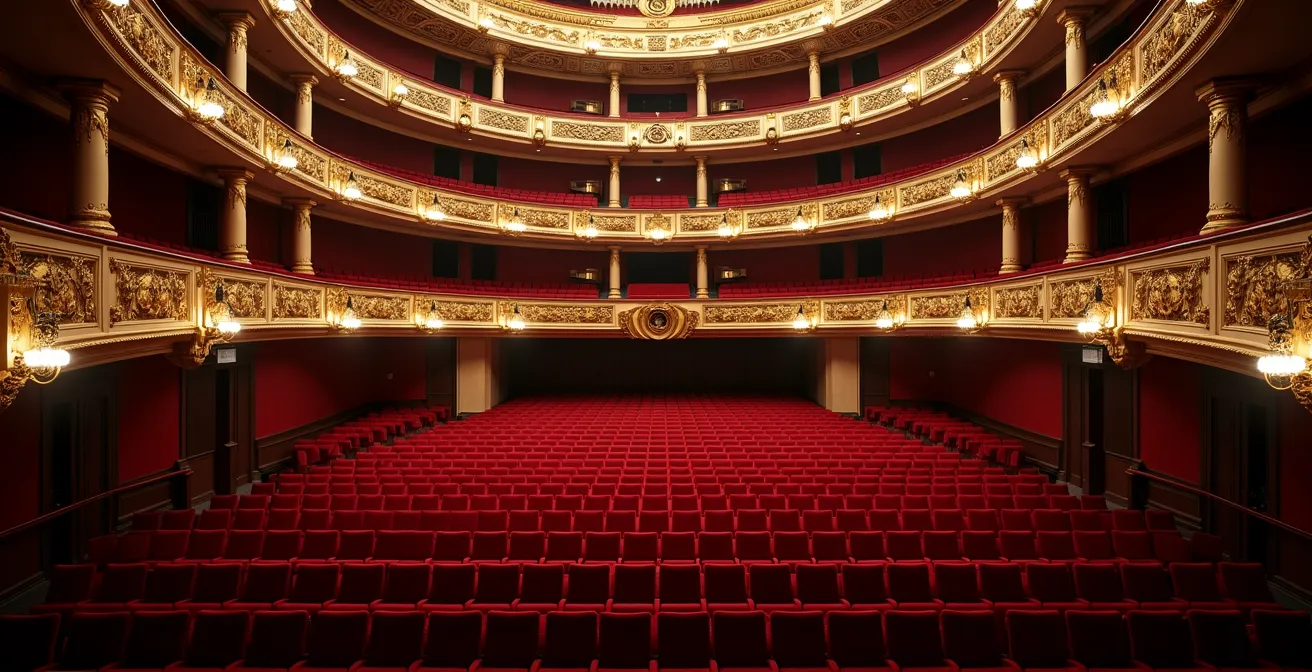
This comparison highlights that your choice of venue is an integral part of your theatre-going strategy. For patrons valuing comfort and perfect views, especially for a long performance, the Princess of Wales is often the superior choice. For those seeking a memorable, historically rich atmosphere for a classic play or a smaller-scale musical, the Royal Alex is unmatched.
| Feature | Royal Alexandra Theatre | Princess of Wales Theatre |
|---|---|---|
| Seating Capacity | 1,497 seats | 2,000 seats |
| Year Built | 1907 (Historic Edwardian) | 1993 (Modern design) |
| Architecture Style | Beaux-Arts with cantilevered balconies | Contemporary with spacious layout |
| Sightlines | Intimate but some obstructed views in older sections | Unobstructed modern sightlines throughout |
| Legroom | Renovated seating but tighter in historic layout | Generous modern spacing |
| Box Office Hours | Tue 3-8PM, Wed 11AM-8PM, Sat 11AM-8PM | Mon 12-5PM, Tue 11AM-8PM, Sat 11AM-8PM |
Musical or Play: Which Genre Dominates Toronto’s Stage Scene?
While the glittering marquees often announce blockbuster musicals, it would be a mistake to think Toronto’s theatre scene is a one-trick pony. The city’s formidable reputation is built on a rich and varied theatrical diet. In fact, an official report from Destination Toronto confirms that Toronto maintains its position as the third-largest English-speaking theatre district in the world, trailing only New York and London. This status is not earned through musicals alone, but through a commitment to a diverse repertoire that includes daring new plays, classic dramas, and experimental works alongside the song-and-dance spectaculars.
The savvy theatre-goer understands that this diversity is a strategic advantage. While musicals often have longer runs and higher ticket demand, powerful dramatic plays offer a different kind of intensity and often have better ticket availability, especially on weeknights. The notion that plays are a “lesser” draw was spectacularly debunked by a recent Toronto theatrical phenomenon. This balance ensures that no matter your taste, there is always something of world-class quality to see. The ecosystem supports both grand spectacle and intimate storytelling, allowing audiences to pivot based on interest, budget, and availability.
Case Study: How ‘Harry Potter and the Cursed Child’ Redefined the “Play”
The CAA Ed Mirvish Theatre underwent a staggering $5 million renovation specifically to house the Canadian premiere of Harry Potter and the Cursed Child. The production, which opened in May 2022, was not a musical but a sprawling, technically complex play. In a stunning demonstration of the audience’s appetite for high-calibre drama, the show proceeded to set a Canadian box office record for non-musical plays. It grossed approximately $2 million in a single week at the end of 2022, proving that a compelling story, brilliantly staged, can be just as much of a commercial powerhouse as any major musical. This success story solidifies Toronto’s role as a city that champions great theatre in all its forms.
The Late Seating Rule That Can Leave You in the Lobby for 20 Minutes
There is perhaps no greater sin in the theatre-goer’s code of conduct than tardiness. It is a mistake that can cost you more than just a few minutes of the show; it can relegate you to the dreaded “Lobby Limbo.” Mirvish theatres, like most professional venues, enforce a strict late seating policy. If you arrive after the curtain has risen, you will not be immediately shown to your seat. Instead, you will be held in the lobby, watching the performance on monitors until an appropriate break in the action. This could be a scene change, a moment of applause, or, in the worst-case scenario, not until intermission. The timing is entirely at the discretion of the house management, and their primary duty is to the 99% of the audience who arrived on time.
This rule underscores the importance of planning. Downtown Toronto traffic is notoriously unpredictable, and the pre-show buzz in the Entertainment District can slow you down. The official recommendation is to arrive 45 minutes before the show, giving you ample time to navigate crowds, check your coat, find your seat, and soak in the pre-show atmosphere without a shred of anxiety. While there is no strict dress code, you will find that Torontonians embrace the sense of occasion, with attire ranging from smart casual to formal evening wear. The key is to be comfortable, but arriving late is the ultimate faux pas. Preparing for your arrival is as crucial as purchasing the ticket itself.
Your Action Plan: The Late Arrival Emergency Protocol
- Arrive 45 minutes before curtain to account for traffic delays – this is Mirvish’s official recommendation.
- If running late, check the specific show’s late seating policy online – some allow entry only at intermission.
- Watch from lobby monitors if available; you will be seated at the first appropriate break determined by the usher.
- Be prepared for usher discretion – re-admittance timing varies by production and the specific moment in the performance.
- Have your digital tickets ready on your phone; their secure QR codes refresh every 30 seconds.
When to Choose a Matinee to Save 25% on Tickets?
The matinee performance is the seasoned theatre-goer’s secret weapon. Often perceived as a more sedate affair for tour groups and families, it is, in reality, a goldmine of opportunity for the strategic saver. The principle is simple supply and demand: with lower demand than evening shows, matinee tickets are frequently more affordable and easier to obtain, especially through programs like rush seats. The prime target is the Wednesday 1:30 PM matinee, traditionally the least crowded performance of the week. Rush seats for these shows can be priced as low as $29-$39, compared to the $39-$59 range for evening performances.
This strategy extends beyond just the ticket price. Attending a matinee allows you to take advantage of off-peak transit on the TTC, avoiding the crush of rush hour. For those who are part of a subscription plan, the benefits multiply. While subscribers already enjoy significant perks, combining their discount with a matinee can be even more advantageous. For instance, some subscriber tiers receive 15% off concessions, a small but satisfying bonus to a day at the theatre. While Mirvish subscribers save up to 20% on Tuesday-Friday performances in general, targeting a weekday matinee within that framework is the ultimate power move. It’s the perfect confluence of value, convenience, and a more relaxed atmosphere, making it an essential tactic in your savings playbook.
The weekend matinees on Saturday and Sunday at 2:00 PM also offer savings, though they tend to be more popular, especially for family-friendly shows. The key is to view the matinee not as a second-best option, but as a first-rate strategic choice for maximizing both your budget and your overall experience.
The Noise Mistake of Renting in the Entertainment District
The experience of a Mirvish show doesn’t begin at the theatre door or end with the final curtain call. It is intrinsically woven into the fabric of its location: the Toronto Entertainment District. To understand the theatre is to understand the neighbourhood, a lesson some visitors learn the hard way. Renting a hotel or Airbnb right on King Street West with the expectation of a quiet evening is a rookie mistake. The district is a pulsating, vibrant hub of activity that roars to life precisely when the theatre lights dim. It is a symphony—or cacophony, depending on your perspective—of post-show crowds, sports fans pouring out of nearby arenas, and nightlife enthusiasts just beginning their evening.
This unique energy is part of the area’s history and its modern-day appeal. As one cultural guide aptly describes it, the district’s character is a continuation of its past identity.
The area was historically dubbed ‘the crossroads of Education, Legislation, Salvation, and Damnation,’ referencing the adjacent school, parliament buildings, church, and tavern frequented by actors – this vibrant mix continues today with the Entertainment District hosting world-class productions steps away from sports venues and nightlife.
– Audiala
Choosing to stay here is a choice to immerse yourself in that 24/7 cultural crossroad. It is not a place for quiet contemplation. The energy is infectious, the people-watching is superb, and the convenience is undeniable. But if your ideal post-theatre plan involves a peaceful retreat, consider staying a few blocks north or west, where you can easily access the district’s magic without being engulfed by its glorious noise all night long.

Panorama Lounge vs. Great Hall: Where to Wait for Your Train?
For the many theatre-lovers who travel to Toronto for a show, the journey’s end is often as important as its beginning. Union Station, the city’s grand central transit hub, serves as the primary gateway. Whether you’re arriving from Pearson Airport or catching a late GO Train home to the suburbs, knowing how to navigate the station can make your denouement smooth and stress-free. The Panorama Lounge offers a premium, quiet space, but it’s often reserved for specific ticket holders. The Great Hall, on the other hand, is a magnificent public space, but can be chaotic during peak hours. The real strategic question for a theatre-goer isn’t where to sit, but how to manage your time and belongings effectively.
Many visitors arrive in the city with luggage, planning to see a matinee or evening show before departing. This presents a classic logistical challenge. Fortunately, the modern Union Station complex has been designed with precisely this traveller in mind. The UP Express train, for instance, is a marvel of convenience, connecting to the station in a predictable timeframe; an official schedule shows the UP Express connects to Union Station in just 28 minutes from Pearson Airport, making travel planning exceptionally reliable. This reliability allows you to time your arrival and departure with precision, but what about your bags?
The Traveller’s Solution: On-Demand Luggage Storage
The true game-changer for theatre-going travellers at Union Station is the integration of services like BagsAway. This luggage storage facility is strategically located within the interior SkyWalk, just steps from the UP Express platform and the main concourses for GO Transit and VIA Rail. This service allows you to securely store your bags on-demand, freeing you to walk unencumbered to the Entertainment District, enjoy a meal, see a show, and return to collect your belongings just before your train departs. It’s a simple, elegant solution that removes the biggest headache for travelling theatre fans, turning Union Station from a place of waiting into a seamless part of the experience.
Key takeaways
- Rush seats are your best bet for last-minute savings, especially for weekday shows, with the digital rush starting at 9 AM.
- Venue matters: choose the modern Princess of Wales for legroom and sightlines, and the historic Royal Alex for intimate atmosphere.
- Plan your trip around Toronto’s cultural calendar, actively avoiding the high-demand, high-price TIFF season in September for the best deals.
Toronto Festival Season: How to Plan Your Trip Around Major Cultural Events?
The ultimate level of strategic planning involves looking beyond the theatre listings and consulting the city’s entire cultural calendar. Toronto is a city of festivals, and major events like the Toronto International Film Festival (TIFF) in September have a profound ripple effect across the entire entertainment landscape. During TIFF, the city is flooded with celebrities, media, and tourists, causing demand for hotels, restaurants, and, yes, theatre tickets to skyrocket. Attempting to score a bargain during this period is a fool’s errand. The savvy planner treats major festival seasons not as an opportunity, but as a period to actively avoid or, at the very least, to book months in advance.
Conversely, the city has its “dead zones,” which are prime hunting grounds for the budget-conscious. The period of late January and February, after the holiday rush and before the spring thaw, is a sweet spot. Flights and hotels are at their cheapest, and theatre producers often roll out significant discounts and flash sales to fill seats, with savings of up to 55% off being possible. Monitoring Mirvish’s social media channels during these off-peak times can yield incredible last-minute deals. As the legendary producer David Mirvish himself notes, the talent is always there, waiting to be discovered by a prepared audience.
The talent both on and off the Princess of Wales stage is exemplary. They represent a new generation of artists and artisans, some of whom were not even born when the original Toronto production was staged in 2000.
– David Mirvish, Destination Toronto
Even during busy festival times, using targeted strategies like booking for Tuesday or Wednesday performances can improve your odds. For those travelling in a group of 10 or more, booking group tickets offers guaranteed seating and flexible payment options, insulating you from the frantic competition of the general public.
By treating your theatre night not as a simple purchase but as a strategic operation, you elevate the entire experience. You are no longer a passive consumer but an active participant, a connoisseur who knows the rhythms of the city and the secrets of the stage. Now, armed with this playbook, it is time to consult the listings, choose your show, and put these strategies into brilliant practice.
Frequently asked questions on Theatre Night in Toronto: How to Score Discount Tickets for Mirvish Productions?
What happens if I leave my seat during the performance?
You will be re-seated only at a suitable break in the performance, which might not be until intermission. Re-admittance to the auditorium and your specific seating location will be at the discretion of the management to minimize disruption to other guests.
Can I check bags if arriving directly from travel?
Yes, small bags can be checked at the coat check stations available at all four Mirvish theatres. This service is designed to accommodate travelers who are heading immediately to or from a performance and need a secure place for their belongings.
Where are the designated bus drop-off zones?
For groups arriving by bus, designated Pick Up/Drop Off zones are clearly marked with street signs on King Street West and Victoria Street. These zones are conveniently located near the entrances to the Princess of Wales, Royal Alexandra, and CAA Ed Mirvish Theatres.