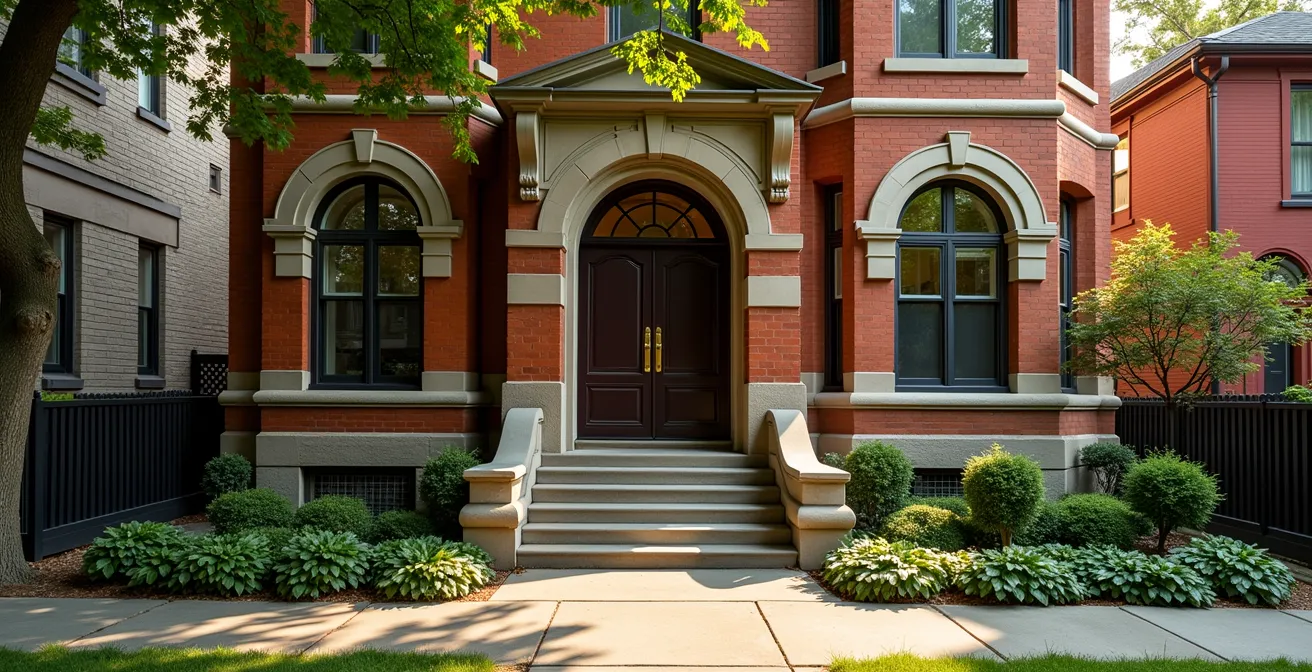
Choosing a guesthouse in The Annex is an architectural negotiation, not just a booking. The key is understanding and embracing the charming trade-offs of heritage living.
- Authentic Victorian guesthouses are rare due to strict residential zoning, making them prized finds.
- Practical challenges like narrow stairs and limited parking are solvable with insider knowledge and preparation.
Recommendation: Prioritize properties where the host is present or provides a detailed guide. Their local expertise is the true value that elevates a stay from a simple room to an authentic Toronto experience.
The search for the perfect place to stay in Toronto can often feel like a choice between two extremes: the anonymous, glass-and-steel efficiency of a downtown hotel or the sprawling, unpredictable nature of a city-wide rental search. For travelers who crave character, who believe a neighborhood’s soul is as important as a comfortable bed, The Annex presents an irresistible proposition. Its tree-lined streets, punctuated by magnificent Victorian and Edwardian architecture, promise an escape from the sterile and a step into the city’s living history. You’re not just looking for a room; you’re looking for a story.
Many guides will point you to the obvious: the proximity to the University of Toronto, the vibrant restaurants on Bloor Street, the sheer beauty of the historic homes. But they often gloss over the practical realities of these 19th-century marvels. The very features that create their charm—ornate staircases, unique room layouts, a deeply residential feel—also present unique challenges. But what if the key to the perfect Annex stay wasn’t about avoiding these quirks, but about understanding them? What if the real value lies in a thoughtful negotiation between modern travel needs and authentic heritage?
This guide moves beyond the facade. We’ll delve into the architectural and cultural trade-offs of choosing a Victorian guesthouse. We will explore why true European-style inns are a rarity, how to manage the practicalities of a heritage building, and how to choose the guesthouse “vibe” that matches your travel style. This isn’t just about finding a place to sleep; it’s about curating an authentic Annex experience that resonates long after you’ve checked out.
To help you navigate your options and make the most of this unique Toronto neighborhood, this guide breaks down the essential considerations for your stay. From the architectural DNA of the area to the practicalities of daily life, you’ll find the insider knowledge needed to choose with confidence.
Summary: Staying in The Annex: How to Find Victorian Charm for a Mid-Range Budget?
- Why European-Style Guesthouses Are Rare in Toronto?
- How to Handle Narrow Stairs with Heavy Luggage in Heritage Homes?
- Live-in Host vs. Keypad Entry: Which Guesthouse Vibe Suits You?
- The Street Parking Nightmare That Guesthouse Bookers Overlook
- When to Walk to U of T Campus for the Best Morning Stroll?
- Gooderham Building vs. City Hall: Which Architecture Defines Toronto Better?
- The Annex vs. Leslieville: Which Offers Better Weekend Brunch Vibes?
- Distillery District Architecture: How to Spot Original Victorian Details on a Walking Tour?
Why European-Style Guesthouses Are Rare in Toronto?
If you’ve traveled through Europe, you’re likely familiar with the ubiquitous “pension” or small, family-run guesthouse tucked into residential streets. You might arrive in The Annex, with its grand, multi-story Victorian homes, and wonder why these aren’t more common. The answer lies not in a lack of will, but in Toronto’s very DNA: its zoning laws. Unlike many European cities with a long history of mixed-use neighborhoods, much of The Annex is designated as single-family residential. This has preserved its quiet, leafy character but has also made operating multi-room commercial guesthouses a significant legal and economic challenge.
The city’s Short-Term Rental By-law further refines this, generally requiring that an operator live in the property they are renting out. This “principal residence” rule is why you’ll find many host-occupied B&Bs but very few detached, multi-unit inns. Economically, the high value of real estate in The Annex also means that converting a massive Victorian single-family home back into a multi-room guesthouse is often less profitable than selling it as a luxury residence. The area is a designated heritage district, with over 500 buildings protected by the Toronto Historical Board, adding another layer of complexity to any renovation. The guesthouses that do exist are often “grandfathered” in or operate as charmingly compliant bed & breakfasts, making them true neighborhood gems.
Your checklist for understanding Annex accommodations
- Research single-family zoning maps to see the residential focus of the area.
- Compare Toronto’s residential-only policies with European mixed-use zoning to understand the difference.
- Review the “principal residence” requirement in Toronto’s Short-Term Rental By-law.
- Note the economics: a guesthouse’s revenue potential can be lower than a luxury home sale.
- Identify “grandfathered” properties that may offer a more traditional inn experience.
How to Handle Narrow Stairs with Heavy Luggage in Heritage Homes?
You’ve found the perfect Victorian guesthouse, its red-brick facade and ornate trim promising a stay full of character. Then you open the door and face your first architectural negotiation: the staircase. Homes built in the 1880s and 1890s were not designed for the modern traveler’s oversized suitcase. Staircases are often narrower, steeper, and more winding than their modern counterparts, especially if they were originally the “servant’s stairs” at the back of the house.

This is a classic “heritage trade-off.” You are exchanging the convenience of a hotel elevator for the authentic experience of living in a historic home. Smart guesthouse hosts in The Annex are well aware of this challenge and often provide ingenious solutions. Some have installed discreet pulley systems in back stairwells, while others offer a secure luggage storage area on the ground floor, allowing you to take only what you need to your room. One forward-thinking host on Madison Avenue even retrofitted their home’s original servant’s staircase with a small, discrete luggage lift, preserving history while embracing modern needs. Before booking, always ask for a floor plan or inquire specifically about luggage assistance if you’re traveling heavy. A good host will be transparent about accessibility, ensuring your stay starts on the right foot.
Live-in Host vs. Keypad Entry: Which Guesthouse Vibe Suits You?
Beyond the architecture itself, the single most important choice you’ll make is the “vibe” of your guesthouse, which typically falls into two categories: the traditional live-in host or the modern keypad entry. This choice defines your entire experience, pitting personal connection against total autonomy. There’s no right answer, only what’s right for you. A property with a live-in host offers an unparalleled connection to the neighborhood. These hosts are often passionate locals, ready with personal recommendations for the best coffee on Bloor Street or the quietest path through the U of T campus. Breakfast might be a homemade affair, shared with other guests. This is the choice for first-time visitors or those seeking cultural immersion.
As the Toronto Neighbourhood Guide highlights, this is a place that thrives on local energy. In the words of the Annex Toronto Neighbourhood Guide:
This is a vibrant neighbourhood that draws its energy from the University of Toronto, as well as from the bars, restaurants, and nightclubs that crowd together along Bloor Street
– Toronto Neighbourhood Guide
Conversely, a keypad-entry guesthouse offers complete privacy and flexibility. There are no scheduled interactions, and check-in is often available 24/7, perfect for late arrivals or business travelers who just need a quiet, comfortable base. These properties usually provide a digital guidebook with recommendations, but the experience is self-directed. This is the ideal choice for seasoned Toronto visitors, introverts, or night owls who value independence above all else. Understanding this distinction is key to curating your perfect Annex stay.
This comparative table breaks down the key differences to help you decide which style of guesthouse is the best fit for your trip.
| Feature | Live-in Host | Keypad Entry |
|---|---|---|
| Local Knowledge | Personal recommendations for Bloor Street dining, U of T campus tours | Digital guidebook only |
| Privacy Level | Scheduled interactions, shared common areas | Complete autonomy, no interactions required |
| Check-in Flexibility | Usually set hours (8am-10pm) | 24/7 self check-in available |
| Legal Compliance | Typically owner-occupied STR compliant | May indicate investor property |
| Breakfast Options | Often included, homemade | Self-service or none |
| Best For | First-time Toronto visitors, cultural immersion seekers | Business travelers, night owls, privacy seekers |
The Street Parking Nightmare That Guesthouse Bookers Overlook
You’ve navigated the stairs and settled into your charming room. Now it’s time to deal with the car. This is where the idyllic, tree-lined residential streets of The Annex reveal their modern-day challenge: parking. The same narrow streets that lend the neighborhood its intimate, pedestrian-friendly feel were laid out long before the automobile became a family staple. On-street parking is fiercely competitive, with residents and visitors vying for a limited number of spots governed by a complex web of permits and time limits.

Overlooking this reality is the number one mistake visitors make. But the “parking nightmare” is entirely avoidable with a bit of insider strategy. First, the City of Toronto offers Temporary On-Street Parking Permits online, which are essential for overnight parking in most Annex zones. Purchase this before you arrive. Second, ask your host about laneway parking; many Victorian homes have hidden rear access that can accommodate a car. Third, use technology. The Green P app shows real-time availability and pricing for public lots, like the one near the Hot Docs Cinema. Finally, consider if you even need a car. With excellent TTC access and services like Communauto or Zipcar offering designated spots in the neighborhood, going car-free is often the most relaxing and cost-effective choice.
When to Walk to U of T Campus for the Best Morning Stroll?
One of the greatest joys of staying in The Annex is your immediate proximity to the stunning St. George campus of the University of Toronto. It’s not just a collection of buildings but a sprawling urban park, a tapestry of Gothic architecture, and peaceful green spaces. The key is knowing when and where to go. The iconic Philosopher’s Walk is a must-see. This serene, sunken pathway, built on a ravine filled in during the 1880s, connects the Royal Conservatory of Music to the heart of the campus. To experience it at its best, plan your stroll for after 10 AM. This allows you to miss the morning rush of students heading to 9 AM lectures, transforming the path from a busy thoroughfare into a tranquil corridor.
The experience is deeply seasonal. In October, the maple and oak canopy creates a breathtaking golden tunnel. In May, cherry blossoms erupt near Robarts Library. And in September, the air buzzes with the back-to-school energy around King’s College Circle. The entire campus is a walker’s paradise, easily accessible from anywhere in the neighborhood. In fact, the area is serviced by an incredible 173 transit stops, making it simple to hop on a streetcar or subway to reach a starting point for your exploration. Forget the car; this is a part of the city best discovered on foot, allowing you to absorb the history and academic ambiance at a leisurely pace.
Gooderham Building vs. City Hall: Which Architecture Defines Toronto Better?
A city’s identity is often read through its landmark buildings. In Toronto, two icons frequently come to mind: the Gooderham “Flatiron” Building, a red-brick testament to 19th-century commerce, and Viljo Revell’s modern City Hall, a bold vision of 20th-century ambition. A visitor might ask which better defines the city. However, when you’re staying in The Annex, you realize this is the wrong question. The true architectural soul of Toronto isn’t found in a single monument you visit, but in the residential fabric you inhabit.
The Annex style is a unique Canadian architectural dialect. As noted by experts, “The Annex style house borrows elements from both the American Richardsonian Romanesque and the British Queen Anne Revival.” This fusion created a distinct look characterized by rough-hewn Credit Valley sandstone, grand rounded arches, and romantic turrets. While the Gooderham Building represents the city’s commercial past and City Hall its civic future, the homes of The Annex represent its enduring residential heart. They were built to be lived in, to display status, and to create a community—a purpose they still fulfill today.
The following table puts these architectural styles into perspective, highlighting how the Annex offers an immersive experience that a landmark viewing cannot match.
| Aspect | Gooderham Building (1892) | City Hall (1965) | Annex Victorian Homes (1880s) |
|---|---|---|---|
| Architectural Style | Flatiron Victorian | Modernist/Futurist | Richardsonian Romanesque |
| Primary Material | Red brick | Concrete and glass | Credit Valley sandstone |
| Tourist Accessibility | Exterior viewing only | Public access, tours available | Walking tour friendly |
| Defines Toronto How? | 19th century commerce | 20th century ambition | Residential heritage soul |
| Best Photo Spot | Berczy Park angle | Nathan Phillips Square | Madison Avenue streetscape |
| Walking Distance from Annex | 30 min subway + walk | 20 min subway direct | You’re already there |
The Annex vs. Leslieville: Which Offers Better Weekend Brunch Vibes?
For many Toronto visitors, the weekend is synonymous with brunch. Two neighborhoods often top the list for this beloved ritual: The Annex in the west and Leslieville in the east. While both offer fantastic options, they cater to distinctly different vibes. Choosing correctly can make or break your weekend morning. Leslieville, with its trendy Queen Street East strip, is the capital of destination brunch. It attracts a “creative family” crowd willing to queue for 45 minutes or more for the latest Instagram-worthy dish. The experience is an event, often followed by exploring vintage furniture shops or waterfront parks.
The Annex, by contrast, offers a more “bookish bohemian” brunch. Its higher density of restaurants along Bloor Street West and its side streets means wait times are significantly shorter, often averaging just 15-20 minutes on a Saturday. The atmosphere is less about the scene and more about the conversation. It’s the kind of place you go for a spontaneous, intellectual meal before an afternoon spent browsing bookstores or visiting the nearby Royal Ontario Museum (ROM). In essence, The Annex wins for those who prioritize food and conversation over hype and queues. It’s a brunch you stumble upon, not one you plan your day around.
Your Action Plan for the Perfect Annex Brunch
- Target your meal for between 10-11 AM on Sundays to skillfully avoid the noon rush.
- Explore hidden gems on side streets like Howland and Madison instead of sticking to the main Bloor spots.
- Use virtual queuing apps for popular restaurants while you browse nearby bookstores.
- Ask your guesthouse host for their personal favorite—often an unmarked local treasure.
- Consider the “professor’s brunch” at quieter cafes near campus that locals protect fiercely.
- Combine brunch with culture by visiting the ROM when it opens at 10 AM, letting the crowds die down.
Key takeaways
- The Annex’s charm lies in its “lived-in” Richardsonian Romanesque architecture, a stark contrast to preserved tourist districts.
- Practical challenges like narrow stairs and tight parking are not deal-breakers but solvable trade-offs for an authentic heritage stay.
- The best Annex experience comes from leveraging local knowledge, whether from a live-in host or by strategically navigating brunch spots and campus paths like an insider.
Distillery District Architecture: How to Spot Original Victorian Details on a Walking Tour?
When discussing Victorian architecture in Toronto, another neighborhood inevitably comes up: the Distillery District. This beautifully preserved industrial site is a masterpiece of Victorian-era functional design. A walking tour there reveals a world of heavy timber, cast iron, and utilitarian red brick. However, comparing it to The Annex highlights the profound difference between architecture that is preserved for tourism and architecture that is lived in.
The Distillery District was built for production. Its design, with segmental arches and large loading doors, was about maximizing efficiency for the Gooderham & Worts distillery. The Annex, conversely, was built to display wealth and status for Toronto’s elite, including members of the same Gooderham family. Its architectural language is one of expression: turrets, carved grotesques, and ornate woodwork designed to project a specific social standing. The materials themselves tell the story. The Distillery’s functional red brick stands in contrast to The Annex’s expensive and decorative Credit Valley sandstone and intricate Queen Anne detailing.
This table clarifies the key differences, showing how each district offers a window into a different facet of Victorian life.
| Feature | Annex Residential Victorian | Distillery Industrial Victorian |
|---|---|---|
| Primary Material | Credit Valley sandstone, decorative brick | Red brick, heavy timber, cast iron |
| Architectural Elements | Turrets, rounded Romanesque arches, bay windows | Segmental arches, loading doors, functional design |
| Purpose | Display wealth and status (Eaton, Gooderham homes) | Maximize production efficiency |
| Decorative Features | Carved grotesques, ornate woodwork, pyramidal roofs | Minimal ornamentation, exposed beams |
| Window Style | Large bays, decorative transoms, Queen Anne details | Multi-pane industrial, maximize natural light |
| Current Use | Protected heritage residences, B&Bs | Galleries, restaurants, cultural spaces |
Ultimately, a stay in The Annex is for the traveler who understands that true character is not a commodity to be consumed like in the Distillery District, but a living history to be engaged with. By embracing the architectural negotiation—the charming trade-offs of a 140-year-old home—you don’t just visit Toronto; you become part of its story. To begin curating your own authentic Annex experience, the next step is to explore the guesthouses that embody this spirit.