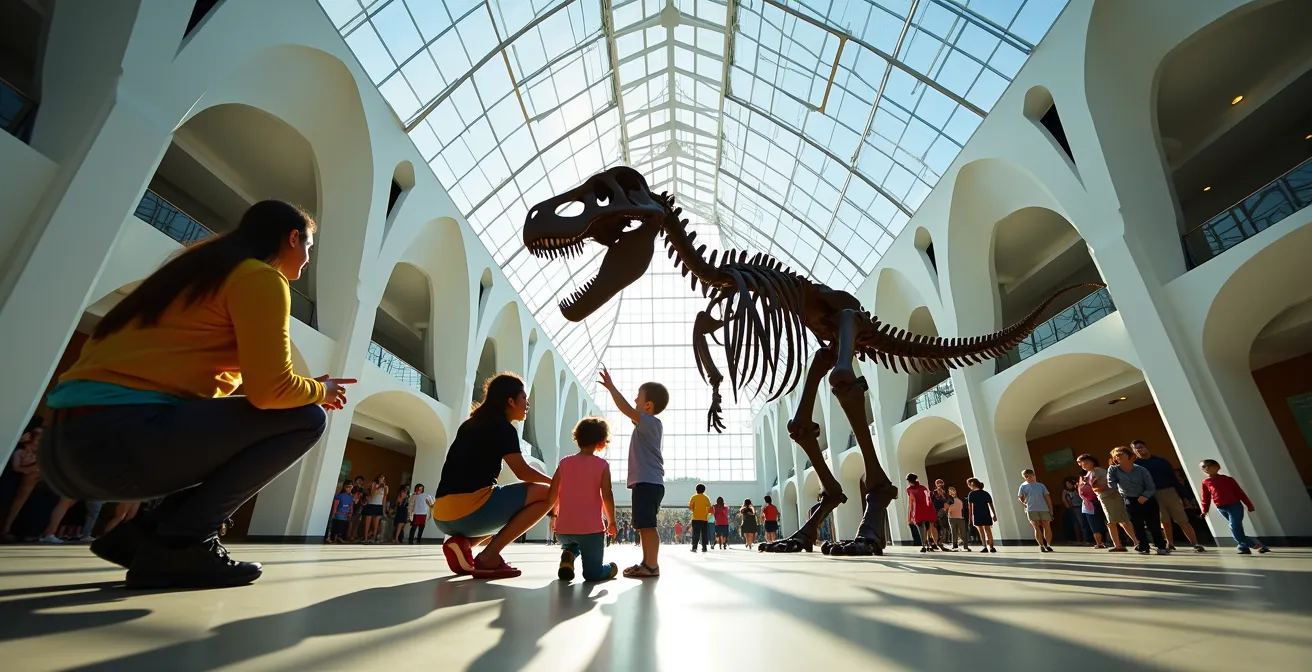
The secret to a successful family trip to the ROM isn’t trying to see everything; it’s managing your family’s “energy budget” with a strategic plan.
- Prioritize a “greatest hits” tour focusing on high-impact exhibits like the dinosaurs to maximize engagement before fatigue sets in.
- Use tools like the CityPASS to bypass queues and plan strategic breaks outside the museum walls to prevent sensory overload.
Recommendation: Before you go, frame the visit as a “mission” with your kids, deciding on your top 2-3 must-see galleries to create a focused and achievable goal.
The thought of navigating the Royal Ontario Museum’s 40 galleries with children can fill any parent with a mix of excitement and dread. You envision their faces lighting up at the sight of a T-rex, but you also brace for the inevitable mid-afternoon meltdown in the Hall of Gems. The standard advice is predictable: buy tickets online, grab a map, and hope for the best. This approach treats a family visit like a checklist, a frantic race against time and toddler tantrums that often ends in exhaustion for everyone.
But what if the key to a joyful, memorable day at the ROM wasn’t about covering more ground, but about smarter planning? What if, instead of just a map, you had a game plan? This guide is built on a museum educator’s core principle: a successful family visit is measured in moments of wonder, not in the number of galleries seen. It’s about mastering your family’s unique energy budget, making strategic choices, and understanding how to pace your day to keep curiosity high and frustration low.
We’ll move beyond generic tips to provide a concrete strategy. We will cover how to get in efficiently, create a focused tour of the museum’s highlights, manage potential fears in specific exhibits, and master the art of the strategic break. We’ll even contextualize your ROM visit within your broader Toronto plans, weighing transportation options and helping you decide if today is truly the right day for a museum adventure. This is your mission briefing for a day of discovery, not defeat.
This comprehensive guide breaks down everything you need to know to transform your family’s visit to the ROM from a stressful marathon into an unforgettable adventure. Explore the sections below to build your perfect game plan.
Summary: A Strategic Guide to the ROM for Families
- How to Skip the Ticket Line Using the CityPASS at the ROM?
- Permanent Collection or Special Exhibition: Where to Spend Your Time?
- Dinosaur Hunting at the ROM: Which Fossil Exhibits Will Impress Your Kids the Most?
- Why the Bat Cave Might Scare Children Under 5 Years Old?
- The Pacing Mistake That Ruins Your ROM Visit by 2 PM
- TTC Day Pass vs. City Sightseeing: Which Wins on Value?
- When to Visit the ROM for Free General Admission?
- Why the Centreville All-Day Pass Pays Off After 5 Rides?
How to Skip the Ticket Line Using the CityPASS at the ROM?
Your ROM mission begins before you even step inside. With a museum that attracts more than one million visitors every year, the entrance line can be a significant drain on your family’s “energy budget” right from the start. Waiting in a queue with restless children is a recipe for a bad beginning. The single most effective strategy to avoid this is to secure your admission in advance. This is where pre-purchased tickets, and specifically the Toronto CityPASS, become your most valuable tool.
The CityPASS allows you to bypass the main ticket-buying line, often providing access through a dedicated, faster-moving entrance for pass holders. For a family, this can mean saving 20-30 minutes of waiting time, which is an eternity in kid-time. It transforms the start of your day from a stressful wait into a seamless entry, preserving precious patience and excitement for the exhibits themselves.

However, the CityPASS is a strategic choice, not a universal solution. Its value depends entirely on your overall Toronto itinerary. If you plan to visit other major attractions like the CN Tower or Ripley’s Aquarium, it offers significant savings. But for a family focused solely on the ROM or planning multiple visits throughout the year, a museum membership might be more economical. Evaluating these options is a key part of your pre-visit “mission briefing.”
This table breaks down the financial and practical considerations to help you make the best choice for your family’s budget and travel style.
| Option | Cost (Family of 4) | ROM Visits Included | Additional Benefits | Best For |
|---|---|---|---|---|
| CityPASS Toronto | $324 CAD | 1 visit | Save up to 38% on admission to ROM and 4 more top Toronto attractions including CN Tower and Ripley’s Aquarium | Tourists visiting multiple attractions |
| ROM Family Membership | $161 CAD/year | Unlimited visits | 10% discount on programs, special member events, gift shop discounts | Local families visiting 3+ times yearly |
| Single Visit Tickets | $68 CAD | 1 visit | None | One-time visitors |
Ultimately, starting your day smoothly sets a positive tone and conserves the energy and enthusiasm you’ll need to explore the wonders inside.
Permanent Collection or Special Exhibition: Where to Spend Your Time?
Once you’re inside, the sheer scale of the ROM can be overwhelming. The biggest mistake families make is trying to see everything. This “checklist” approach inevitably leads to exhaustion and sensory overload. The key to success is exhibit triage: consciously choosing a focused path. For most families, especially those with children under 12, the best strategy is to prioritize the “greatest hits” of the permanent collection over temporary special exhibitions.
Special exhibitions are often crowded, may have an extra cost, and can cover niche topics that don’t always resonate with younger audiences. The permanent collection, on the other hand, houses the iconic, can’t-miss experiences that form the core of the ROM’s identity—dinosaurs, mummies, and biodiversity. As the team at Help! We’ve Got Kids notes, focusing on these highlights is the surest way to hold a child’s attention. As they wisely state in their guide to the ROM for kids:
With its vast collection of exhibits and artifacts, it’s easy to spend hours—or even days—going through all the galleries. The highlights for kids age 12 and under at the ROM guarantee to entertain younger kids and keep their attention.
– Help! We’ve Got Kids Editorial Team, Kids’ Guide to the ROM
To put this into practice, here is a proven 2.5-hour game plan designed to maximize wonder while minimizing walking. This isn’t a rigid schedule, but a tested route that hits the most engaging spots in a logical order.
- Start at Level 1 (15 minutes): Begin with the massive Futalognkosaurus in the main atrium for an immediate “wow” factor. It’s an impressive first impression that sets an exciting tone.
- Move to Level 2 Dinosaurs (45 minutes): Head straight for the main event. Spend the bulk of your energy in the James and Louise Temerty Galleries of the Age of Dinosaurs.
- Visit Level 2 Biodiversity (20 minutes): Take a quick stop at the Schad Gallery to see the polar bears and other striking species. It’s a visually impressive and educational gallery.
- Experience Level 2 Bat Cave (10 minutes): This is an optional, quick, immersive experience for brave kids over 5. (More on this in the next section).
- Head to Level 3 Egypt (30 minutes): Explore the fascinating world of mummies and ancient artifacts. The mystery and storytelling here are captivating for school-aged children.
- Finish at Level 2 Hands-On (30 minutes): End your focused tour at WonderWorks or the Keenan Family Gallery for much-needed interactive play and sensory decompression.
By treating your visit as a “greatest hits” tour rather than an exhaustive survey, you control the pace and ensure the day is defined by discovery, not by tired feet and frayed nerves.
Dinosaur Hunting at the ROM: Which Fossil Exhibits Will Impress Your Kids the Most?
For most children, the word “museum” is synonymous with “dinosaurs,” and the ROM delivers on this promise in a spectacular way. The James and Louise Temerty Galleries of the Age of Dinosaurs are the heart of a family visit, but with a total of 50 dinosaur specimens on display, it’s wise to approach it with a plan. Not all fossils are created equal in the eyes of a child, and knowing which ones to target for your kids’ age and temperament is key.
The hunt begins the moment you enter. The colossal 110-foot-long Futalognkosaurus in the main atrium is the perfect starting point. Its sheer scale is an unforgettable introduction that immediately fulfills the promise of “seeing big dinosaurs.” Once in the main galleries, the crowd-favourite is undeniably the Tyrannosaurus rex. This iconic predator, along with the equally fierce Albertosaurus, captivates older children who are drawn to the power and “danger” of these massive carnivores.
However, for toddlers and younger children, these predators can be intimidating. A better strategy for this age group is to focus on the gentler hadrosaurs (duck-billed dinosaurs) or the impressive armored Zuul, which looks like a real-life dragon. Furthermore, the hands-on displays, like the interactive dinosaur bone excavation area, provide a non-threatening way for little ones to engage with paleontology. They can touch replicas and feel like real scientists, which is often more memorable than just looking at skeletons.
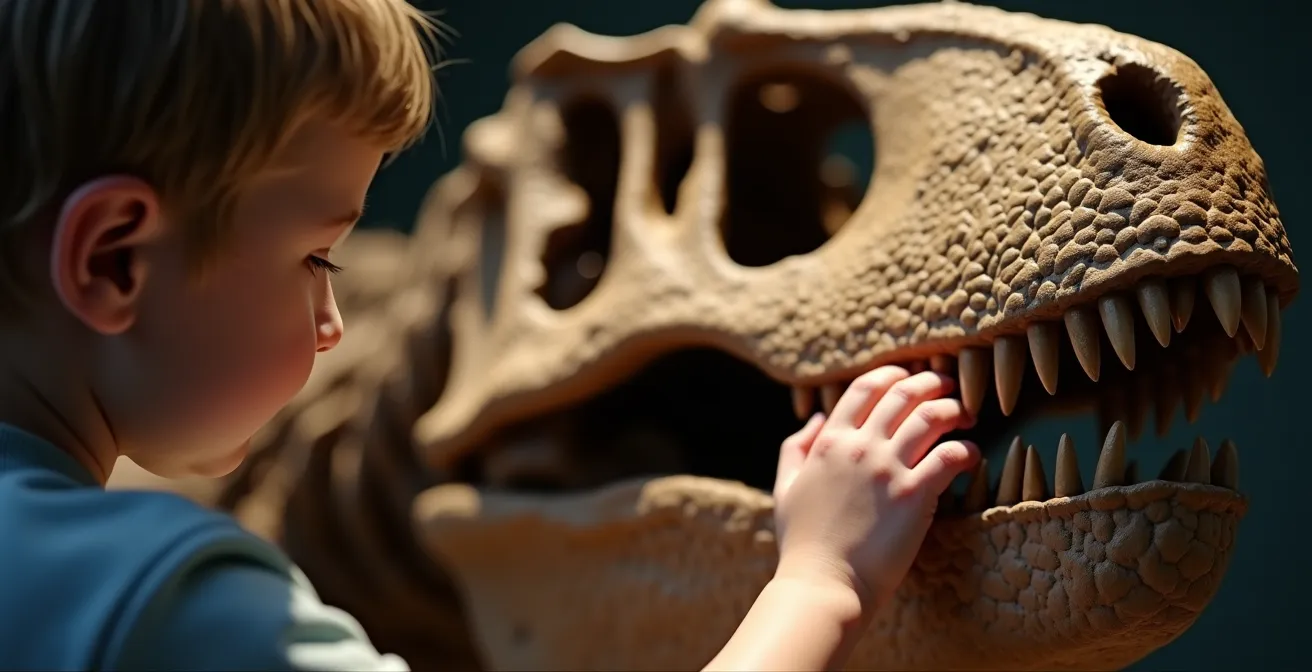
The collection also offers a fantastic educational opportunity, with a special emphasis on dinosaurs discovered in the Alberta Badlands. Pointing out that many of these incredible creatures were found right here in Canada can create a powerful sense of connection and national pride for young learners.
Ultimately, the dinosaur gallery is where you should invest a significant portion of your family’s “energy budget.” A well-paced tour here will create the cornerstone memory of your entire ROM visit.
Why the Bat Cave Might Scare Children Under 5 Years Old?
The ROM’s Bat Cave is one of its most famous and immersive exhibits. It’s a dark, winding passage filled with the sounds of dripping water and the flapping wings of over 400 lifelike bat models. For older children and adults, it’s an exciting and memorable simulation. For children under five, however, it can be a terrifying experience that derails an otherwise happy museum day. The combination of darkness, unfamiliar sounds, and the sudden appearance of creatures can be highly overwhelming for a young child’s developing sensory system.
The primary issue is a lack of control and predictability. A young child thrust into a dark, noisy environment can easily become disoriented and frightened. Unlike a bright, open gallery where they can see what’s coming, the Bat Cave’s design is meant to surprise. This is precisely why it’s a “mission” that requires a careful “briefing” if you choose to attempt it with a sensitive child.
Fortunately, if the Bat Cave seems too risky for your family’s energy budget, the ROM offers fantastic alternatives. The museum has thoughtfully placed its more child-friendly, hands-on galleries nearby. The Patrick and Barbara Keenan Family Gallery of Hands-on Biodiversity and the bright, playful WonderWorks gallery are both located on Level 2, serving as perfect sensory-friendly havens. These spaces allow children to engage with real specimens in a well-lit, controlled setting, providing a positive experience instead of a fearful one.
If you have a budding explorer who is determined to brave the cave, preparation is everything. Treating it like an “explorer’s challenge” can transform fear into excitement. Here is a practical checklist to prepare your child.
Your Action Plan: Preparing for the Bat Cave Mission
- Practice at Home: Play “cave sounds” (nature soundscapes with bat calls) to familiarize your child with the audio experience.
- Learn About Bats: Read age-appropriate books that frame bats as helpful creatures who eat mosquitoes and pollinate plants, not as scary monsters.
- Create a “Brave Explorer Badge”: Make a simple badge your child can wear. This small token can provide a surprising boost of confidence.
- Visit Bright Galleries First: Ensure your child is comfortable and happy in the museum environment (like WonderWorks) before attempting a darker exhibit.
- Establish a “Code Word”: Have a secret word your child can use if they feel overwhelmed and need to leave immediately, putting them in control of the situation.
This strategic approach—assessing risk and having a backup plan—is a core tenet of managing your family’s experience and ensuring the day remains positive.
The Pacing Mistake That Ruins Your ROM Visit by 2 PM
The most common and critical error families make at any large museum is pushing through without planned downtime. By 2 PM, you see it everywhere: tired parents, overstimulated children, and the onset of meltdowns. This crash isn’t just about physical exhaustion; it’s about sensory overload. The constant influx of new sights, sounds, and information depletes a child’s (and an adult’s) capacity for focus and enjoyment. The solution is not just “taking a break,” but engaging in strategic pacing with planned moments of “sensory decompression.”
The ROM has recognized this need and provides several dedicated rest areas. A new pop-up coffee bar on the main floor offers drinks, pastries, and crucially, “plenty of comfy seats where families can rest and relax.” For a quieter escape, the Chinese Temple Garden Courtyard provides benches away from the main gallery traffic. Another excellent option is the Earth Rangers Studio on Level 2 (open most weekends), which offers a calmer environment for children to decompress between high-stimulus exhibits. These indoor zones are vital for a quick reset.
However, sometimes the best way to reset is to leave the museum environment entirely. One of the ROM’s greatest assets is its location directly on Queen’s Park. A 30-minute “halftime break” in the park can completely reset your family’s energy budget. It allows kids to run freely, burn off physical energy, and give their brains a rest from processing information. Remember that food and drink are not permitted in the galleries, so this is the perfect time for a packed snack.
Here’s a simple strategy for a successful park break:
- Exit through the Weston Entrance on the Queen’s Park side for direct access.
- Find the large open lawn directly south of the ROM for kids to run.
- Enjoy portable snacks and water you’ve packed for the occasion.
- Take a calming stroll along the park’s walking paths.
- Return refreshed through the same entrance using your timed ticket for re-entry.
Building these moments of sensory decompression into your plan is non-negotiable. It’s the difference between a day that ends in happy memories and one that ends in tears.
TTC Day Pass vs. City Sightseeing: Which Wins on Value?
Your ROM experience doesn’t start at the front door; it starts the moment you leave home. For families visiting Toronto, transportation logistics are a major part of the day’s “energy budget.” Driving and parking near the museum can be expensive and stressful. The two most popular public transit alternatives are the hop-on-hop-off City Sightseeing buses and Toronto’s own public transit system, the TTC. For families focused on value and authentic local experience, the TTC is the clear winner.
City Sightseeing buses are designed for a broad, passive overview of the city and come at a premium price. The TTC, on the other hand, is a cost-effective and efficient way to navigate Toronto like a local. With children 12 and under riding free, a single TTC Day Pass or the Weekend/Holiday Family Pass can cover your entire family’s travel for a fraction of the cost. The subway’s Line 1 takes you directly to Museum Station, depositing you right at the ROM’s doorstep on Queen’s Park.
Navigating the subway with strollers requires a bit of planning. For instance, if you need an elevator, it’s better to use the nearby St. George station and exit via Bedford Road for a short walk to the ROM, as Museum Station’s accessibility can be affected by ongoing construction. Planning this small detail in advance saves immense frustration on the day of your visit.
Case Study: The Full-Day Museum & Market TTC Itinerary
Maximizing a TTC Day Pass goes beyond just a trip to the ROM. A proven family itinerary involves a morning at the museum (10am-1pm), followed by a 20-minute subway ride south on Line 1 to St. Andrew Station for lunch at the historic St. Lawrence Market. The market offers a huge variety of affordable food choices perfect for picky eaters. Afterwards, you can hop on a streetcar to explore the vibrant shops of Kensington Market before returning to the subway. This itinerary combines a major cultural institution with authentic, budget-friendly Toronto neighbourhood experiences, all on a single transit pass.
By opting for the TTC, you not only save money but also give your family a more genuine experience of the city, all while getting to your museum mission efficiently.
When to Visit the ROM for Free General Admission?
For budget-conscious families, timing your ROM visit to coincide with free admission can be tempting. The museum generously offers free general admission on the third Tuesday evening of every month from 5:30 PM to 8:30 PM. This is part of a wider commitment to accessibility, through which the museum’s accessibility initiatives provide 100,000 free visits every year. While this sounds like an ideal opportunity, for families with young children, it’s a strategic trade-off that requires careful consideration.
The reality of “free night” is that it attracts enormous crowds. The experience is often less of a leisurely exploration and more of a packed, noisy shuffle through the main galleries. For a child who is already tired at the end of the day, this high-stimulus environment can be incredibly overwhelming. What you save in dollars, you may pay for with a stressful experience and a shortened, less enjoyable visit.

When planning a cultural outing in Toronto, it’s helpful to compare the free admission offerings from various institutions. Each has a different character and may be more or less suitable for your family’s needs.
| Museum | Free Night | Hours | Crowd Level | Family Suitability |
|---|---|---|---|---|
| Royal Ontario Museum | 3rd Tuesday monthly | 5:30-8:30 PM | Very High | Challenging with young kids |
| Art Gallery of Ontario | Wednesday evenings | 6:00-9:00 PM | High | Better for older children |
| Aga Khan Museum | Wednesday evenings | 4:00-8:00 PM | Moderate | Good for all ages |
For families with young children, paying for a timed ticket on a quiet weekday morning is often a much better investment in your “experience budget,” guaranteeing a more relaxed and engaging visit.
Key Takeaways
- A successful ROM visit is about managing your family’s “energy budget,” not seeing every exhibit.
- Prioritize a 2-3 hour “greatest hits” tour of the permanent collection (dinosaurs, mummies) over crowded special exhibitions.
- Use strategic breaks, including leaving the museum for a walk in Queen’s Park, to prevent sensory overload and meltdowns.
Why the Centreville All-Day Pass Pays Off After 5 Rides?
The final and most important part of your strategic planning happens before you even commit to a museum day. As a parent, you must be a realist: some days are simply not museum days. If the kids wake up with boundless physical energy, or the sun is shining after a week of rain, forcing a quiet, indoor experience might be a misuse of everyone’s “energy budget.” This is where knowing your alternatives becomes a powerful tool. In Toronto, the classic alternative to a cultural day is a trip to the Centreville Amusement Park on the Toronto Islands.
This isn’t an either/or dilemma, but a strategic assessment of your family’s needs on a given day. The ROM offers immense educational value and is perfect for curious minds on any weather day. Centreville, by contrast, is about pure physical fun—spinning teacups, a log flume, and running around in open green space. It’s an entirely outdoor, weather-dependent experience. The cost structure is also different: where the ROM is a single admission fee, a day at Centreville involves the ferry cost plus either individual ride tickets or an All-Day Pass, which becomes cost-effective after about five rides.
Comparing these two iconic Toronto family destinations helps clarify which “mission” is right for today. As the travel experts at Wandering Wagars point out, the ROM is fantastic for its educational programs and family activities, noting that “Kids will love the ROMKids experience that includes drop-in programs, family activities, and even overnight sleepovers.” This highlights its role in structured learning and discovery.
This planning matrix can help you make a quick, smart decision based on your family’s current state.
| Factor | ROM Day | Centreville Day |
|---|---|---|
| Best Age Range | 5-14 years (educational focus) | 3-10 years (physical play) |
| Weather Dependency | Indoor – all weather | Outdoor – weather dependent |
| Duration | 3-4 hours optimal | 4-6 hours including ferry |
| Energy Level Required | Moderate (walking/standing) | High (active play) |
| Educational Value | Very High | Low-Moderate |
| Cost (Family of 4) | $68 CAD general admission | $40 ferry + $140 all-day ride passes |
By having a “Plan B” like Centreville ready, you empower yourself to make the best choice for your family, ensuring that every Toronto outing is a success, whether it’s filled with fossils or Ferris wheels.