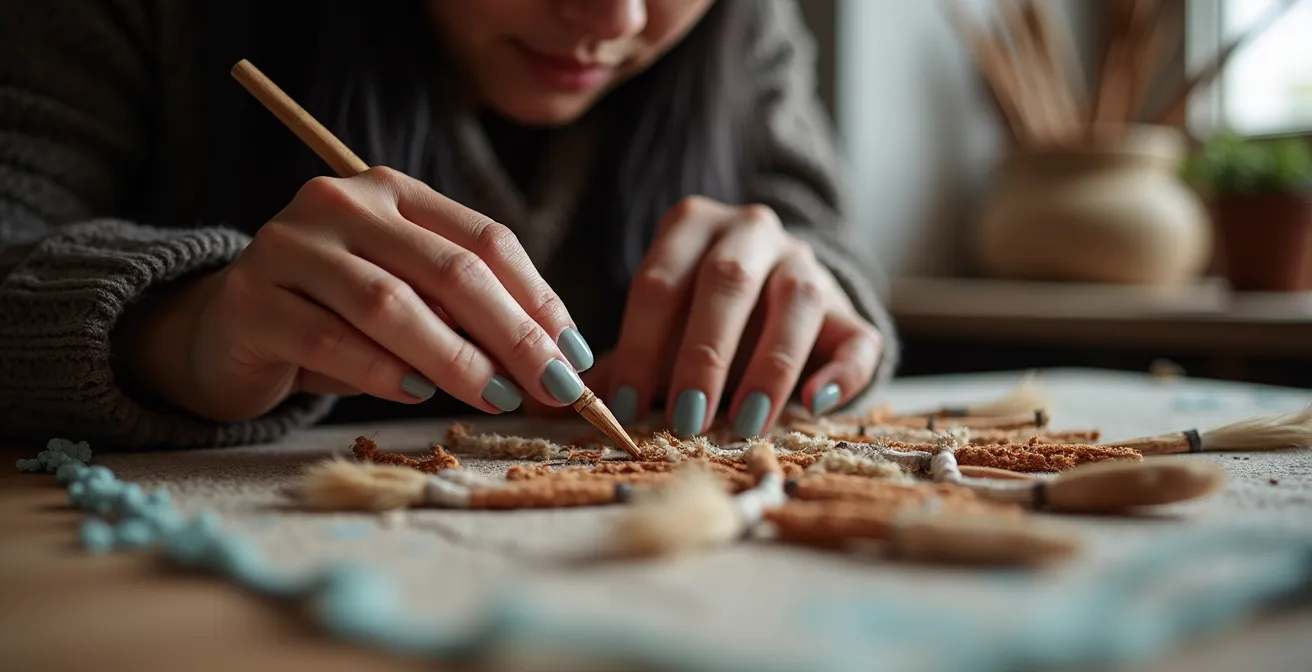
The key to buying authentic Indigenous art isn’t spotting fakes, but practicing ethical, relational due diligence.
- Authenticity is tied to a specific artist and their Nation, not a generic “Made in Canada” label.
- Ethical purchasing directly supports Indigenous economic sovereignty and counters the harm of cultural appropriation.
Recommendation: Shift your focus from a simple transaction to understanding the art’s story, the artist’s background, and your role in a respectful exchange.
For the discerning art collector or culturally-aware tourist in Toronto, the desire to own a piece of authentic Indigenous art is a powerful one. It’s a chance to connect with the deep history of this land and support the vibrant creative spirit of First Nations, Inuit, and Métis artists. Yet, this desire is often met with a paralyzing fear: how do you distinguish a genuine, handcrafted treasure from a mass-produced “Native-style” souvenir? Many believe the answer lies in looking for a signature or a specific label, but these are often superficial markers in a complex landscape.
The proliferation of fakes and appropriated designs in tourist markets not only deceives buyers but actively harms the artists and communities whose cultural heritage is being exploited. This guide moves beyond the simplistic advice. The true path to ethical acquisition isn’t about becoming an expert in forgery detection overnight. Instead, it requires a fundamental shift in perspective—from a transactional mindset to a relational one. It’s about learning the right questions to ask, understanding the context of the art, and recognizing that your purchase is an investment in cultural continuity and economic sovereignty.
This article will provide a clear framework for navigating Toronto’s Indigenous art scene with confidence and respect. We will explore the tangible harm caused by counterfeit art, establish the historical context of Indigenous presence in Toronto, and provide practical steps for identifying reputable galleries, understanding different art forms, and engaging with creators in a way that honours their work and heritage. This is your guide to becoming not just a buyer, but a conscientious supporter of Indigenous art.
To help you navigate this important topic, this guide is structured to build your knowledge step-by-step. Below, you will find a summary of the key areas we will cover, from understanding the foundational issues to taking concrete action as an ethical collector.
Summary: A Guide to Buying Authentic Works from First Nations Artists
- Why Buying “Native-Style” Souvenirs Harms Local Indigenous Communities?
- Toronto’s Cultural History: How Immigration Waves Shaped Current Neighborhood Identities?
- How to Identify Certified Indigenous Art Galleries in Yorkville?
- Boutique Shopping vs. Department Stores: Which Offers Better Service in Yorkville?
- Inuit Sculpture or Woodland Painting: Which Style Fits Your Collection?
- The Etiquette Error to Avoid When Discussing Art with Indigenous Creators
- The “Vintage” Mistake That Costs You New Retail Prices
- How to Support Indigenous Cultural Centers Beyond Buying Art?
Why Buying “Native-Style” Souvenirs Harms Local Indigenous Communities?
The purchase of a brightly-coloured “Native-style” trinket from a general souvenir shop may seem harmless, but it is a direct blow to the livelihood and cultural integrity of Indigenous artists. These mass-produced items, often made overseas, appropriate sacred designs and symbols, stripping them of their context and meaning for commercial gain. This practice perpetuates harmful stereotypes and devalues the skill, knowledge, and lived experience embedded in authentic work. The economic impact is not trivial; it is a direct diversion of funds away from the artists and communities who are the rightful stewards of their cultural heritage.
The economic potential of authentic Indigenous art is significant. For example, a 2017 report for Indigenous and Northern Affairs Canada highlighted that authentic Inuit art alone contributes substantially to the economy, underscoring the importance of ensuring revenue flows back to the creators. According to the report, it was estimated to have an $87.2 million annual GDP contribution, a figure that is threatened by the counterfeit market. This economic leakage prevents artists from achieving financial stability and reinvesting in their communities.
The harm is not just financial, but deeply personal and cultural. It’s an issue of economic sovereignty. As Kwakwaka’wakw artist Lou-ann Neel powerfully articulated in her testimony to Parliament, the reality for many creators is starkly different from the commercial success of appropriated designs:
Our artists continue to operate daily at under-poverty levels. We do not see the proceeds coming back to our communities. We don’t see royalties. Permissions have not been granted for the use of many of our designs in the first place.
– Lou-ann Neel, Kwakwaka’wakw artist testimony to Parliament
Choosing to buy authentic is therefore a conscious decision to reject this exploitative model and participate in a system of respect and fair compensation. It affirms that Indigenous art is not a generic decorative style, but a living, breathing expression of distinct cultures and individual creative voices.
Toronto’s Cultural History: How Immigration Waves Shaped Current Neighborhood Identities?
While the title suggests a focus on immigration, understanding Toronto’s identity requires looking back much further, to the original inhabitants of this land. Before any waves of settlement, the city, known as Tkaronto, was and remains the traditional territory of many nations. The ground on which Toronto’s galleries and neighbourhoods stand is rich with Indigenous history. According to ArtworxTO, the city is situated on the traditional territory of the Mississaugas of the Credit, the Anishnabeg, the Chippewa, the Haudenosaunee, and the Wendat peoples. This land is covered by Treaty 13 and the Williams Treaties, agreements that shape the ongoing relationship between Indigenous peoples and the Crown.
Recognizing this history is the first step in ethical engagement. Toronto is not just a place where Indigenous art is sold; it is a place of profound Indigenous significance. This is reflected in the city’s demographics. Far from being a distant presence, a study highlights that Toronto has the largest Indigenous population in Ontario and the fourth largest in Canada. This vibrant, diverse community of First Nations, Inuit, and Métis peoples contributes immensely to the city’s cultural fabric, often through the very art that collectors seek.
This deep historical context reframes the act of buying art. It ceases to be a simple commercial transaction and becomes an engagement with the living history of the land itself. The artists whose work you see in Toronto’s galleries are often connected by ancestry to the very nations that have called this place home for millennia. Understanding this connection adds a layer of meaning and responsibility to your purchase. The art is not just an object; it is a story, a statement of resilience, and a continuation of a cultural legacy that predates the city’s modern form by thousands of years.
How to Identify Certified Indigenous Art Galleries in Yorkville?
Yorkville, known for its luxury boutiques and high-end galleries, is a prime location for art collectors in Toronto. However, its prestige does not automatically guarantee the authenticity of every piece of Indigenous art sold. Discerning collectors must practice what can be called relational due diligence—an active process of inquiry that builds confidence in a gallery’s ethics and its relationship with the artists it represents. This goes far beyond a quick glance for a certificate. It involves observation, conversation, and a healthy dose of critical thinking.
A reputable gallery focused on Indigenous art will operate with transparency and a clear respect for the creators. The environment itself often tells a story. Look for spaces that present art with dignity—well-lit, with ample information, and an atmosphere that feels more like a museum than a cluttered souvenir shop. These galleries understand they are stewards of culture, not just retailers of goods. They should be able and willing to share the narrative provenance of a piece, including the artist’s story, their Nation, and the meaning behind the work.
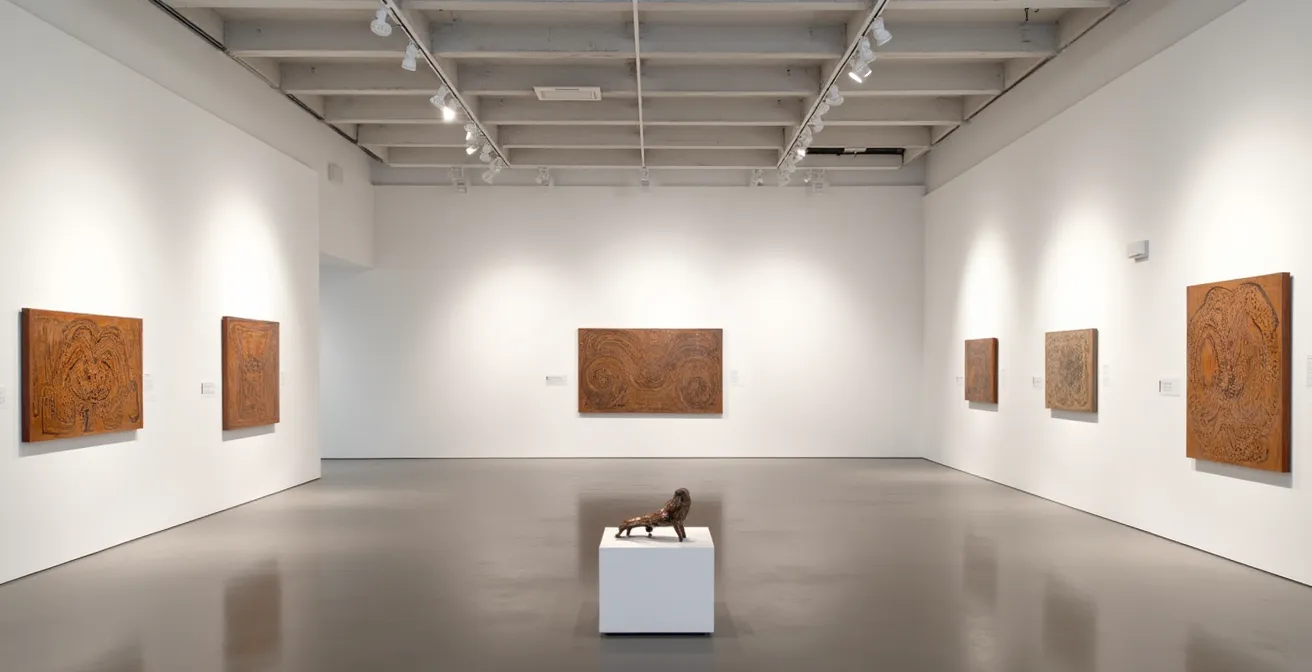
As the image above suggests, a professional setting prioritizes the art and the artist. The gallery staff should be knowledgeable and passionate, serving as a bridge between you and the creator. They should welcome questions and provide detailed answers without hesitation. If you feel rushed, or if your questions are met with vague responses, consider it a red flag.
Your Action Plan: Vetting an Indigenous Art Gallery
- Artist Information: Look for detailed artist biographies displayed prominently next to the artwork.
- Provenance Documentation: Ask for a “Statement of Provenance” for any piece you are seriously considering.
- Professional Affiliation: Check if the gallery is a member of a reputable body like the Art Dealers Association of Canada (ADAC).
- Artist Relationship: Inquire directly about the gallery’s relationship with the artist. Do they work with them directly or through a third party?
- Financial Transparency: Ask what percentage of the sale directly benefits the artist and their community; a reputable gallery will have a clear and fair policy.
Boutique Shopping vs. Department Stores: Which Offers Better Service in Yorkville?
When seeking authentic Indigenous art, the choice of venue is critical. A collector in Toronto might be tempted by the convenience of a large department store that has a “Canadiana” or “Indigenous Crafts” section. However, the experience and assurance of authenticity are vastly different from that of a specialized, independent gallery. Department stores often work through multiple distributors, resulting in an opaque supply chain where the connection to the original artist is lost. Labels may be generic, and the sales staff, while helpful, typically lack the deep, specific knowledge required to discuss the cultural context of the work.
In contrast, specialized Indigenous art galleries, like Bay of Spirits in Toronto, build their entire reputation on direct, long-standing relationships with the artists. Their expertise is their primary asset. They can provide full documentation, share personal anecdotes about the artist, and explain the nuances of a particular piece’s story and symbolism. This direct connection ensures a much higher percentage of the sale price returns to the artist, supporting their practice and their community directly. While the prices may be higher than in a department store, that price reflects the artist’s fair compensation, the gallery’s expertise, and the guaranteed authenticity of the work.
This distinction between retail models is a key indicator for an ethical buyer. The growing presence of Indigenous art in mainstream venues is a positive development, as seen at major events like Art Toronto. For instance, reports from recent fairs showed that over 50% of 121 exhibitors at Art Toronto 2024 featured works by Indigenous artists, a sign of its importance in the contemporary art market. However, for a purchase grounded in ethical principles, the specialized boutique remains the superior choice.
The following table breaks down the key differences for a collector weighing their options in the Yorkville area and beyond.
| Aspect | Specialized Gallery (Bay of Spirits) | Department Store |
|---|---|---|
| Artist Connection | Direct relationships with artists | Multiple distributors |
| Provenance | Full documentation available | Often unclear supply chain |
| Price Range | Higher, but artist receives fair share | Lower, but artist compensation unclear |
| Expertise | Deep knowledge of artists and traditions | General retail knowledge |
| Authentication | Gallery reputation and ADAC membership | Generic ‘Canadian-made’ labels |
Inuit Sculpture or Woodland Painting: Which Style Fits Your Collection?
Once you’ve identified a reputable gallery, the joyful process of selecting a piece for your collection begins. The diversity within Indigenous art is immense, reflecting the distinct cultural traditions of hundreds of Nations across Turtle Island. In a Toronto context, collectors will frequently encounter two prominent and powerful styles: the sculptural works of the Inuit from the Arctic and the vibrant paintings of the Woodland School, originating with Anishinaabe artists from the Great Lakes region.
Inuit Art is renowned for its powerful sculptures, traditionally carved from soapstone, bone, or ivory. These works often depict animals, spirits, and scenes from daily life in the Arctic, capturing a deep connection to the land and its spiritual world. The Art Gallery of Ontario (AGO) holds one of Canada’s most significant collections of Indigenous art, and its holdings demonstrate the importance of this style. In fact, the Art Gallery of Ontario houses one of Canada’s most significant collections, with over 5,000 Inuit artworks, including more than 2,800 sculptures and 1,300 prints. An Inuit sculpture can be a statement piece, its minimalist forms and natural materials fitting perfectly within a modern Yorkville condo aesthetic.
The Woodland School of Art, pioneered by artists like Norval Morrisseau, is characterized by its brilliant colours, bold black outlines, and spiritual themes. These paintings often depict legends, the interconnectedness of all living things, and visions from the dream world. Using acrylic on canvas, these works are dynamic and visually striking, making them a powerful focal point in a Queen West loft or any space that embraces bold, narrative-driven art. Each style offers a different aesthetic and narrative entry point into Indigenous culture.
Your choice depends on your personal aesthetic and the kind of story you want your collection to tell. There is no right or wrong answer, but understanding the origins and characteristics of each style will make your selection more meaningful.
| Art Style | AGO Collection Size | Primary Materials | Toronto Neighbourhood Match |
|---|---|---|---|
| Inuit Sculpture | 2,800+ sculptures | Soapstone, ivory, bone | Yorkville condo (minimalist aesthetic) |
| Inuit Prints | 1,300+ prints | Paper, traditional inks | Art-focused areas (Queen West) |
| Woodland School | Various paintings | Acrylic on canvas | Queen West loft (bold colors) |
| Contemporary Indigenous | Growing collection | Mixed media, digital | Downtown creative spaces |
The Etiquette Error to Avoid When Discussing Art with Indigenous Creators
Engaging directly with an Indigenous artist at a market, gallery opening, or cultural event is a privileged opportunity. This is the heart of relational collecting. However, many well-intentioned buyers make conversational missteps that can inadvertently create discomfort or show disrespect. Understanding the proper cultural protocol is essential for a positive and meaningful interaction. The single biggest error is to treat the conversation like a typical retail negotiation or a transactional inquiry. This art is not merely a product; it is an extension of personal identity, ancestral knowledge, and lived experience.
Approaching the conversation with genuine curiosity and respect is key. Instead of focusing on the time it took to make a piece or haggling over the price, shift your questions toward the story and meaning. An artist’s price is non-negotiable; it reflects not just materials and labour, but generations of knowledge, the cost of living, and the value of their unique creative vision. To question the price is to question the value of their culture and expertise.
Similarly, questions about an artist’s identity, such as “How much Indigenous are you?”, are deeply inappropriate. Identity is personal, complex, and political, and it is not for a buyer to validate. A respectful interaction focuses on the art as the bridge between you and the creator. Show your interest in the work itself, and the artist will likely share what they are comfortable sharing about its connection to their life and community.
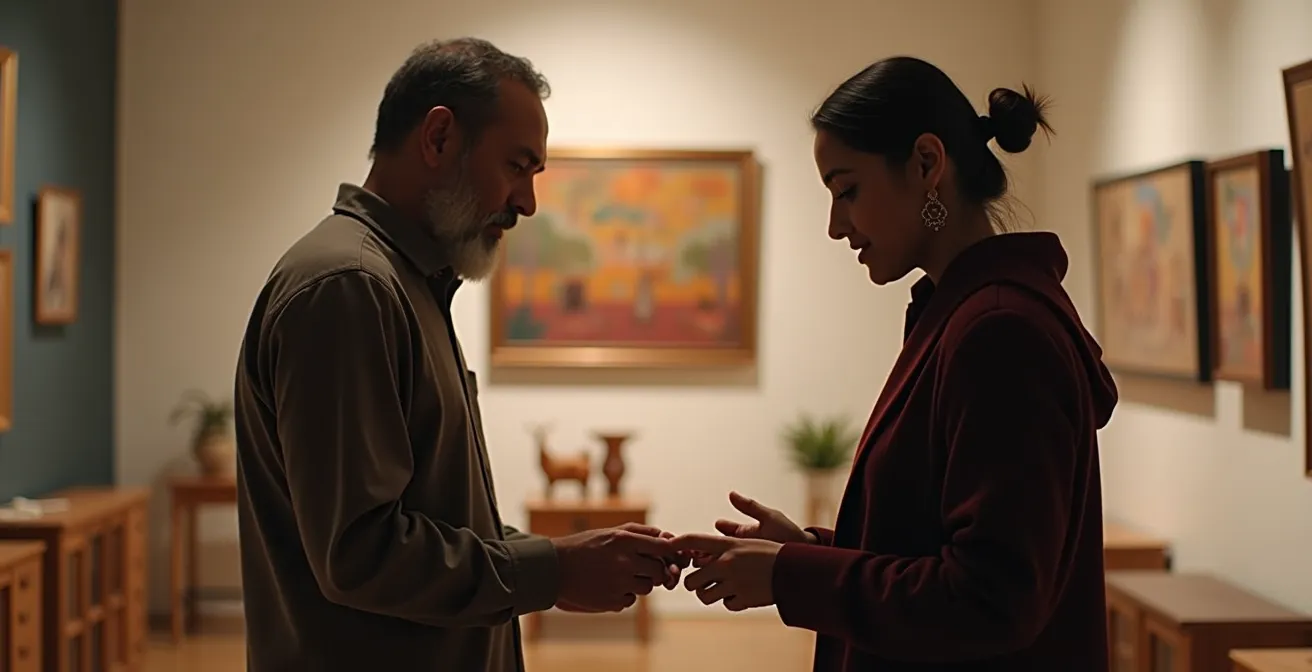
To foster a respectful dialogue, consider the following guidelines:
- Never haggle over the price. It reflects lived experience and ancestral knowledge.
- Never ask, “How much Indigenous are you?” Identity is personal and political.
- Ask, “What story does this piece share?” instead of “How long did this take to make?”
- Ask, “What does this symbol mean to you and your community?” to show genuine interest.
- Always ask for permission before photographing the artist or their work at events.
The “Vintage” Mistake That Costs You New Retail Prices
A common pitfall for new collectors is the misidentification of historical artifacts versus contemporary art. You might come across a beautiful, seemingly old piece at a flea market or antique shop, believing you’ve found a “vintage” bargain. This assumption can be a costly mistake, both financially and ethically. True historical or ancestral objects—pieces made in the 18th or 19th centuries, for example—are exceptionally rare and have a distinct status. Their place is often not in a private collection, but in a museum or a Nation’s cultural centre where they can be preserved and studied. Their value is historical, not commercial, and their sale on the open market is fraught with complex legal and ethical issues related to repatriation.
Institutions like Toronto’s Royal Ontario Museum (ROM) and the Art Gallery of Ontario (AGO) have specific protocols for acquiring such pieces. For example, the AGO’s acquisition of an Anishnaabe Gunstock Club from the early 1800s was a major event. In 2002, this became the gallery’s first major acquisition of Ontario’s First Nations heritage, highlighting its significance as a piece of cultural history rather than a decorative item. Attempting to buy or sell such items privately is a domain for highly specialized experts and institutions, not the average collector.
The “mistake” is confusing these historical items with the vibrant market for contemporary Indigenous art. The beautiful sculptures, paintings, and beadwork you find in reputable galleries today are new works made by living artists. They are intended for the art market. Their value is determined by the artist’s skill, reputation, and the principles of contemporary art pricing. Paying a high price for an unverified “antique” at a flea market is often just paying a new retail price for an item of questionable origin, or worse, participating in the illicit trade of cultural property. Focus your efforts and your budget on supporting living artists through legitimate channels.
Key Takeaways
- Ethical buying is an act of economic reconciliation, not just a transaction.
- Authenticity is rooted in the artist’s identity and story, not a generic label.
- Practice “relational due diligence” by asking respectful questions about the art’s narrative and the gallery’s artist relationships.
How to Support Indigenous Cultural Centers Beyond Buying Art?
Embracing a relational approach to Indigenous art ultimately leads beyond the transaction. While purchasing art is a vital form of direct support for an artist, a true ally and conscientious collector understands that the art emerges from a broader cultural ecosystem. Supporting the institutions that nurture and sustain that ecosystem is a powerful way to deepen your impact. In Toronto, organizations like the Native Canadian Centre of Toronto (NCCT) and Toronto Council Fire Native Cultural Centre are pillars of the community, providing essential services, cultural programming, and a space for artists to connect and create.
Your support does not always have to be financial. Amplifying the voices of these organizations on social media, attending their public events, and educating yourself through their programs are invaluable contributions. For example, the NCCT offers tours that highlight the city’s Indigenous history and public art, with a recommended donation of just $2–$5. Participating in such an experience enriches your own understanding while showing solidarity. These centers often host non-commercial events like lectures, film screenings, and community feasts that are open to the public and offer a chance to engage with the community outside of a retail context.
For those with the means, becoming a member, sponsoring a specific program like a youth beading workshop, or making a direct donation provides the resources these centers need to continue their crucial work. By investing in the cultural infrastructure, you help ensure that the next generation of artists has the support and community they need to thrive. This holistic support is the ultimate expression of an ethical and respectful engagement with Indigenous culture.
- Become a member of the Native Canadian Centre of Toronto (NCCT) for workshop and event access.
- Contact NCCT or Toronto Council Fire to sponsor specific programs.
- Follow and share posts from @nccto and @councilfire on social media.
- Attend non-commercial events like lectures, film screenings, and community feasts.
- Participate in the annual Indigenous History Month Celebration at Yonge-Dundas Square.
Your journey as a collector of Indigenous art is an opportunity for profound learning and connection. By applying these principles of ethical engagement, you can build a collection that is not only beautiful but also meaningful, respectful, and a genuine force for good. The next step is to begin your own journey of relational due diligence by visiting a reputable gallery or cultural center.