Iconic Places & Monuments
Toronto’s skyline and streets tell a compelling story through their landmarks—structures that have evolved from practical necessities into symbols recognized worldwide. From the soaring CN Tower that dominates the cityscape to the meticulously preserved Victorian-era buildings of the Distillery District, these iconic places offer more than photo opportunities. They serve as entry points into understanding Toronto’s identity, balancing its rapid modernization with deliberate historical preservation.
Whether you’re drawn to architectural marvels, panoramic observation decks, or atmospheric heritage sites, Toronto’s landmarks cater to diverse interests. This article unpacks what makes these places genuinely valuable to visit, how to navigate the practical challenges of crowds and timing, and why certain spots have captured the imagination of both locals and visitors. You’ll gain the foundational knowledge needed to make informed decisions about which landmarks align with your interests and how to experience them at their best.
What Makes Toronto’s Landmarks Worth Your Time
The value of visiting Toronto’s iconic places extends beyond their Instagram potential. These sites function as cultural touchstones that help orient both newcomers and long-time residents within the city’s narrative.
The CN Tower’s Enduring Appeal
Standing at 553 meters, the CN Tower remains Toronto’s most recognizable structure, despite no longer holding its record as the world’s tallest freestanding building. Its observation decks offer unobstructed views across Lake Ontario, the Toronto Islands, and on exceptionally clear days, the mist from Niagara Falls nearly 130 kilometers away. The experience combines vertiginous glass floor sections, rotating dining options, and educational exhibits about the tower’s engineering.
What’s often overlooked is the tower’s role as a functional broadcast antenna—its original purpose still serves Toronto’s communications infrastructure. This dual identity as both working technology and tourist destination makes it a particularly honest example of form meeting function, unlike purely decorative monuments.
Heritage Preservation as Living Experience
The Distillery District represents a different value proposition entirely. This collection of Victorian-era industrial buildings, originally home to the Gooderham and Worts Distillery, has been transformed into a pedestrian-only village of galleries, boutiques, and restaurants. The preservation effort here wasn’t about freezing the site in amber, but rather finding economically sustainable uses for heritage architecture.
Walking the cobblestone streets provides tangible connection to Toronto’s 19th-century industrial past—something increasingly rare in a city that has aggressively demolished much of its older building stock. The contrast between the weathered brick exteriors and contemporary art installations inside creates a dialogue between eras that feels authentic rather than manufactured.
Strategic Planning: Timing, Booking, and Crowds
Toronto’s most popular landmarks attract millions of visitors annually, making strategic planning essential for a quality experience rather than a frustrating one.
Understanding Advance Booking Necessities
The CN Tower operates on a timed-entry system during peak seasons and weekends. Booking ahead isn’t merely recommended—it often determines whether you’ll access the observation decks at all during your preferred timeframe. Last-minute walk-ups frequently face hours-long waits or sold-out time slots, particularly during summer weekends and holiday periods.
For dining at the 360 Restaurant, reservations typically open several weeks in advance and fill quickly for sunset dining times. The trade-off here is calculated: restaurant guests receive complimentary observation deck access, potentially offsetting the premium meal cost if you were planning to visit the deck anyway.
Crowd Avoidance Strategies That Actually Work
Popular spots like the Toronto Sign at Nathan Phillips Square experience predictable crowd patterns. Weekday mornings before the lunch rush offer the clearest access, while weekend afternoons become nearly impossible for unobstructed photos. The sign’s viral social media presence has intensified competition for that perfect shot.
For the Toronto Islands, the ferry ride itself becomes part of the experience, but summer weekend sailings can mean 45-minute queues at the Jack Layton Ferry Terminal. Weekday departures, or even evening ferries during extended summer hours, transform the journey from a crowded commute into a leisurely voyage with space to move around the deck and secure optimal viewing positions.
Weather Considerations for Visibility
Toronto’s weather dramatically affects landmark experiences in ways that booking systems don’t always account for. The CN Tower’s observation decks remain accessible during poor weather, but fog, heavy rain, or smog can reduce visibility to nearly zero—rendering the expensive ticket essentially worthless for views.
Lake Ontario’s influence creates microclimates where downtown can be clear while the waterfront experiences dense fog. Checking current conditions from the tower’s webcams before departing for your timed entry can save a disappointing visit. Most operators don’t offer weather-related refunds, making this advance checking crucial.
Photography and the Perfect Light
Toronto’s landmarks offer distinct photographic opportunities that change dramatically based on timing, positioning, and atmospheric conditions.
Observation Deck Photography Challenges
The CN Tower’s observation levels present specific technical challenges. The glass barriers, while necessary for safety, create reflections that plague photographers, particularly during bright daylight. Pressing your lens directly against the glass helps minimize this, though you’ll compete with other visitors for prime window positions.
The SkyPod level, reached by a second elevator, offers 360-degree perspectives from 447 meters up. This height actually works against traditional cityscape photography—you’re often too high for compelling building details but not high enough for the abstraction that aerial photography provides. The sweet spot is late afternoon when angled sunlight creates shadow definition across the urban grid below.
Golden Hour at Heritage Sites
The Distillery District’s red brick buildings and cobblestone streets achieve their most photogenic character during golden hour—the hour following sunrise or preceding sunset. The warm light enhances the terracotta tones of the brick and creates long shadows that emphasize the architectural details often washed out in harsh midday sun.
Union Station’s Great Hall presents different lighting dynamics. The massive arched windows on the east and west ends flood the space with natural light during morning and evening respectively, illuminating the Tennessee marble floors and vaulted ceiling. Midday light becomes more diffused, creating even exposure but less dramatic contrast.
Architectural Significance and Preservation Stories
Understanding the architectural context and preservation efforts behind Toronto’s landmarks adds depth to what might otherwise feel like superficial tourism.
Union Station’s Beaux-Arts Grandeur
Union Station, completed in the early 20th century, exemplifies Beaux-Arts design with its symmetrical composition, classical columns, and emphasis on monumental scale. The Great Hall’s ceiling reaches 25 meters high, creating a cathedral-like space for what is fundamentally a transportation hub.
The famous meeting clock, a four-faced timepiece suspended in the Great Hall, has served as Toronto’s most reliable rendezvous point for generations. This simple functional element has acquired cultural significance through accumulated human stories—proposals, reunions, farewells—all oriented around this bronze and glass fixture.
The Preservation vs. Modernization Tension
Toronto’s approach to heritage preservation remains contentious. While the Distillery District represents successful adaptive reuse, countless other heritage structures have been demolished to make way for condominium towers. This creates a city where historical and modern landmarks exist in sharp contrast rather than gradual transition.
Walking tours that deliberately contrast old and new—perhaps starting at Union Station, passing through the Financial District’s towers, and ending in the Distillery District—make this tension tangible. You’re experiencing urban planning philosophy through your feet rather than abstract policy discussions.
Romantic Settings and Special Occasions
Certain Toronto landmarks have developed reputations as romantic destinations, though the reality requires more nuanced understanding than promotional materials suggest.
Sunset Proposals and Their Logistics
The Toronto Islands offer multiple settings for sunset proposals, with Ward’s Island providing quieter, more intimate beachfront locations compared to the busier Centre Island. The ferry ride back to the city, with downtown’s lights reflecting across the harbor, adds a memorable coda to the moment.
However, outdoor proposals face practical challenges. Late spring and summer bring mosquitoes that can make lingering uncomfortable. Wind off Lake Ontario, even during warm months, necessitates layers that might conflict with carefully planned outfits. These aren’t deal-breakers, but they require acknowledgment in planning.
Comparing Casual and Upscale Viewing Experiences
The CN Tower’s 360 Restaurant offers white-tablecloth dining with revolving views, completing a full rotation every 72 minutes. This upscale experience contrasts sharply with casual options like the Harbour Castle’s waterfront terrace or Tommy Thompson Park’s naturalized shoreline.
Neither approach is inherently superior—they serve different occasions and budgets. The restaurant provides climate-controlled comfort and formal service but restricts mobility and spontaneity. Ground-level waterfront spots offer freedom to move, change vantage points, and extend or shorten the experience as desired, though weather becomes a dominant factor.
Practical Visitor Considerations
Successful landmark visits often hinge on unglamorous practical details that promotional materials ignore.
Footwear and Physical Comfort
The Distillery District’s cobblestone streets, while atmospheric, become genuinely uncomfortable in inappropriate footwear. High heels create stability issues on uneven surfaces, while thin-soled shoes transmit every stone directly to your feet. Supportive walking shoes aren’t just recommended—they determine whether you’ll explore thoroughly or cut the visit short due to discomfort.
Self-guided walking tours connecting multiple downtown landmarks might cover 5-7 kilometers depending on routing. Union Station to the Distillery District alone spans roughly 2 kilometers, much of it without shaded rest areas during summer.
Alternative Transportation Options
While most visitors default to walking or using the TTC subway system, the Distillery District is also accessible via the 514 Cherry streetcar, which provides a more scenic approach than emerging from an underground station. Biking via Toronto’s expanding cycle network offers another perspective, though secure parking facilities at major landmarks remain inconsistent.
Acoustic Challenges in Grand Spaces
Union Station’s Great Hall, despite its visual beauty, suffers from significant acoustic issues. The hard marble surfaces and vast volume create echo and reverberation that make conversation difficult during busy periods. PA announcements become intelligible only if you’re directly beneath a speaker. This same quality that makes the space feel grand also makes it functionally challenging for its purpose as a communication hub.
Seasonal Events and Special Programming
Toronto’s landmarks extend beyond static architecture to host events that add layers of experience.
Union Station regularly features pop-up installations in the Great Hall—everything from art exhibits to seasonal markets. These temporary additions activate the space beyond its transportation function, though they can also obstruct the architectural views and sightlines that visitors come to photograph.
The Toronto Islands serve as prime territory for viewing Canada Day fireworks, with unobstructed harbor views framing the downtown skyline. However, this popularity means ferry services become overwhelmed, and return trips can involve hours-long waits. Planning to stay overnight on the islands (at specific designated areas) or accepting a very late return helps manage expectations.
Toronto’s iconic places and monuments reward visitors who invest time in understanding not just what they are, but why they matter to the city’s identity and how to experience them beyond surface-level tourism. From the CN Tower’s engineering marvel to the Distillery District’s preservation success story, these landmarks offer multiple entry points for engagement—whether your interests lean toward architecture, history, photography, or simply finding the perfect vantage point to understand Toronto’s geography. The practical considerations around timing, weather, and logistics aren’t obstacles to authentic experience; they’re part of learning to navigate the city as residents do, making informed choices that align expectations with reality.
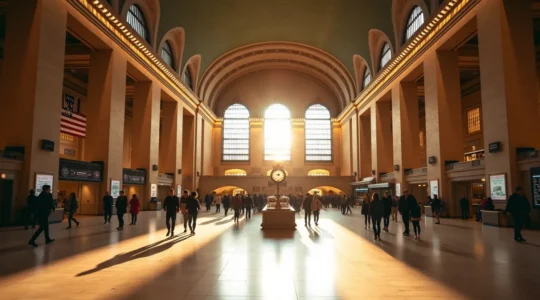
The Great Hall at Union Station: A Guide to Toronto’s Grandest Meeting Place
Union Station’s Great Hall is more than a transit point; it’s Toronto’s civic living room, a space whose architectural grandeur and social rhythms can transform a simple meeting into a memorable urban experience. The hall’s award-winning restored architecture, from its…
Read more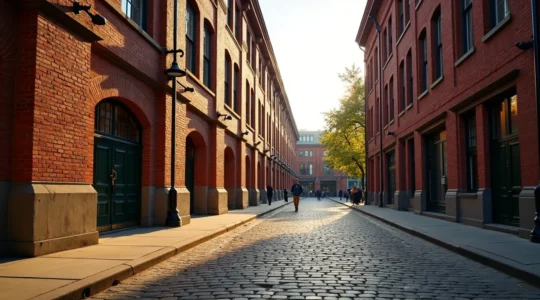
Distillery District Architecture: How to Spot Original Victorian Details on a Walking Tour?
The true marvel of the Distillery District isn’t just its preserved Victorian buildings, but the story they tell through their materials and design—a language of industrial might and masterful renovation. The district’s preservation is a unique North American case study,…
Read more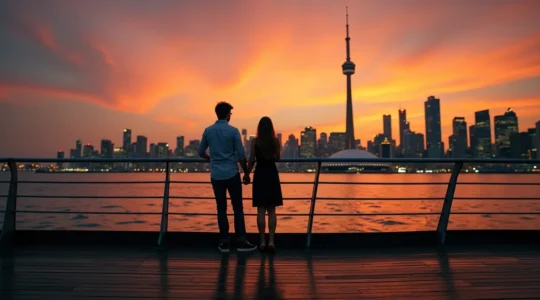
Romantic Dates in Toronto: Where to Find the Most Breathtaking Cityscape Views?
The secret to a breathtaking romantic view in Toronto isn’t finding a new location, but mastering the art of experiential choreography at the classic spots. Success lies in strategic timing (blue hour vs. golden hour) and curating the ambiance of…
Read more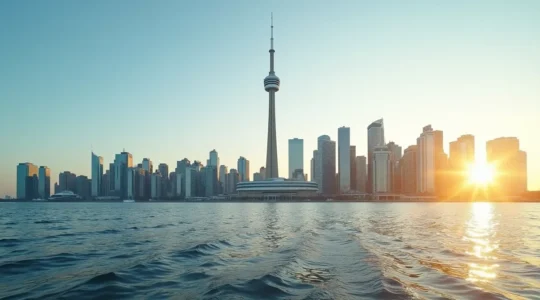
Toronto’s Secret Views: A Photographer’s Guide to Capturing the City for Free
In summary: Discovering Toronto’s best free views requires looking beyond the famous skyline and focusing on architectural details and unique perspectives. Timing is more critical than location; capturing landmarks during blue hour, after rainfall, or on weekdays avoids crowds and…
Read more
Visiting the CN Tower: Is the EdgeWalk Experience Worth $195 CAD?
The $195 EdgeWalk ticket is worth the price, but not just for the thrill; its real value is as a strategic tool that transforms a standard, frustrating tourist visit into a frictionless VIP experience. It grants you priority access, letting…
Read more