
Choosing the right Toronto tour is less about the subject and more about matching the tour’s narrative style to the experience you crave.
- “Free” tours have a hidden cost, while dedicated ghost tours offer vastly different styles of fear, from jump scares to psychological dread.
- A great food tour should be substantial enough to replace a meal, and a local “Greeter” is best for orientation, not deep history.
Recommendation: First, decide on your desired “experience texture”—be it authentic connection, theatrical performance, or in-depth learning—then select the tour that fits, not the other way around.
The paradox of modern travel is the tyranny of choice. You arrive in a vibrant city like Toronto, open a browser to find a walking tour, and are immediately flooded with options on Viator and TripAdvisor. Ghost walks, food tours, history lessons, photo walks—the list is endless, and the reviews, often contradictory. This choice paralysis is real, leaving you wondering which 2-3 hours of your precious vacation time will offer the best return. Most guides will simply categorize tours by topic, but this misses the point.
The secret to navigating Toronto’s tour landscape isn’t about choosing between food and ghosts. It’s about understanding the narrative DNA of each experience. Are you looking for a polished, theatrical performance filled with jump scares, or a gritty, true-crime story in a historic setting? Do you want a meal-on-the-go that serves as dinner, or a series of small, artisanal bites? Do you crave an authentic, one-on-one chat with a local about transit cards and coffee shops, or a deep, academic dive into Victorian architecture?
This guide moves beyond the brochure descriptions to act as your personal tour curator. We will deconstruct the most popular tour formats to help you identify their underlying experience. By focusing on the *style* of storytelling and the *quality* of the engagement, you can confidently select the walk that doesn’t just show you Toronto, but lets you experience it in a way that truly resonates with your travel style. Forget the star ratings for a moment; let’s find the tour that tells the story you want to hear.
To help you curate the perfect urban exploration, this guide breaks down the critical decisions and hidden gems of Toronto’s walking tour scene. From the real economics of “free” tours to the specific architectural details you can spot on your own, you’ll gain the framework to choose with confidence.
Summary: A Curator’s Guide to Toronto Guided Tours
- Why “Free” Walking Tours Actually Cost You $15 in Tips?
- Original Haunted Walk vs. Distillery Ghost Tour: Which Is Scarier?
- How to ensure Your Food Tour Replaces a Full Dinner?
- The Booking Mistake That Ruins Tours on Rainy Days
- When to Book a “Greeter” Program for a Free Local Friend?
- How to Find the Secret Prohibition Tunnel Entrances?
- How to Plan a DIY Photo Walk from Spadina to Portland Street?
- Distillery District Architecture: How to Spot Original Victorian Details on a Walking Tour?
Why “Free” Walking Tours Actually Cost You $15 in Tips?
The allure of a “free” walking tour is powerful, but it’s crucial to understand the model before you book. These tours operate on a tip-based system, which means “free” is a misnomer; “pay-what-you-feel” is more accurate. In a city like Toronto, the social expectation for a quality experience is clear. Research shows that for free walking tours in major cities, most tour participants tend to tip between $10-15 USD per person. For a couple or a family of four, this “free” tour can quickly approach the cost of a pre-paid ticketed tour, but with less certainty about the quality.
Furthermore, the economics for the guide are often challenging. Many guides must pay a marketing or platform fee (sometimes $3-5 per person who shows up) to the company that organizes the tour. This means they start their tour in debt and rely entirely on your generosity to make a living. While this can incentivize fantastic performances, it can also create a pressure to entertain rather than educate and may lead to very large, impersonal group sizes to maximize potential earnings.
The discerning choice isn’t to avoid these tours, but to evaluate them consciously. Compare the expected tip for your group against the price of a paid tour, which often guarantees a smaller group size and a more structured itinerary. For a truly free, non-transactional experience focused on cultural exchange, consider the city’s official Toronto Greeter program, where passionate volunteers show you their neighbourhood with absolutely no tipping involved. It offers a different kind of value—a genuine connection over a polished script.
Original Haunted Walk vs. Distillery Ghost Tour: Which Is Scarier?
In Toronto, not all ghost tours are created equal. The choice between the two most popular options—the Original Haunted Walk and the Distillery District Ghost Tour—is a perfect example of matching a tour’s “narrative DNA” to your personal taste in fear. The question isn’t just “which is scarier?” but “what *kind* of scary are you looking for?” It’s a decision between classic theatrical horror and atmospheric, true-crime dread.
The Original Haunted Walk of Toronto focuses on classic Gothic horror. Over 75 minutes, guides lead you through downtown and near the university campus, sharing spine-tingling tales of haunted theatres, unsolved mysteries, and terrifying encounters at places like the notoriously haunted Mackenzie House. This experience is built on performance: cloaked guides, dramatic storytelling, and a high potential for jump scares. It’s designed to feel like a live, mobile horror movie.
The Distillery Ghost Tour, by contrast, leans into psychological horror rooted in the district’s grim industrial past. The setting itself—imposing Victorian industrial buildings and cobblestone lanes—is the main character. The stories are less about ghosts and more about the grisly reality of 19th-century factory life, focusing on industrial accidents, cholera outbreaks, and the desperate lives of the workers. The fear here is more atmospheric and historical, a slow-burn dread rather than a sudden fright.
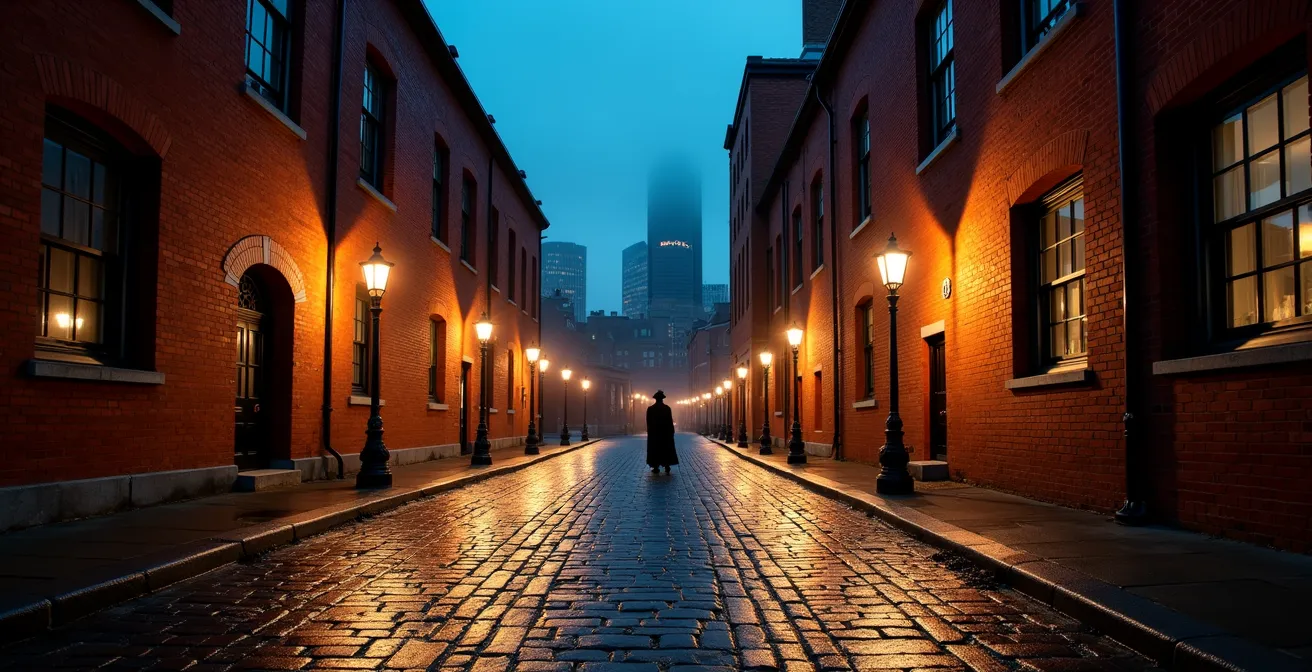
The best choice depends entirely on your preference. If you want theatrical ghost stories and the thrill of a jump scare, the Original Haunted Walk is your ticket. If you’re fascinated by dark history and prefer a more subtle, psychological atmosphere, the Distillery District’s true tales of woe will be far more chilling.
This table breaks down the distinct horror profiles of Toronto’s top ghost tours, helping you curate your ideal evening of frights. As a local tourism report highlights, the choice depends on whether you seek classic ghost stories or industrial-era dread.
| Tour Aspect | Original Haunted Walk | Distillery Ghost Tour |
|---|---|---|
| Horror Style | Classic Gothic Horror | Psychological/True Crime |
| Duration | 75 minutes | 60-90 minutes |
| Setting | Downtown/UofT Campus | Victorian Industrial Buildings |
| Scare Score | 8/10 | 6/10 |
| History Score | 6/10 | 8/10 |
| Best For | Jump scares & ghost stories | Industrial accidents & cholera tales |
How to ensure Your Food Tour Replaces a Full Dinner?
A food tour can be one of the most efficient and enjoyable ways to experience a city’s culture, but its value proposition hinges on a key question: is it a snack or a meal? For the visitor looking to maximize their time and budget, a tour that doubles as a full, satisfying dinner is the ultimate prize. Simply booking a “food tour” isn’t enough; you must become a curator, scrutinizing the details to gauge its “Return on Time” and substance.
The first clue is the number and type of stops. A tour advertising 3-4 “bites” is likely a series of appetizers. Look for tours that explicitly mention 5-7 “substantial tastings.” Next, apply the “Protein & Carb Test.” A tour that includes a butcher, a bakery, a fromagerie, or a pasta spot is far more likely to be filling than one focused solely on chocolates or ice cream. The neighbourhood is also a major indicator. In Toronto, a Kensington Market tour might feature hearty Jamaican patties and Tibetan momos, while a tour of the iconic St. Lawrence Market is almost guaranteed to include a famous peameal bacon sandwich—a meal in itself.
The 200-year-old St. Lawrence Market, rated one of the world’s best, is a hub for Toronto’s food traditions. Companies like The Culinary Adventure Co. guide visitors through its 120+ vendors, arranging tastings of uniquely Canadian dishes like Montreal-style bagels, local Ontario cheeses, and butter tarts. The duration and timing are also critical. A 3-hour tour starting at 5 p.m. is structurally designed to be a dinner experience, whereas a 90-minute tour at 2 p.m. is not. When in doubt, email the company directly and ask: “Is this tour substantial enough to replace dinner?” A confident “yes” is a very good sign.
The Booking Mistake That Ruins Tours on Rainy Days
Nothing dampens the spirit of a walking tour faster than an unexpected downpour. The most common booking mistake visitors make in Toronto is failing to consider a tour’s “weather-resilience.” Choosing an itinerary without any indoor component or flexibility is a gamble, especially during the summer months when afternoon thunderstorms are common. A discerning traveler doesn’t just hope for good weather; they plan for the reality of it.
The key is to analyze a tour’s indoor-to-outdoor ratio before you book. Tours that are 100% outdoors, like those focused on the waterfront or vast parks like High Park, offer zero shelter and can become miserable experiences in the rain. Instead, look for tours that naturally integrate indoor stops. A history tour of Old Town Toronto that includes a lengthy visit inside St. Lawrence Market, or a Queen West art walk that pops into a gallery or two, provides built-in rain breaks that save the day.
Toronto has a unique secret weapon against bad weather: the PATH. As the world’s longest underground shopping network, the PATH is a climate-controlled web of tunnels connecting major downtown buildings. An official report notes that Toronto’s PATH connects over 70 buildings, creating a city beneath the city. A savvy downtown history tour can leverage this system, moving between landmarks underground, keeping guests dry and comfortable. Before booking any downtown tour, check if it utilizes the PATH on rainy days.
Finally, look for flexibility in booking policies. Smaller, local companies are often more accommodating than large international platforms. Many Toronto-based operators allow for day-of rebooking or offer credits if the weather turns severe. This flexibility is a hallmark of a quality, customer-focused operation. Don’t let a rainy day wash out your plans; book a tour with a smart itinerary that’s prepared for anything.
When to Book a “Greeter” Program for a Free Local Friend?
In the world of urban exploration, there’s a unique and often overlooked option that provides an unparalleled level of authentic connection: the Toronto Greeter Program. This isn’t a tour in the traditional sense; it’s a cultural exchange. Understanding when to choose a volunteer Greeter over a professional guide is key to curating the perfect start to your Toronto visit. The Greeter is your “day one” friend, not your history professor.
The program pairs you with a passionate local volunteer who shares their love for their neighbourhood with you for a few hours. There is no script, no fee, and absolutely no tipping. A Greeter excels at answering the practical, everyday questions that professional guides often bypass: “How does the PRESTO transit card work?”, “Where’s the best non-touristy coffee shop?”, or “I love indie comics, where should I go on Queen West?” It’s an informal, conversational experience, often one-on-one, designed to orient you and make you feel welcome.
Conversely, a professional paid guide is an expert in their subject matter. Their role is to deliver a polished, fact-checked narrative on a specific topic like architecture, history, or food. They are storytellers and educators operating on a structured itinerary for a group. You choose a paid guide for deep knowledge and historical accuracy, not for help with your transit pass. The “experience texture” is entirely different: one is a performance, the other is a conversation.

The decision of when to book which service is critical. Book a Greeter for your first or second day in the city for an invaluable, friendly orientation. Book a paid guide for later in your trip when you want to dive deep into a subject that has caught your interest. Using each for its intended purpose ensures you get the best of both worlds: authentic local connection and expert-led storytelling.
This comparative table clarifies the ideal use case for each type of guide, helping you decide whether you need a local friend or a historical expert.
| Your Need | Choose Greeter | Choose Paid Guide |
|---|---|---|
| First day orientation | ✓ Perfect for practical tips | ✗ Too detailed for overview |
| Transit help | ✓ PRESTO card guidance | ✗ Assumes you know basics |
| Historical accuracy | ✗ Passionate but not expert | ✓ Licensed professionals |
| Niche interests | ✓ Indie shops, local scenes | ✓ Tourist-focused routes |
| Group size | ✓ One-on-one possible | ✗ Usually 10+ people |
How to Find the Secret Prohibition Tunnel Entrances?
The story of Prohibition in Toronto is a captivating tale of legal loopholes, bootlegging, and hidden infrastructure. During the early 20th century, while alcohol was outlawed in various parts of North America, Toronto’s Gooderham and Worts distillery was legally producing millions of gallons of booze, much of which found its way south. This era has given rise to legends of secret tunnels under the Distillery District used for smuggling spirits. While you can’t actually enter these tunnels today, you can become a historical detective and spot the architectural scars they left behind.
A guided tour, such as the 1.5-hour walk offered by Go Tours Canada, provides the essential backstory. It transports you to the days of the temperance movement and explains how Canada’s alcohol industry thrived during Prohibition. The tour often concludes with a whisky tasting, bringing the history to life. But the real fun for a history enthusiast is training your eye to see the clues hidden in plain sight. These are not marked on any tourist map; they are subtle remnants of a bygone industrial age.
Your hunt for these “secret” entrances should focus on the oldest buildings in the Distillery District. Look for bricked-up archways at ground level along Trinity Street, which were once openings for transport. Near the famous Flatiron Building, search for unusual basement-level doors that have since been converted into windows. The heavy iron manhole covers in the district aren’t for sewers; some mark access points to former industrial transport tunnels. The foundations of the original Stone Distillery are another key area, where you can spot sealed-up loading bay openings in the thick limestone. These are the ghosts of the district’s infrastructure, visible only to those who know where to look. While entry is impossible and not permitted, identifying these architectural remnants connects you to the city’s clandestine past in a uniquely tangible way.
How to Plan a DIY Photo Walk from Spadina to Portland Street?
Sometimes the best tour is the one you curate yourself. For photographers, the stretch of Queen Street West from Spadina Avenue to Portland Street offers a perfect narrative arc, capturing Toronto’s evolution “From Grit to Green.” This DIY photo walk is a journey through the city’s creative soul, from the chaotic energy of Graffiti Alley to the serene expanse of Trinity Bellwoods Park. Planning it correctly, especially around the light, is key to telling a compelling visual story.
The best time to embark is about 90 minutes before sunset. This “golden hour” will provide you with the most dramatic and flattering light. Start at the iconic intersection of Queen and Spadina. Your first goal is to capture the dynamic lines of the streetcars, using a slightly slower shutter speed to create a sense of motion blur against the static urban background. From there, duck into the famous Graffiti Alley (Rush Lane). Here, the setting sun can create beautiful backlit portraits, with the vibrant street art dissolving into a colourful bokeh behind your subject.
As you walk west along Queen, pay attention to the storefronts. The low-angled golden light will catch the west-facing vintage signage and textured brick facades, bringing them to life. This section is a treasure trove of typographic details and the juxtaposition of old and new Toronto. Don’t just stay on Queen Street; explore the smaller lanes that branch off for unique, lesser-known murals and compositions. Your walk culminates at Trinity Bellwoods Park. Position yourself to capture the quintessential Toronto shot: the silhouette of the CN Tower against the vibrant colours of the setting sun, framed by the park’s mature trees. This provides a peaceful, iconic conclusion to your visual journey.
Key Takeaways
- Evaluate “free” tours by calculating the expected tip for your group; it often rivals the cost of a ticketed tour.
- Choose a ghost tour based on your preferred horror style: theatrical jump scares (Haunted Walk) or atmospheric true-crime (Distillery).
- Book a Toronto Greeter for a friendly, practical orientation on your first day, not for an in-depth, professional history lesson.
Distillery District Architecture: How to Spot Original Victorian Details on a Walking Tour?
The Distillery District is more than just a collection of hip boutiques and restaurants; it’s a perfectly preserved time capsule of Victorian industrial architecture. Designated a National Historic Site, the former Gooderham & Worts distillery campus contains over 40 heritage buildings, making it one of the most remarkable sites of its kind in North America. To truly appreciate it, you must learn to read the stories told by its bricks and mortar. A walking tour here, whether guided or self-led, becomes an exercise in spotting the subtle yet significant details of its past.
Your architectural treasure hunt begins by looking up. Notice the brick corbelling near the rooflines of the main buildings—intricate, stepped patterns that served as both decoration and structural support. The windows tell another story; their slightly curved tops, known as segmental arches, are a classic feature of 19th-century warehouse construction, designed to distribute weight efficiently. As you walk, keep an eye out for the original “G&W” medallions embedded in the brickwork, a quality seal from Gooderham & Worts themselves.
The materials used are also a key part of the narrative. The imposing Stone Distillery building is made of massive blocks of Kingston limestone, transported from distant quarries. Most other buildings feature the characteristic deep red bricks from the nearby and now-famous Don Valley Brick Works. The most fascinating details, however, are the “scars” of adaptive reuse. What might look like a modern window could be a former grain chute. The grand entrances to today’s art galleries and cafes were once massive loading bays for horse-drawn carts. Recognizing these transformations allows you to see two timelines at once: the industrial machine of the past and the cultural hub of the present.

Victorian Detail Spotter’s Checklist: Distillery District
- Brick Corbelling: Scan the rooflines for decorative, stepped brickwork patterns.
- Segmental Arches: Identify the slightly curved tops of windows, a hallmark of robust warehouse design.
- G&W Medallions: Hunt for the original Gooderham & Worts quality seals embedded in the brick facades.
- Material sourcing: Distinguish the light-coloured Kingston Limestone of the Stone Distillery from the iconic red Don Valley Bricks used elsewhere.
- Adaptive Reuse Scars: Spot where former industrial features like grain chutes and massive loading bays have been converted into modern windows and doorways.
By learning to see the city through this curated lens—evaluating narrative, assessing value, and spotting hidden details—you empower yourself to move beyond the overwhelming options and confidently choose or create the perfect Toronto exploration for you.