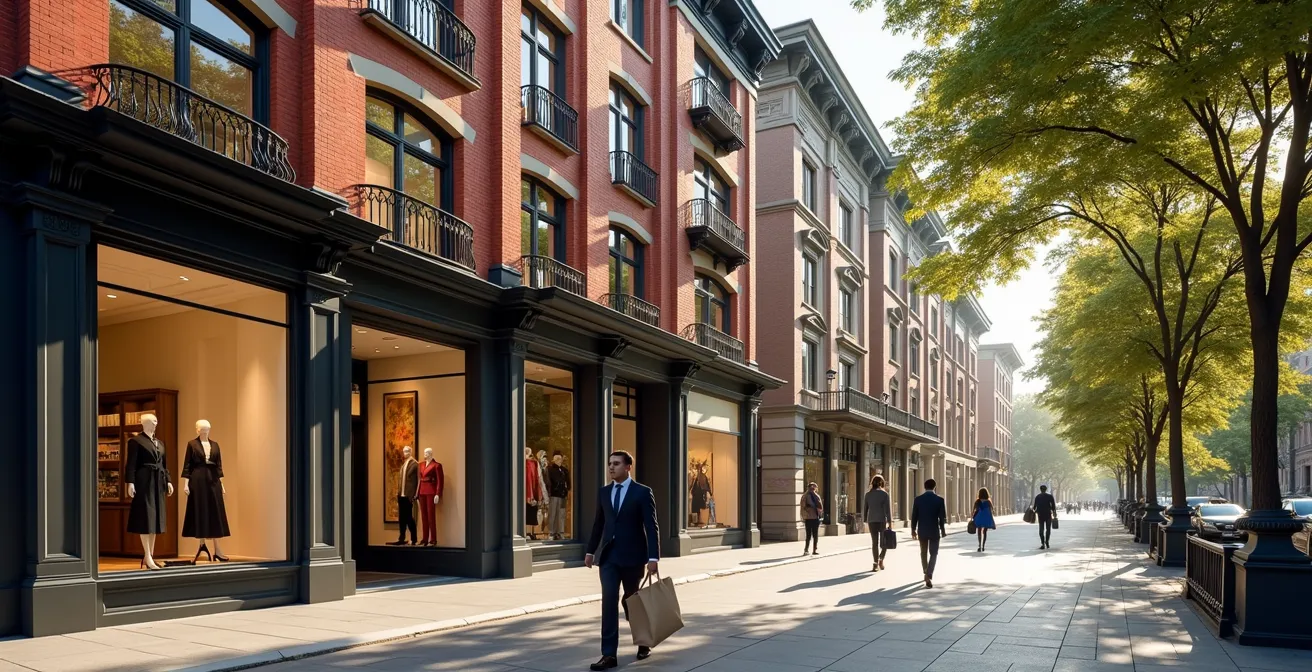
Yorkville’s exclusive luxury experience is not just set against a Victorian backdrop; it is fundamentally created by it, offering an intimacy and sense of discovery that modern malls cannot replicate.
- The district’s high value is driven by “heritage-driven scarcity”—strict preservation laws that limit commercial space and foster exclusivity.
- True luxury lies in the “two-tiered” approach: blending global brands on Bloor Street with the curated, owner-led boutiques hidden on historic side streets.
Recommendation: To fully appreciate Yorkville, treat it as an architectural exploration. Seek out the hidden courtyards and alleyways, where the most unique retail discoveries are made.
To stroll through Yorkville is to witness a paradox. On one hand, the biggest names in global luxury—Chanel, Gucci, Hermès—call out from polished storefronts along Bloor Street. On the other, the quiet, tree-lined avenues of Cumberland and Scollard whisper a different story, one told in the language of preserved Victorian brickwork and intimate, human-scale townhouses. Many visitors see this as a charming setting for a day of high-end consumption, a simple aesthetic choice. This is the common understanding, but it misses the fundamental point.
The conventional approach is to treat Yorkville as a simple list of stores to visit. You might plan a trip to Holt Renfrew, then perhaps a coffee on a patio. But what if the true genius of Yorkville’s luxury experience isn’t found in the brands it houses, but in the very structure of the neighbourhood itself? The secret to truly experiencing Yorkville lies in understanding that its opulence is not merely contained within its Victorian architecture; it is actively forged by it. The tension between historic preservation and the demands of modern commerce has created an unparalleled ecosystem of discovery, intimacy, and exclusivity.
This guide moves beyond the obvious to reveal how the neighbourhood’s history and design dictate its modern luxury. We will explore why these historic homes are so valuable, how to find their hidden secrets, and how to navigate the distinct worlds of global department stores and local boutiques. It’s a masterclass in appreciating not just what you can buy, but where and how you buy it, transforming a shopping trip into a sophisticated cultural exploration of Toronto’s most elite corner.
To help you navigate this unique district, this article breaks down the essential elements of the Yorkville experience. From the economic forces shaping its real estate to the practical tips for celebrity spotting, each section offers a deeper understanding of what makes this neighbourhood a global benchmark for urban luxury.
Summary: A Discerning Guide to Yorkville’s Luxury and Heritage
- Why Yorkville Row Houses Are Among the Most Expensive in Canada?
- How to Find the Hidden Courtyards Behind Cumberland Street?
- Boutique Shopping vs. Department Stores: Which Offers Better Service in Yorkville?
- The Coffee Shop Mistake That Costs $15 CAD for a Latte
- When to Visit Yorkville to Spot Celebrities During TIFF?
- Why Real Estate Prices Vary by 30% Between Neighboring Cultural Districts?
- How to Identify Certified Indigenous Art Galleries in Yorkville?
- Toronto Shopping Guide: How to Balance Mall Brands with Local Boutiques?
Why Yorkville Row Houses Are Among the Most Expensive in Canada?
The staggering property values in Yorkville are not merely a reflection of a desirable Toronto postal code. They are the direct result of a powerful economic principle: heritage-driven scarcity. Unlike modern developments that can expand upwards, Yorkville’s core is governed by strict heritage conservation laws. These regulations protect the Victorian-era row houses, limiting redevelopment and creating an extremely finite supply of commercial and residential space. When global demand meets hyper-limited supply, prices inevitably soar. This scarcity transforms each property from a simple building into a rare cultural artifact.
The data paints a clear picture of this exclusivity. Even in the condo market, which surrounds the historic core, prices are astronomical, with some luxury condo buildings in Yorkville selling for between $1,150 to $2,500 per square foot. This premium is even more pronounced in the historic properties themselves. The real estate market here is a landscape of extremes, with median list prices of $1.3M and a range stretching from $380K to $19.0M. This incredible diversity is fueled by the mixed-use zoning and preservation status, making every square foot a battleground for retailers and residents who want a piece of Canada’s most exclusive neighbourhood.
Ultimately, a Yorkville address signifies more than wealth; it signifies a stake in a preserved, irreplaceable piece of Toronto’s history. This is why a small boutique in a restored row house can command rents comparable to a flagship store in a modern metropolis. The value is not just in the location, but in the architectural intimacy and the protected character that can never be replicated at scale. It is the antithesis of the sprawling suburban mall.
How to Find the Hidden Courtyards Behind Cumberland Street?
The true soul of Yorkville is not found on its main thoroughfares but in the spaces in-between. The neighbourhood’s Victorian layout, with its deep lots and narrow frontages, has created a network of semi-private passages and hidden courtyards. These are the lungs of the district, offering quiet respite and a sense of discovery that is central to the Yorkville experience. Finding them is to unlock a more intimate side of the neighbourhood, far from the traffic of Bloor Street.
Discovering these enclaves requires a deliberate, exploratory mindset. Begin your walk on Cumberland Street and look for the subtle invitations: ornate cast-iron gates nestled between boutiques or narrow passageways that hint at a garden within. These courtyards often house secluded café patios, public art, and serene green spaces, creating a multi-layered environment that rewards the curious visitor. They are the physical manifestation of the neighbourhood’s curated discovery ethos.
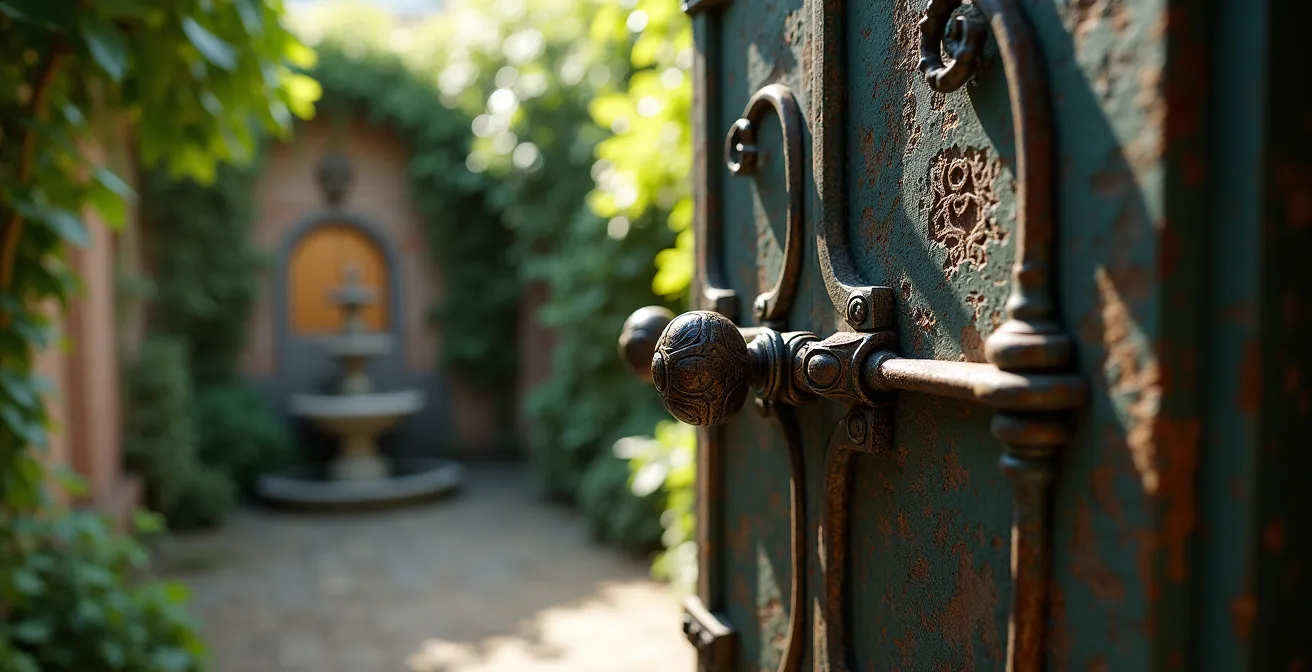
As the image above illustrates, these spaces offer a powerful contrast to the urban energy just steps away. To embark on your own exploration, follow this simple route:
- Start at the Village of Yorkville Park, marked by the iconic “The Rock” landmark at 115 Cumberland Street.
- Walk west along Cumberland, observing the heritage Victorian townhouses that now house luxury shops.
- Keep an eye out for the cast-iron gates and passageways between the storefronts that lead to interior courtyards.
- Visit the Yorkville Village courtyard, which can be accessed through the main shopping complex.
- Explore the famously secluded courtyard behind The Hazelton Hotel at 118 Yorkville Avenue, a true oasis.
Boutique Shopping vs. Department Stores: Which Offers Better Service in Yorkville?
The shopping experience in Yorkville operates on two distinct tiers, each offering a different model of luxury service. On one side, you have the grand department store, Holt Renfrew, a cathedral of global luxury. On the other, the intimate, owner-led boutiques that line the quieter streets. The question of “better” service depends entirely on the shopper’s objective: standardized efficiency or personalized curation.
Department stores like Holt Renfrew excel at providing a seamless, CRM-driven luxury experience. Their personal shoppers have access to an extensive inventory of global brands and can offer perks like in-house spa treatments or access to private shopping suites. It is a highly professional, standardized service designed for efficiency. In contrast, local boutiques offer a level of architectural intimacy and personal connection that larger stores cannot replicate. As the fashion journalist from Streets of Toronto notes when speaking of a local institution:
Over the Rainbow has always been cool. Joel Carman and his family have been running this denim institution since the 1970s, always in Yorkville.
– Streets of Toronto, 10 essential local shops to visit in Yorkville
This longevity and family ownership translate into a service model built on relationships. At boutiques like 119 Corbo or Andrews, service is often provided by the owner or a senior stylist who has personally curated the collection. This allows for deeper styling consultations, the ability to source rare items, and even after-hours appointments. The experience is less transactional and more relational.
The choice between these two models is a core part of the Yorkville strategy. The following table breaks down the key differences for the discerning shopper:
| Aspect | Department Stores (Holt Renfrew) | Local Boutiques (119 Corbo, Andrews) |
|---|---|---|
| Service Model | CRM-driven personal shopping, standardized luxury | Owner-led styling, intimate consultations |
| Product Range | Global luxury brands, extensive inventory | Curated selection, emerging designers |
| Exclusive Perks | In-house spa, salon, private shopping suites | After-hours appointments, direct buyer access |
| Price Range | Premium to ultra-luxury | High-end with occasional sales |
| Customization | Brand-exclusive events, tailoring services | Sourcing rare items, personalized curation |
The Coffee Shop Mistake That Costs $15 CAD for a Latte
In a neighbourhood defined by luxury, it’s easy to assume that the most expensive option is always the best. This is particularly true when it comes to a simple pleasure like a cup of coffee. The common mistake visitors make is defaulting to the opulent lobby bars of five-star hotels like the Four Seasons or The Hazelton. While the ambiance is undeniable, you’re primarily paying a premium for the setting, with a simple latte often exceeding $15 CAD. This is the tourist’s approach, not the connoisseur’s.
The savvy local, however, knows that true quality often comes with a more reasonable price tag. Yorkville is dotted with specialty coffee shops where the focus is on the craft of the beverage, not the prestige of the address. These establishments offer a more authentic neighbourhood experience, allowing you to enjoy a meticulously prepared espresso or pour-over while rubbing shoulders with Yorkville residents. This principle of smart luxury extends beyond coffee to dining, where choosing a prix-fixe lunch at a high-end restaurant can provide a Michelin-quality experience for a fraction of the cost of a dinner reservation.
Navigating this landscape requires a bit of insider knowledge. To avoid the common pitfalls and experience Yorkville’s offerings like a seasoned regular, it is essential to distinguish between atmospheric pricing and genuine value. The following checklist provides a clear path to making more discerning choices for your daily indulgences.
Your Action Plan: Savvy Sips and Bites in Yorkville
- Avoid Hotel Lobbies: Steer clear of hotel bars like those at the Four Seasons and Hazelton Hotel, where coffee is priced primarily for ambiance.
- Seek Specialty Cafés: Visit Goldstruck Coffee on Yorkville Avenue for expertly roasted beans and a local vibe at fair prices.
- Explore Park-Facing Options: Try S’Cream Ice Cream + Coffee, which faces the Village of Yorkville Park, for a quality brew with a great view.
- Scour Side Streets: Check out the independent cafés on Cumberland Street, where a quality espresso can typically be found for under $6.
- Apply Logic to Dining: Opt for prix-fixe lunch menus at top-tier restaurants like Alobar to enjoy world-class cuisine at a more accessible price point than dinner.
When to Visit Yorkville to Spot Celebrities During TIFF?
During the Toronto International Film Festival (TIFF) each September, Yorkville transforms from a luxury district into the unofficial epicentre of Hollywood North. While celebrity sightings are never guaranteed, understanding the rhythm and geography of the festival within the neighbourhood dramatically increases your chances. It’s not about luck; it’s about strategy and knowing the celebrity movement ecosystem that takes over the area.
Celebrities, publicists, and media outlets operate within a highly concentrated circuit. The luxury hotels—specifically The Hazelton, Four Seasons, and Park Hyatt—serve as the home bases for A-listers. These are the locations for press junkets, private meetings, and moments of rest between premieres. The Writers Room Bar at the Park Hyatt, for instance, is legendary for its star-studded clientele during the festival; in 2024, the bar attracted Angelina Jolie, Brad Pitt, Charlize Theron, and Jennifer Aniston. Restaurants like Sassafraz on Cumberland Street become de facto commissaries, having hosted everyone from Denzel Washington to Meg Ryan over the years.
Timing is everything. The highest concentration of stars occurs during the first weekend of the festival. The best times for spotting are not necessarily on the red carpet, but during the transitional moments. Midday is prime time for junkets, meaning you might see talent moving between their hotel and a nearby restaurant for a quick lunch. Late nights, after the premieres have concluded, are when post-screening parties take place at Yorkville’s exclusive bars and lounges. For a more casual sighting, position yourself on a restaurant patio along Cumberland Street or Yorkville Avenue in the late afternoon and watch the world—and the stars—go by.
Why Real Estate Prices Vary by 30% Between Neighboring Cultural Districts?
Avenue Road serves as more than just a street in Toronto; it is a stark dividing line between two fundamentally different urban philosophies. To the east lies Yorkville, a dense, vertically-oriented hub of mixed-use commerce and high-rise living. To the west lies The Annex, a historically residential neighbourhood characterized by leafy streets and preserved single-family Victorian and Edwardian homes. This sharp contrast in urban planning is the primary driver behind the significant real estate price variations, which can easily exceed 30% between the two adjacent districts.
Yorkville’s value is propelled by its intense commercial density and the “heritage-driven scarcity” of its protected low-rise core, surrounded by towering luxury condominiums. It is an environment optimized for commerce, tourism, and high-density living. The Annex, while also historically significant, has been preserved with a different goal: maintaining its character as a quiet, family-oriented residential enclave. Its zoning laws have historically prioritized single-family dwellings over commercial or high-rise development, creating a different kind of scarcity—that of a tranquil, low-density lifestyle in the heart of the city.
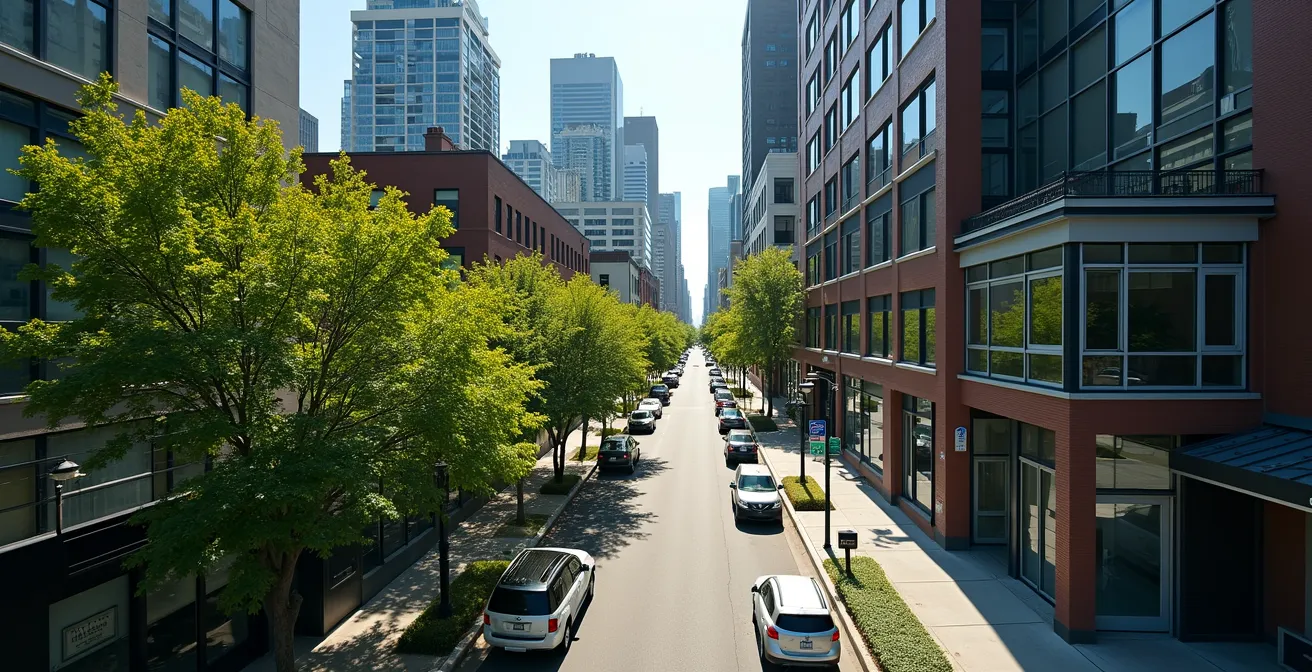
This aerial view powerfully illustrates the divide. On the right, Yorkville’s blend of historic storefronts and modern high-rises creates a dynamic, high-energy landscape. On the left, The Annex’s uniform tree canopy and consistent architectural fabric present an image of stability and residential calm. Consequently, a condominium in Yorkville is priced based on its proximity to global luxury retail and five-star amenities, while a home in The Annex is valued for its space, privacy, and access to a different set of cultural assets like the University of Toronto and independent local businesses. The 30% price gap is not arbitrary; it is the market’s valuation of two entirely different ways of life, coexisting side-by-side.
How to Identify Certified Indigenous Art Galleries in Yorkville?
For the discerning collector, Yorkville offers more than just luxury fashion; it is also home to galleries that feature exquisite Indigenous art. However, navigating this space requires a commitment to ethical and informed purchasing. The market can be confusing, with a critical distinction between authentic, Indigenous-made artwork and pieces that are merely “Indigenous-inspired.” Supporting Indigenous artists and communities means taking the time to verify the provenance and authenticity of each piece.
A truly sophisticated acquisition is one that is not only beautiful but also culturally respectful and economically fair. Authentic galleries are transparent about their relationships with the artists they represent. They should be able to provide detailed artist biographies, information about their community affiliations, and a formal Certificate of Authenticity with any purchase. This documentation is crucial, as it validates the artwork’s origin and ensures the artist is being properly compensated for their cultural and intellectual property. The focus should be on art forms specific to the region, such as the rich traditions of the Anishinaabe or Haudenosaunee peoples of Ontario.
To ensure your investment supports authentic creators, it’s vital to know what to look for and what questions to ask. A reputable gallery will welcome inquiries about provenance and certification as a sign of a serious and respectful buyer. The following points provide a framework for identifying and engaging with certified Indigenous art galleries responsibly:
- Verify Certification: Check if the gallery is a member of a recognized body like the Indigenous Art Centre (IAC) or a similar professional association.
- Request Documentation: Always ask for a Certificate of Authenticity for any artwork you intend to purchase.
- Inquire About the Artist: Look for detailed artist biographies and ask about their specific community affiliations and story.
- Distinguish the Difference: Learn to tell the difference between “Indigenous-made” art (created by an Indigenous artist) and mass-produced “Indigenous-inspired” items.
- Ask About Provenance: A gallery should be able to document the artwork’s history and the story or tradition it represents.
Key Takeaways
- Yorkville’s unique luxury is a direct product of its preserved Victorian architecture, creating scarcity and an intimate shopping scale.
- The most rewarding experience comes from a “two-tiered” strategy: combining visits to global flagships on Bloor with discoveries in local boutiques on side streets.
- True neighbourhood mastery involves looking beyond the storefronts to find hidden courtyards, specialty coffee shops, and authentic cultural spaces.
Toronto Shopping Guide: How to Balance Mall Brands with Local Boutiques?
Yorkville is not just another shopping district; it is a living microcosm of Toronto’s entire retail landscape. It perfectly demonstrates how a shopper can and should develop a two-tiered shopping strategy that balances the pull of major mall brands with the unique charm of local boutiques. The district’s masterfully compact design is its greatest advantage, allowing a seamless transition between these two worlds within a few blocks. This is where Toronto’s urban density becomes a key asset, placing global luxury and local creativity just steps apart.
The strategy is simple in principle. Begin your journey at the anchor points: the large-format stores like Holt Renfrew Centre or the flagship brand boutiques (Gucci, Louis Vuitton) lining Bloor Street. This is where you go for specific, high-demand items—the latest designer handbag, a classic trench coat, or luxury essentials from an international brand. This approach is targeted and efficient. Once that mission is accomplished, the second tier of the experience begins. This involves veering off the main artery and exploring the quieter, more intimate streets like Cumberland and Scollard.
Here, you’ll find the heart of local Toronto style in boutiques like 119 Corbo or the Toronto Designers Market. This is the terrain of curated discovery, where you are more likely to find a statement piece from an emerging Canadian designer or a unique accessory that no one else will have. To help you decide where to focus your time and energy based on your shopping needs, this decision tree offers a practical guide:
| Shopping Need | Go To Mall/Department Store | Go To Local Boutique |
|---|---|---|
| Latest designer handbag | Holt Renfrew, Hermès on Bloor | – |
| Unique Canadian designer piece | – | Toronto Designers Market, Andrews |
| Luxury basics/essentials | Harry Rosen, Max Mara | – |
| Statement/conversation pieces | – | 119 Corbo, Capsule |
| Gift shopping | William Ashley | Local artisan shops on Cumberland |
Embrace this two-tiered approach on your next visit to transform a simple shopping trip into a curated exploration of Toronto’s most dynamic neighbourhood. By understanding that Yorkville’s character is defined by the dialogue between its global flagships and its historic, independent heart, you can craft a truly sophisticated and rewarding experience.