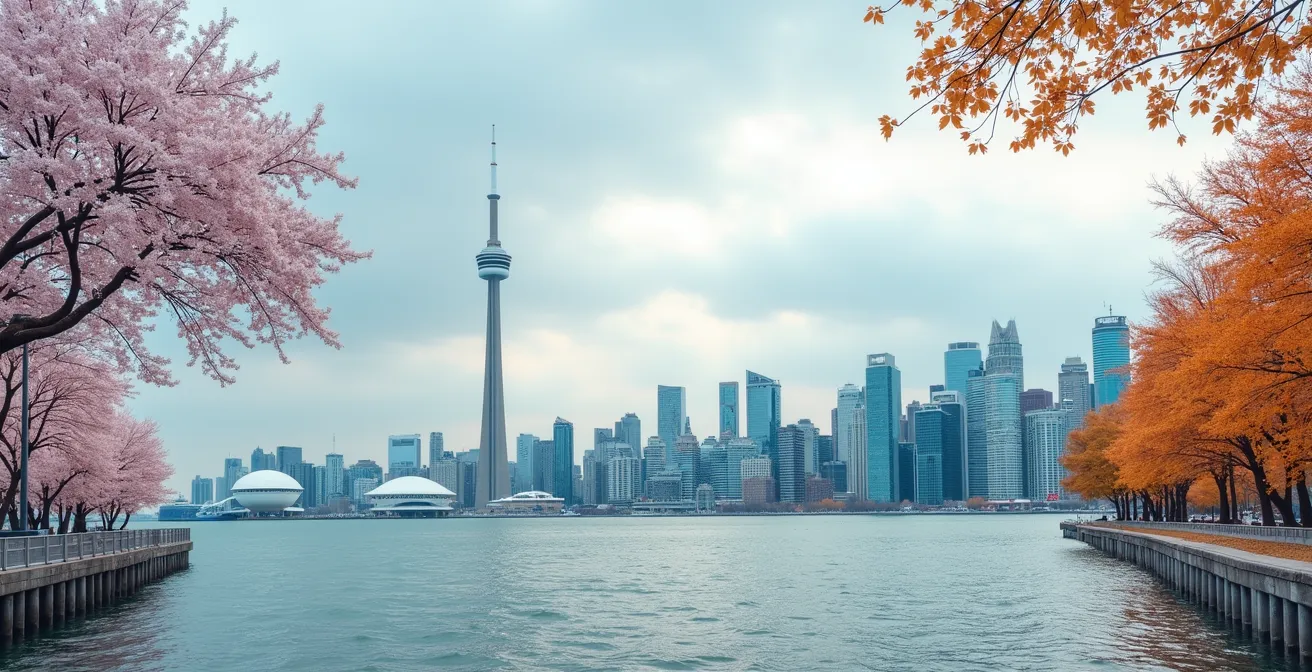
Packing for Toronto is less about the clothes you bring and more about mastering the city’s unique climate psychology.
- Humidity, not just heat, dictates summer comfort. A 30°C day can feel like 40°C due to the humidex.
- Spring and fall feature 15°C daily temperature swings, rendering single outfits obsolete.
- Weather directly impacts logistics, from PATH system navigation in heatwaves to seasonal ferry schedules.
Recommendation: Plan your outfits and activities around the “feels like” temperature and hourly forecasts, not just the daily average.
Packing for Toronto often leaves travelers staring at a suitcase, bewildered. How can one city demand both a swimsuit for a +30°C humidex and a parka for a -20°C wind chill? The standard advice is always the same: “pack layers.” While not wrong, this platitude fails to capture the strategic thinking required to truly thrive in Toronto’s dynamic climate. It overlooks the crucial difference between the number on the thermometer and the actual “perceptual temperature” felt on your skin.
The real challenge isn’t just the range of temperatures, but their nuances. It’s the oppressive summer humidity that makes 30°C feel far hotter than in a dry climate. It’s the “transitional volatility” of spring and fall, where a sunny morning can devolve into a chilly, damp evening within hours. Most travel guides prepare you for the seasons; they don’t prepare you for the climate’s personality.
But what if the key wasn’t just to pack more, but to pack smarter by thinking like a local climate planner? This guide moves beyond generic checklists. We will dissect the “why” behind Toronto’s weather, focusing on the perceptual traps and logistical adaptations necessary for a comfortable trip. You’ll learn not just what to wear, but how to interpret the forecast, understand the city’s seasonal culture, and avoid common weather-related mistakes that catch tourists off guard.
This article provides a strategic framework for mastering Toronto’s climate. By understanding the unique challenges of each season, from summer humidity to winter’s deep freeze, you can plan your trip with confidence, ensuring the weather enhances your experience rather than dictates it.
Summary: A Strategic Guide to Toronto’s Four-Season Climate
- Why 30°C in Toronto Feels Hotter Than Dry Climates?
- How to Dress for May and October When Temps Swing 15 Degrees?
- Summer Patio vs. Winter Chalet: Which Vibe Defines Toronto Better?
- The UV Index Mistake That Burns Tourists in June
- When to Trust the Hourly Forecast Over the Daily Average?
- When to Book Your Summer Stay to Lock in Winter Rates?
- The Ferry Mistake That Can Leave You Stranded on the Island at Night
- Summer Style in the City: How to Stay Cool During a Toronto Heatwave?
Why 30°C in Toronto Feels Hotter Than Dry Climates?
The single most misunderstood aspect of Toronto’s summer is the humidity. A 30°C day in Toronto is not the same as a 30°C day in a dry, arid climate. The culprit is the humidex, a Canadian innovation that combines temperature and humidity into a “feels like” number, which is what your body actually experiences. As a major city on the shores of Lake Ontario, Toronto’s air becomes saturated with moisture during the summer months. This moisture prevents your sweat from evaporating effectively, trapping heat against your skin and making you feel significantly hotter.
This isn’t just a minor inconvenience; it’s a defining feature of the local climate. Data confirms the intensity, showing that Toronto can experience an average of 87% humidity in September, with high levels persisting throughout summer. This sustained dampness is why, as a CBC analysis points out, checking the humidex is a daily ritual for locals. An analysis of the phenomenon reveals how this “perceptual temperature” becomes the true metric for planning your day. It’s common for a 32°C day to have a humidex reading that pushes the perceived temperature into the low 40s, a range considered dangerous for prolonged outdoor activity.
Therefore, your packing strategy must prioritize managing moisture, not just heat. Lightweight cotton might feel nice initially, but it absorbs sweat and stays wet. The better choice is moisture-wicking synthetic fabrics or ultra-light merino wool, which pull perspiration away from the skin to help you cool down. Think of it as dressing for a mild jungle, not a desert. This focus on fabric technology is the first step in adapting your mindset from a tourist to a prepared climate planner.
How to Dress for May and October When Temps Swing 15 Degrees?
Toronto’s “shoulder seasons”—late spring (May) and early fall (October)—present a unique challenge that can be described as transitional volatility. A single day can encompass the weather of two different seasons. It’s not uncommon to start a day in May with a crisp 8°C morning that requires a jacket, only to find yourself sweating in 23°C sunshine by the afternoon. This 15-degree swing makes a single, static outfit impractical and is a classic trap for visitors who pack based on the “average” daily temperature.
The key to navigating this is a modular, adaptable layering system. This goes beyond the simple advice of “bring a sweater.” It’s about building an outfit from components that can be easily added, removed, or reconfigured throughout the day. A successful system allows you to adjust your thermal regulation without needing a complete wardrobe change. This approach ensures you remain comfortable whether you’re exploring a sun-drenched park or caught in a cool evening breeze by the lakefront.
This image demonstrates an effective layering strategy for Toronto’s unpredictable transitional weather.

As you can see, the core of the outfit is a base layer, like a t-shirt. Over that, a mid-layer like a hoodie or zip-up fleece provides easily adjustable warmth. The final piece is a packable outer shell—a windbreaker or light rain jacket—that protects against wind and unexpected showers. This three-part system, combined with accessories like a scarf, allows for multiple combinations to match the conditions of the moment. It’s a proactive approach that anticipates change, rather than just reacting to it.
Summer Patio vs. Winter Chalet: Which Vibe Defines Toronto Better?
Asking whether summer or winter better defines Toronto is like asking which half of a personality is more authentic. The city’s identity isn’t found in one season but in its wholehearted embrace of both extremes—a concept of seasonal immersion. Toronto doesn’t just endure its weather; it builds its social calendar around it. Understanding this duality is key to planning activities that align with the city’s natural rhythm.
In summer, life moves outdoors. The city transforms into a sprawling network of patios, parks, and waterfront pathways. As Fodor’s guide notes, areas like the Harbourfront become magnets for locals and tourists alike, buzzing with energy from morning until late at night. The summer vibe is communal, spontaneous, and expansive. Street festivals, outdoor concerts, and a mass migration to the Toronto Islands define the social landscape. To experience this, you must plan for heat, sun, and crowds, choosing activities that celebrate the long daylight hours.
Conversely, winter triggers a retreat inwards, but not into hibernation. The city’s energy becomes concentrated and cozy. The best example of this is the transformation of the historic Distillery District. While a charming spot in summer, its true magic emerges during the holidays. An article on visiting Toronto highlights how events like the Distillery Winter Village turn the cobblestone streets into a festive, European-style market. The vibe shifts from sprawling patios to intimate, warmly lit pubs, chalets, and indoor gatherings. The winter experience is about seeking warmth, comfort, and festive light in the face of the cold. The true character of Toronto isn’t summer or winter; it’s the enthusiastic cultural shift between the two.
The UV Index Mistake That Burns Tourists in June
One of the most deceptive dangers of a Toronto summer is the UV miscalculation. Many visitors, especially those from warmer, sunnier climates, associate the risk of sunburn only with intense, direct heat. However, Toronto’s northern latitude and the specific angle of the sun in early summer create a potent combination that often catches people by surprise. Even on a seemingly mild or hazy day, the ultraviolet (UV) radiation can be extremely high.
This isn’t an anecdotal warning; it’s a measurable phenomenon. In June, as the summer solstice approaches, the sun is at its highest point in the sky for the year. This direct angle means the sun’s rays travel through less of the Earth’s atmosphere, resulting in a stronger UV dose. Weather data for the city is starkly clear on this point. It reveals that the UV index in Toronto can reach 9 in June, which is categorized as “very high” exposure. At this level, unprotected skin can burn in as little as 15-25 minutes.
The perceptual trap occurs when a cool breeze off Lake Ontario or a bit of cloud cover masks the intensity of the sun. A traveler might feel comfortably cool at 22°C and forgo sunscreen, not realizing the UV rays are penetrating with full force. This is particularly true along the waterfront or on the Toronto Islands, where reflective surfaces like water and sand can amplify UV exposure. A climate-prepared traveler doesn’t rely on the feeling of heat to gauge sun risk. They check the daily UV index as diligently as they check the temperature and apply broad-spectrum sunscreen regardless of how “hot” it feels.
When to Trust the Hourly Forecast Over the Daily Average?
For many destinations, a quick glance at the daily high and low temperature is enough to plan your day. In Toronto, this approach is flawed, especially during the volatile spring and fall seasons. Relying on the daily average can lead to being significantly under or overdressed. The more strategic tool for a visitor is the hourly forecast, which provides a granular view of how the day will actually unfold.
The daily average often masks dramatic intra-day shifts. A forecast might show a pleasant average of 15°C, but the hourly breakdown could reveal a brisk 9°C at 9 a.m. for your morning walk, a peak of 20°C at 3 p.m. for your patio lunch, and a sharp drop to 12°C by 7 p.m. as you head to dinner. The hourly forecast is your script for the day, telling you when you’ll need to add or shed a layer. It empowers you to make proactive decisions, like packing a light jacket for your evening return trip, even if the afternoon sun makes it feel unnecessary.
This level of detail is crucial for planning activities. For example, knowing the wind will pick up and the temperature will drop by 4°C between 4 p.m. and 6 p.m. might influence your decision on when to take the exposed ferry back from the Toronto Islands. It allows for tactical, moment-to-moment adjustments that are the hallmark of an experienced traveler.

As illustrated, modern weather apps provide this hour-by-hour data, making it an indispensable tool. Ignoring it in favor of a single daily high is like trying to navigate the city with a map that only shows the start and end points, without any of the streets in between. A climate planner lives by the hourly breakdown.
When to Book Your Summer Stay to Lock in Winter Rates?
The financial impact of Toronto’s seasonal shifts extends beyond activity planning and into the core of your travel budget: accommodation. Hotel and rental prices fluctuate dramatically based on the season, major events, and demand. The biggest mistake travelers make is waiting until spring to book a summer trip, by which point prices have already surged. A strategic planner understands that the best time to book a high-season stay is during the low-season booking window—typically in the dead of winter.
From January to February, Toronto’s tourism industry is at its quietest. With cold weather and fewer events, hotels are competing for a smaller pool of visitors, resulting in the lowest average rates of the year. This is the prime opportunity to lock in a room for a July or August trip at a fraction of the price you would pay if you booked in May. You are essentially buying your summer accommodation at an “off-season” discount.
This comparative table clearly shows how timing your booking can lead to significant savings. As an analysis of Toronto hotel booking trends demonstrates, waiting for major event schedules like the Toronto International Film Festival (TIFF) to be announced before booking is a costly error, as rates skyrocket immediately.
| Season/Event | Average Rate | Booking Strategy |
|---|---|---|
| Winter (Jan-Feb) | $100-150 | Best rates, book anytime |
| Spring (Apr-May) | $150-200 | Book 2-3 months ahead |
| Summer Regular | $200-300 | Book in winter for best rates |
| TIFF September | $393+ | Book January-February before event schedules |
| Pride June | $300+ | Book by March latest |
| Caribana August | $350+ | Book winter months |
The data from a comprehensive guide to hotel booking reinforces this strategy. For major summer festivals like Caribana in August or Pride in June, booking by January or February is not just advisable; it’s essential to avoid paying peak or surge pricing. This forward-planning approach separates the savvy traveler from the spontaneous one, saving hundreds of dollars that can be reallocated to experiences within the city.
The Ferry Mistake That Can Leave You Stranded on the Island at Night
A trip to the Toronto Islands is a quintessential summer experience, offering stunning skyline views and a peaceful escape from the city’s hustle. However, this idyllic outing can quickly turn into a logistical nightmare if you make a common mistake: assuming the ferry schedule is consistent. The service operates on a highly seasonal schedule that reduces dramatically after Labour Day (the first Monday in September), catching many unsuspecting visitors off guard.
During the peak summer months of July and August, ferries run frequently and late into the evening, with last departures from the islands often around 11:30 p.m. This gives visitors ample time to enjoy a sunset picnic or a late dinner. However, as one travel expert points out, this changes abruptly in the fall. Post-Labour Day, the schedule can be cut back so severely that the last ferry might leave as early as 7:30 p.m. Tourists lingering for a final photo can find themselves with a long wait for the next, much later boat, or in a worst-case scenario, facing limited options to get back to the mainland.
This isn’t the only weather-related risk. Ferry service can be suspended entirely with little notice due to high winds or thick fog, even on a summer day. While water taxis exist as an alternative, they are more expensive and may also cease operations in poor weather or during periods of low demand, particularly on weekday evenings. The only foolproof strategy is a logistical one: check the official City of Toronto Ferry Schedule website on the day of your trip. It’s also wise to take a photo of the posted return times at the ferry terminal when you arrive on the island, as this serves as your most reliable, on-the-ground information.
Key takeaways
- Understand “Perceptual Temperature”: Pack for the humidex in summer and wind chill in winter, not just the thermometer reading.
- Master Transitional Volatility: Use a three-part layering system (base, mid, shell) to adapt to 15°C+ temperature swings in spring and fall.
- Plan for Logistical Adaptation: Your plans must account for weather’s impact on city life, from using the underground PATH system in extremes to verifying seasonal ferry schedules.
Summer Style in the City: How to Stay Cool During a Toronto Heatwave?
Surviving a Toronto heatwave is less about fashion and more about strategic logistical adaptation. When the humidex climbs into the high 30s or low 40s, staying comfortable requires leveraging the city’s infrastructure and carrying a few key items. Your goal is to create personal cooling zones and minimize your exposure to the most oppressive heat and sun.
First, your mobility strategy must change. Long walks in direct sun become draining and dangerous. This is where the city’s transit and underground network become essential. The air-conditioned streetcars, subways, and buses of the TTC (Toronto Transit Commission) are not just for transport; they are mobile cooling stations. Hopping on a streetcar for a 15-minute ride can provide a much-needed respite from the heat. Furthermore, downtown Toronto is home to the PATH, a massive underground pedestrian network connecting major buildings and subway stations. During a heatwave, the PATH is your best friend, allowing you to traverse large sections of the city centre in a climate-controlled environment.
Beyond transportation, your personal gear is critical. Hydration is non-negotiable, so a reusable water bottle is a must-have. The city has numerous public parks and spaces with water fountains for easy refills. Sun protection also becomes paramount, especially a wide-brimmed hat and UV-protective sunglasses for walks along the exposed waterfront. Finally, a packable poncho or small umbrella is wise, as intense summer heat often culminates in sudden, powerful thunderstorms.
Your Toronto Heatwave Survival Checklist
- Carry a reusable water bottle: Refill stations are common throughout the city’s public spaces and parks.
- Keep a PRESTO transit card ready: Use air-conditioned streetcars or subways for cooling breaks between destinations.
- Download a PATH system map: Navigate the downtown core underground to avoid extreme heat and sun.
- Pack UV-protective sunglasses and a wide-brimmed hat: These are essential for walks near the waterfront where there is little shade.
- Include a packable rain poncho: Be prepared for sudden and intense summer thunderstorms that often follow heatwaves.
To put these strategies into practice, your next step is to begin building an adaptable packing list based on these specific climate realities, ensuring you’re prepared for whatever Toronto’s seasons throw at you.
Frequently Asked Questions on Toronto’s Weather and Travel Logistics
What happens to ferry service in bad weather?
High winds or thick fog can lead to full suspension of ferry service even on summer days.
Are water taxis a reliable alternative?
Water taxis are more expensive and may cease operations in bad weather or low demand, especially weekday evenings.
How can I avoid being stranded?
Always check the official City of Toronto Ferry Schedule website on your trip day and photograph posted return times at the terminal.