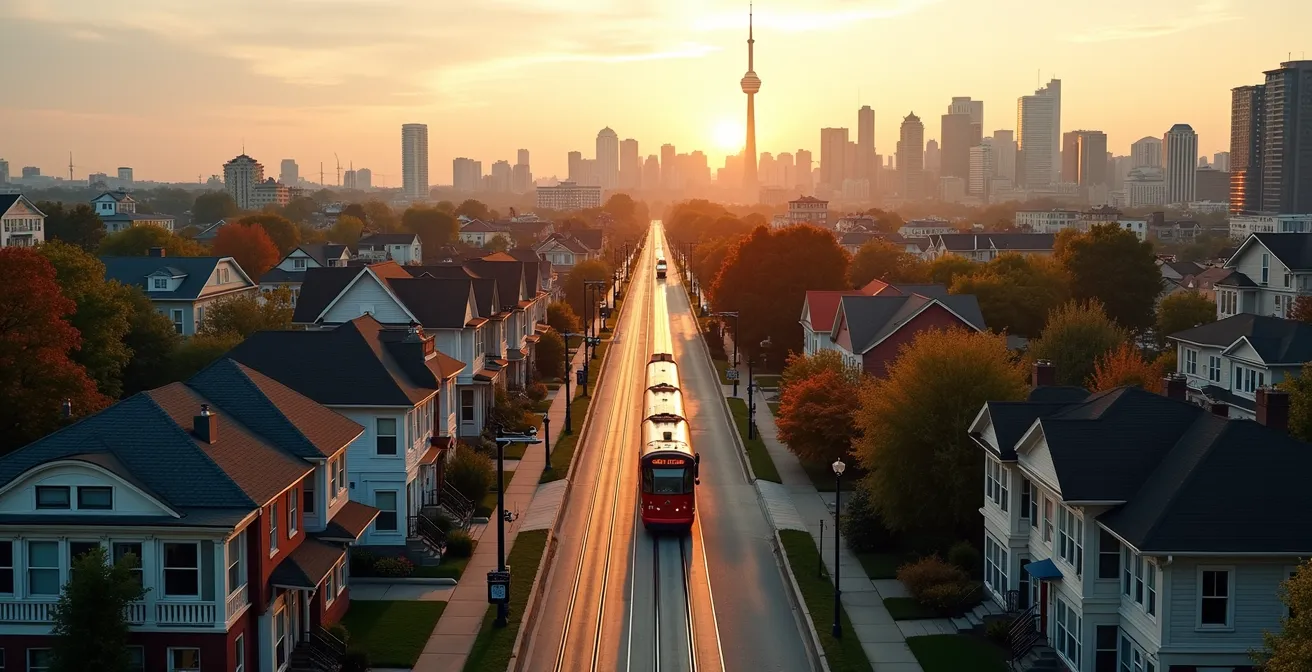
Choosing a Toronto neighborhood is about decoding its “vibe architecture” to find a genuine match for your personality, not just picking a place with good coffee.
- The city’s East/West divide offers two distinct versions of “cool”: the curated, boutique-filled East End versus the gritty, artistic West End.
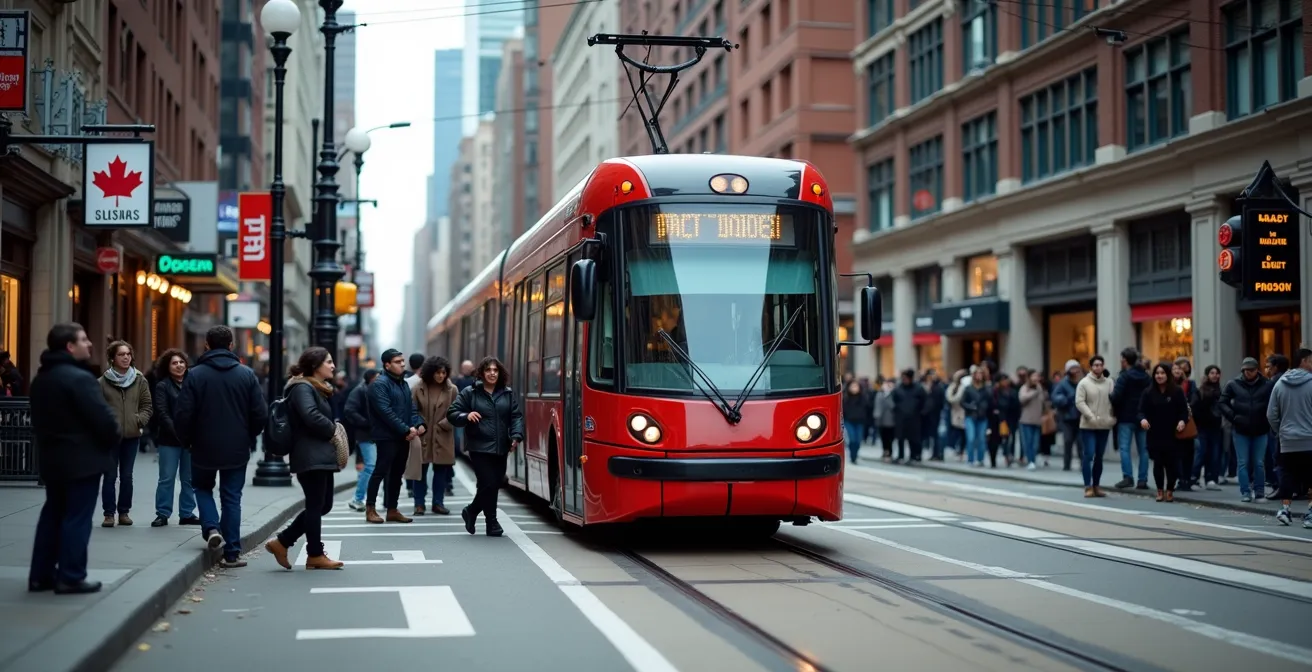
- Transit lines like the 501 streetcar aren’t just for transport; they are cultural corridors that let you tour the city’s evolving personality.
Recommendation: Instead of relying on lists, spend a day “dating” a neighborhood. Have brunch, walk the side streets, and feel its rhythm to see if it truly resonates with you.
So, you’re coming to Toronto. You’ve heard about the city’s legendary cultural mosaic, a sprawling metropolis of over 140 distinct neighborhoods, and now you face the overwhelming question: where do you even begin? The typical advice is a whirlwind of clichés. You’re told The Annex is for students, The Beaches is for families, and Yorkville is for those with platinum cards. While not untrue, this advice barely scratches the surface. It tells you *what* is in a neighborhood but fails to explain its soul, its energy, its unique frequency.
Finding your place in Toronto isn’t about following a checklist of top-rated cafes or boutiques. It’s about understanding the city’s hidden “vibe architecture”—the invisible framework built from historical migration patterns, the flow of streetcar lines, and the subtle pressures of gentrification. The real mistake is trying to fit into a neighborhood. The secret is finding the neighborhood that already fits you.
But what if the key wasn’t to randomly explore, but to learn how to read the city’s personality? This guide is your decoder ring. We’ll move beyond the superficial to explore the deep-seated cultural dynamics that make each district tick. We’ll analyze the fundamental differences between East and West, show you how to use a single streetcar as a cultural safari, and even explain the sonic consequences of living in the heart of the action. By the end, you won’t just have a list of places to see; you’ll have a framework for finding where you truly belong.
To guide you on this journey, we’ve structured this article around the real, practical questions that separate a tourist from a local. From decoding brunch vibes to mastering transit hacks, each section is a step towards finding your perfect Toronto match.
Table of Contents: A Guide to Finding Your Toronto Vibe
- Why West End Vibes Are Radically Different from the East End?
- How to Use the 501 Streetcar to Tour Three Distinct Neighborhoods?
- The Annex vs. Leslieville: Which Offers Better Weekend Brunch Vibes?
- The Noise Mistake of Renting in the Entertainment District
- When to Visit Kensington Market for the Pedestrian Sunday Experience?
- Why Little Italy Moved Westward Over the Decades?
- How to Travel Between Toronto and Suburbs Without Double Fares?
- Moving to Toronto: How to Navigate the Cultural Mosaic Without Overwhelm?
Why West End Vibes Are Radically Different from the East End?
The Don River isn’t just a geographical marker in Toronto; it’s a cultural dividing line. Asking whether the East End or West End is “better” is missing the point. The real question is: which version of “cool” aligns with your personality? This fundamental difference is the first layer of the city’s vibe architecture, rooted deep in its development history. It’s the difference between effortless grit and curated polish.
The West End, shaped by waves of Italian, Portuguese, and Polish immigration, has a dense, spontaneous urban fabric. Its personality is more “found” than “designed.” Think spontaneous street art in graffiti alleys, dive bars where the music is loud, and independent shops with a vintage, eclectic edge. Neighborhoods like Parkdale and Ossington thrive on this authentic, gritty energy. It’s a place for those who enjoy the beautiful chaos of a city that has evolved organically over decades.
In contrast, the East End, with its Anglo-Saxon working-class origins, experienced a more family-centric and design-conscious gentrification. This created what you might call “curated cool.” Here, the vibe is more relaxed and intentional. You’ll find meticulously designed cafes perfect for Instagram, designer boutiques with polished aesthetics, and a generally calmer, more residential pace. Areas like Leslieville and The Beaches embody this spirit, appealing to young professionals and families who appreciate a neighborhood that feels both trendy and settled.
How to Use the 501 Streetcar to Tour Three Distinct Neighborhoods?
In Toronto, some streets are more than just asphalt; they are “cultural corridors” that carry a specific energy across the city. Queen Street is the ultimate example, and the 501 streetcar is your ticket to a cross-city vibe safari. Recognized by National Geographic as one of the Top 10 Trolley Rides in the world, this route is the longest in North America, stretching nearly 25 kilometers. It’s a rolling tour through Toronto’s evolving personality.
To do it right, think like a local. Grab a TTC Day Pass for unlimited hop-on-hop-off travel. This isn’t about getting from A to B; it’s about sampling distinct ecosystems. Here’s a strategy:
- Morning (9-11 AM): The Beaches. Start your day at the eastern terminus, Neville Park Loop. Here, the vibe is serene and coastal. Grab a coffee, walk along the boardwalk, and experience Toronto’s quiet, lakeside persona before the crowds arrive.
- Afternoon (1-4 PM): Queen West. Hop back on the 501 and ride into the belly of the beast. This is the creative and commercial heart of Toronto. The energy is high, the fashion is forward, and the shops are a mix of international brands and iconic local institutions. This is the epicenter of Toronto’s “cool” reputation.
- Evening (5-8 PM): Parkdale. Continue west and feel the shift. As you enter Parkdale, the vibe becomes grittier, more eclectic, and decidedly more bohemian. The storefronts are a mix of vintage shops, Tibetan restaurants, and dive bars. This is where you end your day to catch live music spilling out onto the street.
This journey showcases how a single street can host radically different lifestyles. A key tip for your tour: watch for “short turn” signs on the streetcars. Many 501s turn back at Humber Loop, so if you’re heading to the furthest western reaches, ensure your streetcar is marked for “Long Branch.”
The Annex vs. Leslieville: Which Offers Better Weekend Brunch Vibes?
Brunch in Toronto is less a meal and more a competitive sport, and the neighborhood you choose defines the entire experience. Two prime contenders, The Annex in the west and Leslieville in the east, offer completely different brunch vibes. Choosing between them is a litmus test for your social preferences: do you crave intellectual buzz or relaxed, professional calm?
The Annex, bordering the University of Toronto, is fueled by a youthful, academic energy. The brunch crowd is a mix of students, professors, and a younger intellectual set. The atmosphere is bustling, with conversations buzzing around you. Post-brunch activities naturally lean towards the cultural, like a visit to the Royal Ontario Museum (ROM) or a walk through the historic university campus. The downside? Be prepared for lines, especially at the most popular spots. Your best bet is to go before 10 AM or after 2 PM.
Leslieville, on the other hand, offers a more laid-back, neighborhood pace. The crowd consists of young professionals and families with strollers, creating a relaxed and friendly atmosphere. The vibe is less about being seen and more about enjoying a weekend morning. While lineups are still a reality, many spots are reservation-friendly. After your meal, the ideal activity is a leisurely stroll through Jonathan Ashbridge Park or browsing the curated boutiques along Queen Street East. This table breaks down the core differences in the experience.
This comparative table, drawing on insights from local guides like those found on BlogTO, highlights the key differences in the weekend experience.
| Aspect | The Annex | Leslieville |
|---|---|---|
| Crowd Type | Students, academics, younger intellectual crowd | Young professionals, families with strollers |
| Wait Time Strategy | Go before 10 AM or after 2 PM | Target reservation-friendly spots |
| Post-Brunch Activity | ROM visit, UofT campus walk | Jonathan Ashbridge Park, boutique shopping |
| Atmosphere | Bustling, intellectual chatter | Relaxed, neighborhood pace |
Your Toronto Brunch Lineup Survival Guide
- Download the Apps: Get Yelp or OpenTable on your phone before you go to find reservation-friendly spots or join virtual waitlists.
- Plan a Backup: In The Annex, a great alternative is grabbing amazing, authentic bagels from Bagel House and finding a spot in a nearby park.
- Explore Further: If Leslieville lines are too long, walk further east on Queen St towards The Beaches to find hidden gems with shorter waits.
- Master the Timing: Weekday brunch is always a win. If it has to be a weekend, Sunday after 2 PM is often quieter as the initial rush dissipates.
- Come Prepared: The average weekend wait can be 30-60 minutes. Bring a book, have a podcast ready, and treat the wait as part of the experience.
The Noise Mistake of Renting in the Entertainment District
For those who crave being in the center of the action, the gleaming condo towers of the Entertainment District seem like the perfect choice. But many newcomers make a critical mistake: they underestimate the sheer, multi-layered nature of the noise. It’s not just about weekend parties; it’s a constant, ambient soundtrack that is physically amplified by the neighborhood’s very structure.
Living here means exposure to several noise layers at once. There’s the constant hum of traffic on major arteries like King and Spadina. Then there’s the weekend nightlife bass that throbs until 3 AM. Add to that the near-constant daytime noise from new condo construction and the seasonal roar from major events like the Toronto International Film Festival (TIFF) or Blue Jays games. It’s an immersive sonic experience, for better or worse.
What truly defines the soundscape, however, is the “Canyon Effect.” The dense cluster of high-rise glass towers creates an urban canyon that traps and amplifies sound from the street below. This means that even residents on higher floors are not immune. The ambient city hum, sirens, and wind whipping between the buildings become a part of daily life. For some, this is the exhilarating pulse of the city; for others, it’s a recipe for sleepless nights. Before committing, an honest self-assessment is crucial: are you someone who thrives on urban energy, or someone who needs quiet to recharge?

When to Visit Kensington Market for the Pedestrian Sunday Experience?
Kensington Market is Toronto’s bohemian heart, a fiercely independent and eclectic enclave that resists corporate influence. The ultimate expression of its unique personality is Pedestrian Sundays. Held on the last Sunday of each month from May to October, this is not a city-run festival but a grassroots, community-led initiative to reclaim the streets for people. Visiting on this day is essential, but *when* you visit completely changes the experience.
As detailed by local observers and tourism bodies like Destination Toronto, this event is a pure reflection of the market’s rebellious spirit. You’ll find pop-up food stalls from chefs without permanent restaurants, artisans who only sell on these days, and spontaneous street performances, from drum circles to magicians. To get the most out of it, you need a time strategy based on your personal vibe:
- Morning Explorer (9 AM – 11 AM): This is the golden hour for photographers and serious food shoppers. The crowds are thin, the light is soft, and you can interact with vendors without the midday rush. It’s a quieter, more intimate Kensington experience.
- Midday Reveler (1 PM – 4 PM): This is peak energy. The streets are packed, the drum circles are in full swing, and the air is electric with the buzz of the crowd. If you want the full, chaotic, and vibrant experience, this is your time.
- Evening Chiller (5 PM – 7 PM): As the day winds down, the crowds begin to thin. Many vendors start packing up, but the patios of the market’s bars and restaurants come alive. This is the perfect time for a relaxed dinner while soaking in the last of the day’s energy.
A few essential tips for any visit: bring cash, as many smaller vendors don’t accept cards, and start your exploration on the side streets like Bellevue or Augusta to ease into the sensory overload. Knowing when to go is as important as deciding to go at all.
Why Little Italy Moved Westward Over the Decades?
Neighborhoods in a dynamic city like Toronto are not static. They are living ecosystems that shift, evolve, and diffuse. The story of Toronto’s “Little Italy” is a perfect case study in this phenomenon. Understanding its migration shows how a culture doesn’t disappear but rather expands, creating new hotspots while its original heart transforms.
The original Little Italy, centered on College Street, began in the early 1900s. As outlined in local histories on platforms like Wikivoyage, Italian immigrants working on railways and road construction settled here, buying affordable Edwardian homes and opening shops. This created the iconic neighborhood known for its historic cafes, traditional restaurants, and vibrant street life during events like the World Cup.
However, as property values on College Street rose and gentrification took hold, the next generation of Italian-Canadians began moving. They didn’t leave the culture behind; they simply carried it westward along College towards Ossington and north to St. Clair West, establishing a new hub known as Corso Italia. This created a fascinating duality: two “Little Italys” with distinct personalities.
The table below illustrates this cultural diffusion, showing how one community evolved into two different neighborhood vibes.
| Aspect | College Street Little Italy | St. Clair’s Corso Italia |
|---|---|---|
| Current Vibe | Fusion of historic & trendy, younger crowd | Traditional, multi-generational families |
| Businesses | Historic cafes next to trendy bars | Classic bakeries and social clubs |
| Demographics | Diverse, bohemian crowd | Italian-Canadian families |
| Evolution Stage | Gentrified, mixed-use | Preserved traditional character |
How to Travel Between Toronto and Suburbs Without Double Fares?
For any visitor or new resident, exploring beyond the downtown core is essential for a full Toronto experience. But a common frustration is the “double fare”—paying once for the TTC (Toronto’s local transit) and again for a regional service like the GO Train. This is where a crucial piece of local knowledge comes in: the PRESTO Co-Fare program, a hack that makes regional travel seamless and affordable.
The system is designed to encourage integrated transit use, but it’s not always intuitive. The key is your PRESTO card, the reloadable payment card for all major transit systems in the Greater Toronto Area. When you use it to transfer between the TTC and a GO Train (or other regional buses like MiWay or YRT), your TTC portion of the trip becomes free. The official TTC website outlines the details, but the strategy is simple.
Here’s the hack in practice:
- Get a PRESTO Card: They are available for purchase at any subway station vending machine or at Shoppers Drug Mart locations.
- Tap Strategically: When heading out of the city, tap onto the GO Train first. When you transfer to a TTC bus or subway within the 2.5-hour transfer window, your tap will register as a free co-fare.
- Reverse for Return: On your way back, your TTC trip to the GO station will cost a regular fare, but when you tap onto the GO Train, the system recognizes the transfer.
This simple process effectively eliminates the double fare, saving you money on every trip. For example, a trip from downtown to the beautiful waterfront of Port Credit in Mississauga becomes much more economical. You can take the GO Train from Union Station to Port Credit, explore the lakefront, and then take a MiWay bus (Mississauga’s transit) to a TTC subway station on your return, all without paying multiple fares. It transforms the region from a collection of expensive, separate zones into one interconnected network.
Key Takeaways
- Vibe is Architecture: A neighborhood’s personality is built on its history, transit routes, and gentrification patterns. Learn to read this structure.
- Embrace the Divide: The East/West split is your first filter. Choose between the East’s “curated cool” or the West’s “artistic grit” based on your own style.
- Ride the Corridors: Use major streetcar lines like the 501 on Queen Street as a tool to sample multiple distinct neighborhood vibes in a single day.
Moving to Toronto: How to Navigate the Cultural Mosaic Without Overwhelm?
You’ve now seen how Toronto’s neighborhoods are defined by more than just their geography. They have distinct personalities, rhythms, and sounds. The key to navigating this vast cultural mosaic without feeling overwhelmed is to abandon the idea of finding the “best” neighborhood and instead adopt a framework of finding the “best fit” for you. This means thinking of neighborhoods in terms of their core personality traits.
As outlined by local resources like Neighbourhood Guide Toronto, you can simplify the city’s complexity by thinking along three axes of “vibe architecture”:
- The East/West Vibe Divide: Are you drawn to the artistic, sometimes chaotic energy of the West, or the calm, curated aesthetic of the East?
- The Streetcar Corridors: Do you connect with the creative pulse of Queen Street, the intellectual buzz of College Street, or the business-focused hustle of King Street?
- The Subway Spines: Do you prefer the high-density commercial energy along the Yonge line or the more residential, community-oriented character of the Bloor line?
Using this framework transforms a list of 140+ names into a manageable set of choices based on your own lifestyle preferences. The final step is to put this theory into practice. Don’t just research—explore. Treat it like dating. Before you commit, spend a full day in your top one or two choices. Go for brunch, wander the residential side streets away from the main drag, visit a local park, and grab a drink in the evening. Feel the rhythm of the place. This is the ultimate vibe check.
The best way to start is to challenge yourself with a “Neighborhood Dating” week. Dedicate each day to experiencing a different vibe: the lakeside calm of The Beaches, the artistic energy of West Queen West, the urban pulse of the Entertainment District. This hands-on approach is the only way to move from abstract knowledge to a confident decision, ensuring you find a corner of Toronto that truly feels like home.