In summary:
- Saturday at St. Lawrence is a mission, not a stroll. Your goal: the iconic peameal bacon sandwich without the tourist-trap delays.
- Navigate the South Market by sticking to the perimeter first, then diving into the center. Avoid the main entrance bottleneck after 10 AM.
- The real farmers are in the North Market, only on Saturdays. Go there for produce, then hit the South Market for prepared foods.
- The ultimate prize, the “World-Famous Peameal Bacon Sandwich,” is at Carousel Bakery. Prepare for a line, but it moves fast if you know when to go.
So, you want to conquer St. Lawrence Market on a Saturday to get a peameal bacon sandwich. Good. That’s the right attitude. Too many people wander in aimlessly, get swept up in the slow-moving current of indecisive tourists, and end up frustrated. They treat it like a museum. It’s not. It’s a living, breathing, delicious beast, and if you don’t have a plan, it will chew you up and spit you out, sandwich-less and hangry.
Most guides will tell you to “soak in the atmosphere” or “get lost in the aisles.” That’s terrible advice for a Saturday. The key isn’t to wander, it’s to move with purpose. The secret isn’t just knowing *what* to eat, but *how* and *when* to get it. For those who don’t know, peameal bacon isn’t your typical strip bacon; it’s lean, brined pork loin rolled in cornmeal, a true Toronto “Hogtown” classic. It’s a rite of passage.
But if the real goal is to experience the market’s best without losing your mind, you need to think like a veteran, not a visitor. This isn’t about following the longest line; it’s about understanding the market’s flow, hitting your targets efficiently, and securing that legendary sandwich while others are still figuring out where the stairs are. This is your tactical plan for maximum flavour with minimum friction.
This guide lays out the no-nonsense strategy for your mission. Below, you’ll find everything you need to know, from navigating the chaotic aisles and understanding the two different market buildings to timing your visit perfectly and identifying the best fuel for your walk.
Summary: Your No-Nonsense Guide to Conquering St. Lawrence Market
- Why National Geographic Ranked St. Lawrence the #1 Food Market?
- How to Navigate the South Market Aisles Without Getting Stuck?
- South Market vs. North Market: Where to Find the Farmers?
- The Monday Mistake That Disappoints Hungry Tourists
- When to Arrive for St-Urbain Bagels Before They Sell Out?
- Why Food Halls Are Replacing Traditional Food Courts in Condos?
- Chilean Empanadas or Jamaican Patties: Which Snack Fuels Your Walk Better?
- Eating Through Kensington Market: How to Taste Global Cuisines for Under $20?
Why National Geographic Ranked St. Lawrence the #1 Food Market?
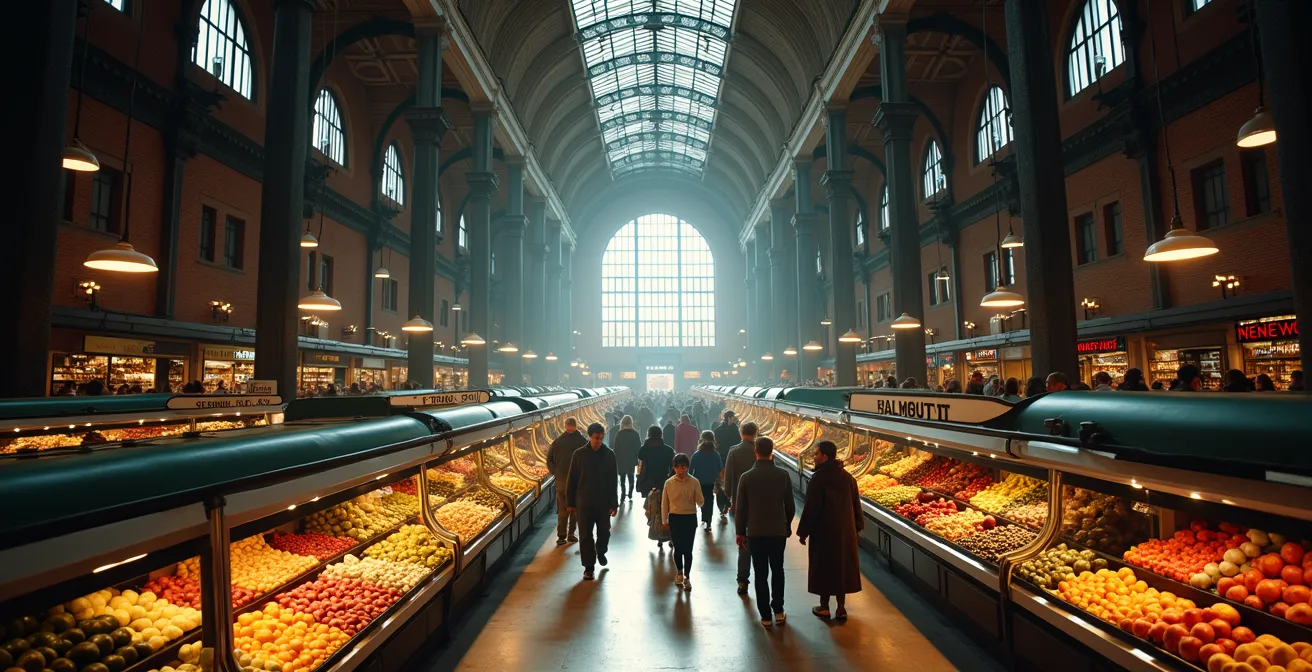
Let’s get one thing straight: the hype is real. There’s a reason this place isn’t just a local favourite but a global icon. St. Lawrence Market was named the world’s best food market by National Geographic in April 2012, and it wasn’t a fluke. This isn’t just a collection of stalls; it’s a finely tuned culinary ecosystem that has been perfected over centuries.
The ranking comes down to three core strengths. First, the sheer diversity. You have over 120 vendors packed into the South Market building, offering everything from artisan cheese and cured meats to exotic spices and freshly baked bread. Second is its unwavering commitment to authenticity. The market has a 200-year heritage, with farmers and vendors, some whose families have been here for generations, setting up shop with a passion you just don’t find in a supermarket. Finally, it’s the completeness of the experience. You can assemble a world-class meal from scratch or grab one of the best sandwiches of your life, all under one roof.

As you can see, the energy comes from the people behind the counters. They aren’t just selling products; they are sharing their craft. This combination of history, diversity, and passionate vendors is what elevates St. Lawrence from a simple market to a world-class food destination. It has an energy that’s both historic and incredibly alive.
How to Navigate the South Market Aisles Without Getting Stuck?
On a Saturday, the South Market is a beautiful, delicious, and chaotic gauntlet. Tourists stop dead in the middle of the aisle to take a photo, groups of four walk shoulder-to-shoulder, and the central corridors become human traffic jams. The rookie mistake is to dive right into the middle. Don’t do it. Your mission is to move with purpose. The market is open Tuesday to Saturday, with peak chaos hitting between 11 AM and 2 PM on Saturday. The pros know the hours: Tuesday to Friday from 9am to 7pm, Saturday from 7am to 5pm, and Sunday from 10am to 5pm.
Here’s the veteran’s strategy: walk the perimeter first. The outer aisles are generally wider and have a more consistent flow. Do a full lap. This allows you to scout the vendors, spot your primary targets (we’ll get to the sandwich later), and identify any secondary objectives, like a cheese shop or a bakery, without getting trapped. Once you have your bearings, you can make surgical strikes into the denser central aisles. See a short line at a butcher? Go now. Need to get to the lower level? Use the less-obvious stairs at the back, not the main ones at the front.
Another key tip: travel light. Leave the bulky backpack at home. You need to be nimble. And a word on payment: while most vendors now accept cards, having a bit of cash can speed up small transactions. The goal is efficiency. Scout, strike, and move on. Don’t be part of the problem; be the person weaving through it.
South Market vs. North Market: Where to Find the Farmers?
This is a fundamental piece of market intelligence that 90% of visitors miss. St. Lawrence is actually two buildings, and they serve different purposes, especially on a Saturday. The grand, historic building everyone knows is the South Market. This is where you’ll find the 120+ permanent vendors, the butchers, the bakers, and the prepared food stalls. It’s the main event, open all week.
But if you’re looking for the true “farmers’ market” experience, you need to go across the street to the North Market. This is mission-critical: the farmers are only there on Saturdays. Since the 1800s, farmers from Southern Ontario have been arriving at dawn to sell their seasonal produce, meats, and cheeses. This is where you get the freshest, straight-from-the-earth goods. As Destination Ontario notes, it’s a tradition that runs deep.
Many of the farmers have provided farm fresh products at this location for generations.
– Destination Ontario, The Local’s Guide to St. Lawrence Market
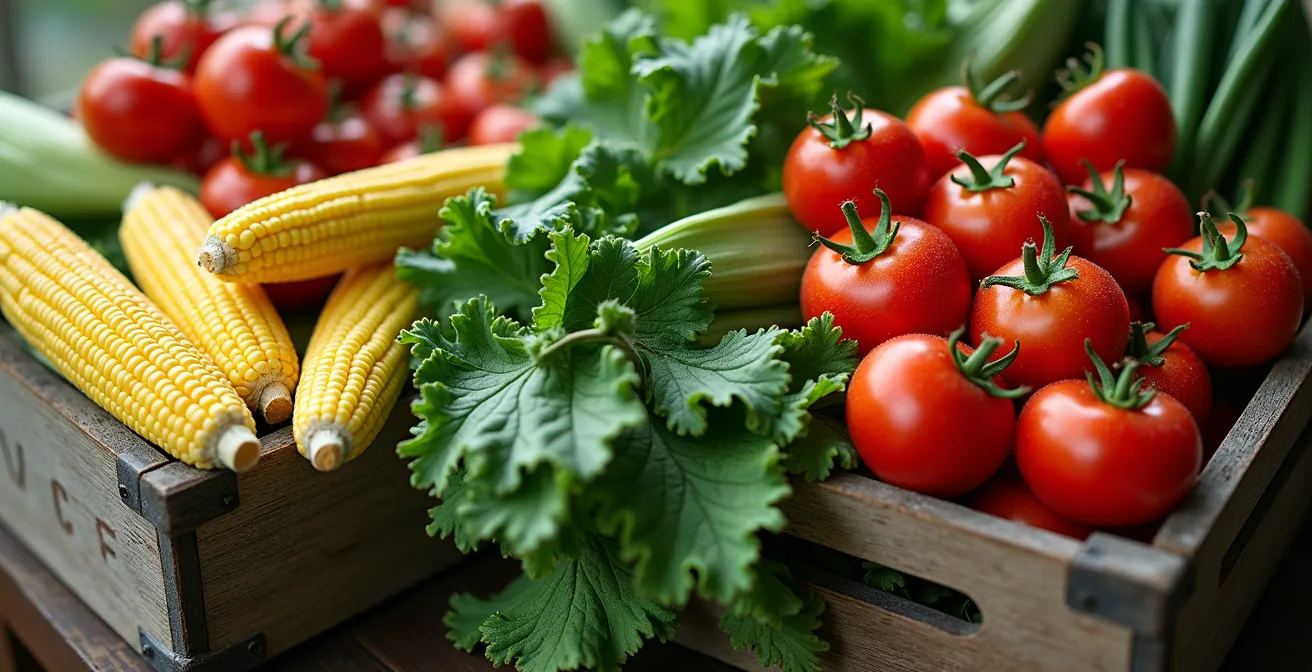
The pro move is to hit the North Market first, especially if you’re arriving early. Grab your fresh produce, talk to the farmers, and experience that authentic market tradition. Then, with your farm-fresh goods secured, head over to the South Market for the rest of your culinary mission. This two-pronged attack is the most effective way to experience everything the complex has to offer.
The Monday Mistake That Disappoints Hungry Tourists
You can spot them every time. A little cluster of disappointed people, staring at the closed doors of the South Market, phone in hand, realizing their itinerary is ruined. They’ve made the classic rookie error: trying to visit St. Lawrence Market on a Monday. Don’t be one of them. The market needs a day for deep cleaning, restocking, and giving its vendors a well-deserved break. That day is Monday.
This crucial detail, that the South Market is closed every Monday, seems to elude countless travel blogs and itineraries. The disappointment is real, especially for those on a tight schedule. But a veteran doesn’t see a closed door; they see an opportunity to execute Plan B without missing a beat. If your trip lands you in Toronto on a Monday, you still have excellent options.
Here’s your Monday recovery plan:
- Explore the Distillery District: Just a short walk or streetcar ride east, this historic area is packed with unique restaurants, cafes, and bakeries that are open for business.
- Head to Kensington Market: This is a completely different vibe—a bohemian, multicultural, open-air market neighbourhood. It’s a fantastic alternative for global street food and vintage shopping.
- Plan a Weekday Visit: If your schedule allows, simply shift your St. Lawrence trip to Tuesday or Wednesday. You’ll get to enjoy the market with a fraction of the weekend crowds, which is a reward in itself.
When to Arrive for St-Urbain Bagels Before They Sell Out?
Inside the South Market, there’s a little piece of Montreal that causes a stir: St. Urbain Bagels. Now, purists will argue that you can’t get a true Montreal-style bagel outside of Quebec, and they might have a point. But for Torontonians, this is as close as it gets—and it’s very, very good. They are boiled in honey water and baked in a wood-fired oven, giving them that distinct dense, chewy, and slightly sweet character.
Because of their cult following, these bagels are a high-demand item, especially on Saturdays. They don’t just sell bagels; they sell out of specific *types* of bagels. If you have your heart set on a fresh-from-the-oven sesame or poppy seed bagel, timing is everything. Showing up at 1 PM on a Saturday and expecting a full selection is a recipe for disappointment.
So, when should you arrive? The mission-critical window is between 8:00 AM and 9:30 AM on a Saturday. At this time, the ovens are still firing at full capacity, the shelves are fully stocked, and the major tourist wave hasn’t crested yet. You can get in, grab a dozen of your preferred style, maybe a tub of cream cheese, and get out before the serious bottlenecks begin. Arrive any later, and you’re gambling with the bagel gods. By noon, the most popular varieties are often gone, and you’re left with the “everything” bagel—which is fine, but it might not have been your primary target.
Why Food Halls Are Replacing Traditional Food Courts in Condos?
It’s interesting to watch the rise of modern “food halls” in Toronto and think—haven’t we had this all along? Before shiny new developments like The Well or the Eaton Centre’s Queens Cross tried to curate a “gourmet” food experience, St. Lawrence Market was the original blueprint. It is, in essence, the ultimate food hall: a collection of independent, high-quality purveyors under one roof. The current trend is really just developers catching up to a 200-year-old idea.
The modern food hall boom is driven by a desire for authenticity and variety that tired, franchise-heavy food courts can’t provide. And the growth is explosive. The global food hall market reached USD 25.8 billion in 2024 and is projected to skyrocket. Toronto is a perfect example of this, with three major food halls opening in 2024 alone. Developers are realizing that a curated food experience is a powerful draw. As Christopher Rundle of CBRE Montreal notes, it’s a smart business move.
The food hall trend is well beyond taking off, it’s spreading rapidly, but what’s interesting is that the concepts keep getting better. Landlords are finding creative ways to fill big spaces on the ground floors and basements of their buildings.
– Christopher Rundle, CBRE Montreal
What sets St. Lawrence apart from these new ventures is its deep-rooted, organic history. It wasn’t designed by a developer; it grew over generations. While the new food halls offer exciting options, they are curated collections. St. Lawrence is a living community. It’s the standard against which all new Toronto food halls like Wellington Market and Waterworks Food Hall must be measured. It proves that the model isn’t just a trend; it’s a timeless way for a city to eat.
Chilean Empanadas or Jamaican Patties: Which Snack Fuels Your Walk Better?
Navigating the market is a marathon, not a sprint. You need fuel. While the main event might be a big sandwich, a strategic mid-walk snack is essential to maintain energy and morale. The market is a treasure trove of portable, delicious international options, from Chilean empanadas to Portuguese custard tarts to spicy Jamaican patties. The question isn’t just what’s tastiest, but what serves your mission best? You need to consider portability, messiness, and energy density.
An empanada is a great choice—it’s a self-contained pastry, easy to eat with one hand while you navigate the crowd. A Jamaican patty offers a similar advantage. But the options are nearly endless. To make a smart choice, you need to think like a tactician. The table below compares a few other excellent grab-and-go options available in the market, though you’ll find countless others.
| Snack Option | Price Range | Portability | Best For |
|---|---|---|---|
| Buster’s Sea Cove Lobster Roll | Premium | Moderate | Sit-down indulgence |
| Churrasco Portuguese Chicken Sandwich | Mid-range | Good | Walking meal |
| Yianni’s Chicken Souvlaki Wrap | Budget-friendly | Excellent | On-the-go eating |
Choosing the right snack is part of the strategy. A lobster roll from Buster’s Sea Cove is an iconic indulgence, but it’s a sit-down affair. A souvlaki wrap, on the other hand, is built for combat eating. Assess your situation and choose your fuel wisely.
Your Tactical Snack Fuel Audit
- Assess your hunger level: Are you looking for a quick bite or a substantial refuel? This determines size and density.
- Evaluate portability: Can you eat it with one hand while walking? Anything requiring a fork or that might drip is a high-risk choice in a crowd.
- Consider the mess factor: Sauces, crumbs, and flaky pastry can become a liability. Choose a clean-eating option if you’re on the move.
- Check the line length: A great snack isn’t worth a 20-minute wait if your main goal is elsewhere. Be prepared to pivot to a vendor with a shorter line.
- Optimize for energy: A balance of carbs and protein (like a meat pie or a cheese-filled pastry) will provide more sustained energy than a pure sugar rush from a tart.
Key takeaways
- St. Lawrence Market’s global prestige comes from its authentic 200-year heritage and the sheer diversity of its 120+ vendors.
- Conquer Saturday crowds with a “perimeter first” navigation strategy, avoiding central bottlenecks and making surgical strikes into busy aisles.
- The North Market is for fresh produce from farmers (Saturdays only), while the South Market is for prepared foods and daily vendors. Hit both for the full experience.
Eating Through Kensington Market: How to Taste Global Cuisines for Under $20?
While Kensington Market offers its own fantastic and gritty cheap eats adventure, let’s be clear: our primary mission is here, at St. Lawrence. And that mission culminates with one thing: the “World-Famous Peameal Bacon Sandwich” from Carousel Bakery. This isn’t just food; it’s a Toronto institution. For over 50 years, Carousel has been the undisputed king, with lines of hungry locals and tourists forming a constant queue, especially on weekends.
The sandwich itself is a study in simplicity and perfection: a soft, fresh kaiser roll, piled high with thick-cut, juicy slices of griddled peameal bacon. You can add mustard or other condiments, but a purist might say it needs nothing else. Its popularity reflects a broader trend, with research showing that up to 40% of Canadians prefer breakfast on the go. This sandwich is the ultimate answer to that demand: it’s fast, hearty, and deeply satisfying.
Don’t be intimidated by the line at Carousel Bakery. It’s a well-oiled machine. They have the process down to a science, and the queue moves surprisingly fast. The key is to know what you want before you get to the front. Have your order ready and your payment method out. This is no time for indecision. Getting this sandwich is the crowning achievement of a successful St. Lawrence Market operation. It’s the reason you came. Everything you’ve done—navigating the crowds, timing your arrival, choosing a strategic snack—has led to this moment.
You now have the intelligence and the strategy. The plan is clear. Go execute the mission, get the sandwich, and enjoy one of Toronto’s most essential culinary experiences. Don’t get stuck, don’t hesitate, and savour the victory.