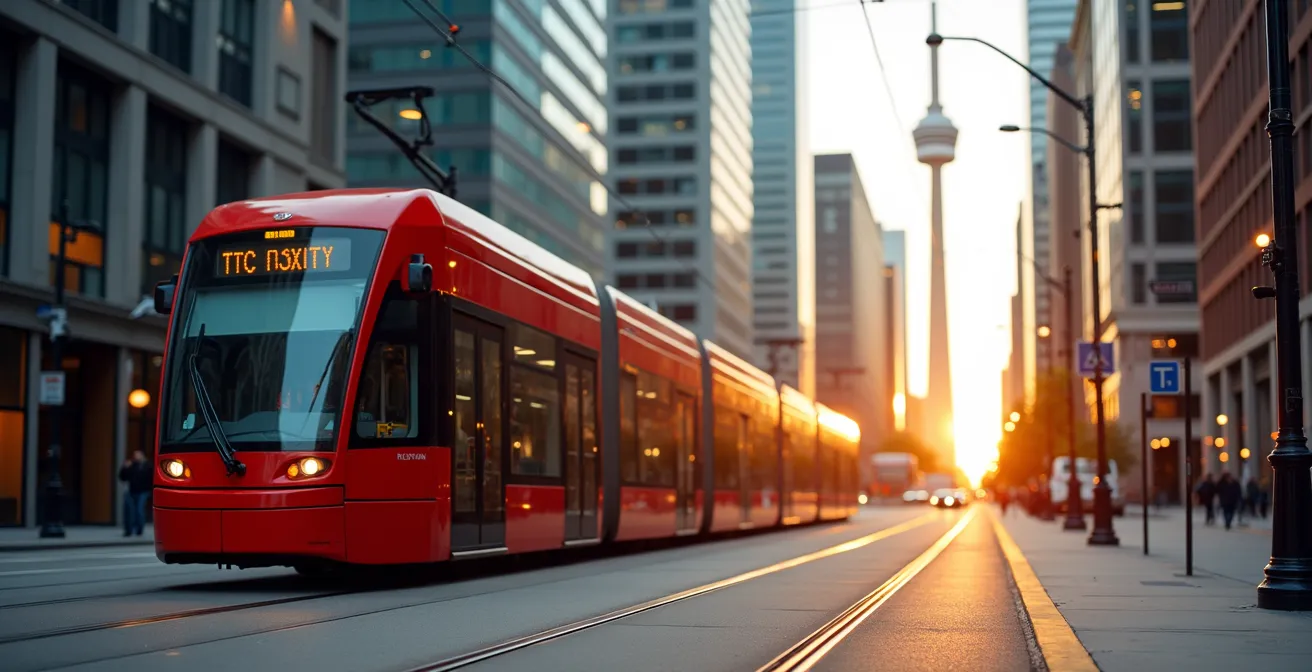
Riding a Toronto streetcar efficiently isn’t about the route map; it’s about understanding the hidden operational logic that governs the system.
- The King Street transit-first rules aren’t just for cars; they are the primary reason the 504 is the most reliable cross-town route.
- “Short turns” aren’t random; they are predictable events you can anticipate by reading the vehicle’s destination sign and using the right apps.
Recommendation: Stop being a passive passenger. Start thinking like an operator by learning the system’s quirks to predict delays and choose the fastest route, every time.
You’re standing on a corner, late for a meeting, and you see it—the beautiful red and white streetcar you’ve been waiting for. But instead of stopping, the sign flashes “To Russell Carhouse” and it sails right past. Or you board the 501 Queen, expecting a scenic ride to The Beaches, only to be told to get off halfway there. Welcome to Toronto’s streetcar system. From an operator’s seat, I see the frustration on your faces every single day. Tourists and even seasoned commuters think they can master the network with just a map and a PRESTO card. They can’t.
The common advice is to just tap your card, know your stop, and maybe avoid rush hour. That’s surface-level thinking. That won’t save you from the notorious “short turn,” the gridlock in Chinatown, or the confusion of all-door boarding. The truth is, the TTC streetcar network—our iconic Red Rockets—operates on its own internal rhythm and logic. It’s a system designed to move hundreds of thousands of people, and sometimes, that means sacrificing an individual’s convenience for the health of the entire line.
But what if you could understand that logic? What if you could anticipate the system’s quirks instead of just reacting to them? That’s the real secret to mastering the streetcar. This isn’t your average tourist guide. This is the operator’s playbook. I’m going to take you beyond the simple “how-to” and show you the “why” behind the system’s biggest headaches. We’ll break down the strategic differences between major routes, decode the rules that actually speed you up, and give you the tools to ride not like a passenger, but like someone who truly gets how this city moves.
In this guide, we’ll cover the essential insider knowledge you need, from the transit-priority corridor on King Street to the specific times you should just walk instead of riding the 510 Spadina. Follow along to turn your frustrating commute into a strategic journey.
Summary: Riding the Red Rocket: An Operator’s Guide to Navigating Toronto’s Streetcar System
- Why Cars Are Banned on King Street and How It Speeds You Up?
- How to Board All Doors Without Getting Fined by Inspectors?
- 501 Queen vs. 504 King: Which Cross-Town Route is Faster?
- The “Short Turn” Nightmare That Dumps You in the Cold
- When to Avoid the 510 Spadina Due to Chinatown Congestion?
- How to Use the 501 Streetcar to Tour Three Distinct Neighborhoods?
- Why Cars Are Banned on the Islands and What It Means for You?
- Toronto Neighborhood Guide: How to Choose the Right District for Your Lifestyle?
Why Cars Are Banned on King Street and How It Speeds You Up?
If you’ve ever ridden the 504 King streetcar, you’ve seen the magic: your vehicle glides past lines of cars stuck in traffic. This isn’t luck; it’s the King Street Transit Priority Corridor. Between Bathurst and Jarvis, we don’t share the road. Private cars are forced to turn right at most intersections, leaving the lanes clear for us. From my seat, it’s the smoothest part of my day, and for you, it’s the key to a reliable commute. This “car ban” isn’t about punishing drivers; it’s about prioritizing the movement of people. A single streetcar can hold 130 passengers; a car holds, what, two or three? The math is simple.
The results speak for themselves. After the city implemented this, riders saw travel times improve by an average of 4 to 5 minutes during peak hours. It’s not just about speed; it’s about reliability. We can maintain a consistent schedule when we aren’t weaving through gridlock. Official city studies confirmed the pilot was a success, showing that transit ridership increased 11 percent on weekdays within just six months. That’s thousands of people choosing the more efficient option.
For you, the rider, this means two things. First, if you need to cross downtown east-west, the 504 King is almost always your most dependable bet. Second, be aware of how taxis and Ubers behave. They are also forced to turn off King Street, so they can’t provide a direct door-to-door ride along the corridor. Often, it’s faster to ride the streetcar one more stop and walk back than to take a car that has to navigate a complicated detour. Understanding this rule gives you a strategic edge.
How to Board All Doors Without Getting Fined by Inspectors?
The new streetcars have a great feature: you can board through any door. This speeds things up immensely. But with great convenience comes great responsibility. I see people get fined by inspectors all the time, and it’s almost always for one simple reason: they failed to get or keep their Proof-of-Payment (POP). The inspectors are not lenient, so you need to know the rules by heart. There are no excuses when you’re on a POP route.
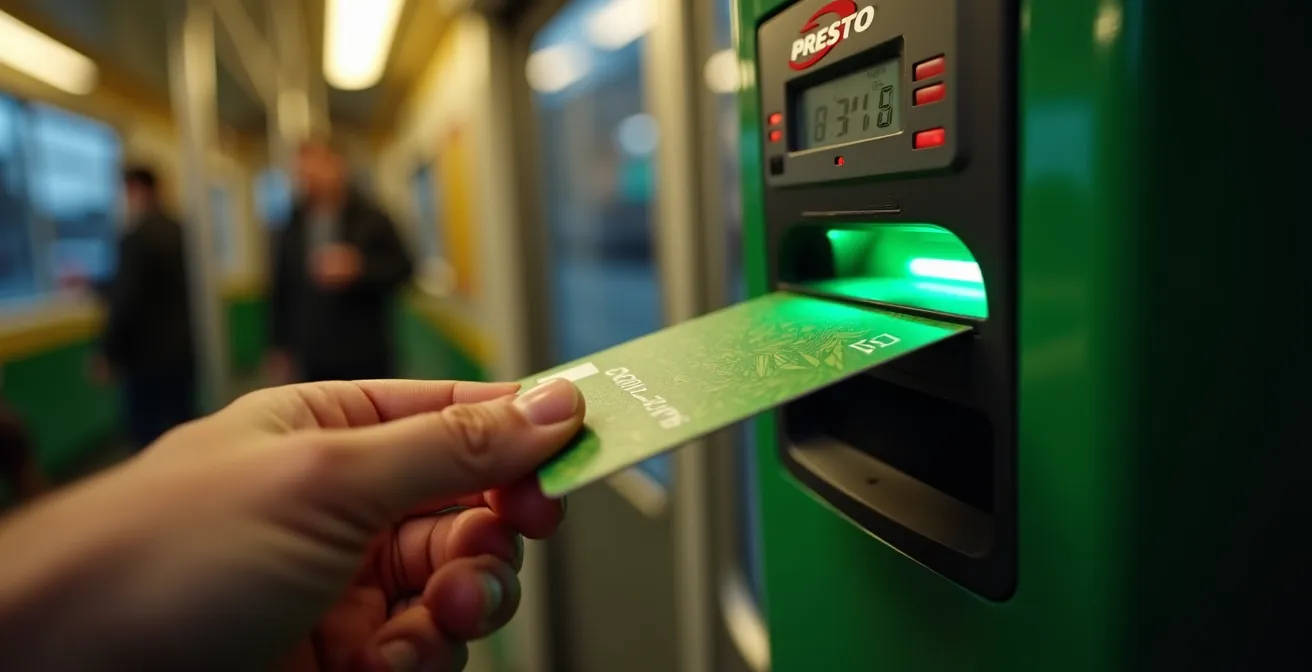
The core action is simple: as soon as you step on board, you must tap. Whether it’s your PRESTO card, your credit card, or your phone with a mobile wallet, you find the green reader at your door and tap it immediately. That tap is your proof. It starts a two-hour transfer window, and if an inspector boards, you simply show them the card you tapped with.
If you’re paying with cash or a TTC ticket, your procedure is different and more restrictive. You must board at the front door and get a paper transfer from the operator or the fare machine. That little slip of paper is your only POP. If you board at the back with cash, you have no way to pay or get proof, and you’re at risk of a fine. The TTC has a clear Proof-of-Payment system, and it’s your job to follow it to the letter. Don’t be the person arguing with an inspector; they’ve heard every excuse.
501 Queen vs. 504 King: Which Cross-Town Route is Faster?
It’s the classic Toronto debate: for a cross-town trip, should you take the 501 Queen or the 504 King? As someone who has driven both, I can tell you there’s no single answer—it all depends on the time of day, the day of the week, and your tolerance for delays. The 504 King has the massive advantage of its transit-priority corridor, making it the undisputed champion during weekday rush hour. When Queen Street is a parking lot of mixed traffic, the 504 is sailing smoothly.
However, the 501 Queen can sometimes be faster during off-peak hours, like late evenings or weekend mornings, when general traffic is lighter. The Queen route is also more scenic, but it’s notoriously prone to disruptions. Its incredible length makes it susceptible to delays, construction, and the dreaded short turn. The 504, being more centrally managed and prioritized, tends to be far more consistent. Even during major construction events, the King streetcar has shown its resilience.
The real decision comes down to what you value more: speed and reliability, or scenery and neighborhood access. The following table breaks down the operator’s view on these two workhorse routes.
| Factor | 504 King | 501 Queen |
|---|---|---|
| Rush Hour Speed | Superior – Transit priority corridor | Slower – Mixed traffic |
| Weekend Performance | Good reliability | Can be faster off-peak |
| Route Reliability | More consistent | Prone to delays and short turns |
| Event Disruptions | High (TIFF, sports games) | Moderate |
| Construction Impact | Moderate | High – frequent shuttle bus replacements |
| Scenery | Business district | Diverse neighborhoods (Beaches, Parkdale) |
The “Short Turn” Nightmare That Dumps You in the Cold
There is no experience more frustrating for a TTC rider than the “short turn.” You’re on your way home, and suddenly the operator announces the streetcar is going out of service and everyone has to get off. From the rider’s perspective, it feels random and unfair. From the operator’s seat, it’s a necessary tool for maintaining the health of the entire line. A short turn happens for a few key reasons: to fill a large gap in service further down the line, because of a major blockage ahead (like an accident or a parade), or because my shift is over and the vehicle needs to return to the carhouse.
It’s not personal; it’s operational logic. If one streetcar is severely delayed, it creates “bunching” where two or three vehicles end up together, followed by a long 20-minute gap. By turning one streetcar back early, control can send it to fill that gap, restoring more even service for hundreds of people down the line. The 501 Queen route is the most famous for this due to its extreme length. A small delay at one end can have massive ripple effects an hour later at the other end.
The good news is that you don’t have to be a victim. You can often predict a short turn before you even board. The key is to look at the destination sign on the front of the streetcar. If it says “501 QUEEN to NEVILLE PARK,” it’s going the full route. If it says “501 QUEEN to RUSSELL CARHOUSE” or “to DUFFERIN LOOP,” you know it’s making a short turn. Learning these turn-back points is part of mastering the system.
Your Action Plan: How to Avoid Getting Caught in a Short Turn
- Check the Destination: Before you board, read the digital sign. “To Neville Park” (501) or “To Broadview/Dufferin Gate” (504) means a full trip. Anything else (e.g., “To Russell,” “To Roncesvalles”) is a short turn.
- Use a Transit App: Apps like Transit or Rocketman often show the vehicle’s true final destination, giving you a heads-up before it even arrives at your stop.
- Learn Key Turn-Back Points: For the 501, major short-turn locations are the Russell Carhouse (near Greenwood), Roncesvalles, and the Dufferin Loop. Knowing these helps you anticipate where you might be asked to de-board.
- Don’t Panic if Short-Turned: Your two-hour transfer is still valid. The next full-service streetcar is usually scheduled to be directly behind the short-turning one.
- Assess Your Options: If it’s cold or raining, check your app to see how far away the next car is. It might be better to duck into a coffee shop for five minutes than to wait on the curb.
When to Avoid the 510 Spadina Due to Chinatown Congestion?
The 510 Spadina is a vital north-south artery, connecting Union Station to the Bloor subway line through the heart of the city. But there’s a stretch of this route that can bring the Red Rocket to a crawl: Chinatown. The section between Queen and College streets is a vibrant, bustling area, but that energy translates into major congestion, especially on weekends. Pedestrians, delivery trucks, and local traffic all conspire to slow us down.
If you’re a tourist looking to soak in the atmosphere, this might be fine. But if you’re trying to get somewhere on time, you need a strategy. Based on my experience and what tourist guides confirm, the absolute worst congestion hits between 12 PM and 5 PM on weekends. During these hours, walking is often faster than riding the streetcar through the core of Chinatown. You’ll see your streetcar sitting motionless as shoppers cross mid-block and cars attempt to park.

So what’s the pro move? Avoid it. If your destination is north of College, like the University of Toronto, a much faster alternative is to take the University subway line (Line 1) to Queen’s Park or St. Patrick station and walk a few minutes west. If you’re heading south towards the waterfront, take Line 1 to Union Station. The parallel Bathurst 511 bus is another good, albeit slower, alternative. The 510 is a fantastic route, but knowing when to abandon ship is a key piece of local knowledge.
How to Use the 501 Streetcar to Tour Three Distinct Neighborhoods?
The 501 Queen is more than just a transit route; it’s a tour of Toronto itself. For all its operational headaches, it offers an unparalleled cross-section of the city’s diverse character. In fact, this route is so iconic it was once ranked the #1 Trolley Ride in the world by National Geographic. At over 24 kilometres, it’s one of the longest streetcar routes in North America, and it stitches together vastly different worlds. With a single day pass, you can experience the city in a way no tour bus ever could.
Your journey can start in the west end, exploring the vintage shops and hip bars of Parkdale before moving into the trendy boutiques and art scene of Queen West. This stretch, especially between Bathurst and University, is the heart of Toronto’s creative culture, home to Graffiti Alley and the iconic MuchMusic building. After crossing the Don River, the vibe shifts again as you enter Leslieville, with its famous brunch spots and antique stores.
The grand finale is the arrival in The Beaches (or “The Beach,” depending on which local you ask). Here, the city gives way to a relaxed, small-town atmosphere. You can get off at the Neville Park loop, walk a block south, and find yourself on a boardwalk overlooking Lake Ontario. It’s the perfect way to end a day-long exploration. A day pass costs about $13.50 and allows for unlimited hop-on, hop-off travel, making the 501 the city’s best-value tour.
Why Cars Are Banned on the Islands and What It Means for You?
The Toronto Islands are a car-free paradise, a peaceful escape just a short ferry ride from the downtown core. The “car ban” there is what preserves their unique, tranquil atmosphere. For you, the key is knowing that your streetcar is the most direct link to that escape. You don’t need a car, and you don’t even need a long walk from the subway. The TTC network is designed to deliver you right to the ferry terminal’s doorstep.
The magic happens at Union Station. From there, you can board either the 509 Harbourfront or the 510 Spadina streetcar. These routes enter a dedicated underground tunnel, bypassing all the traffic around the station. Your stop is the very next one: Queens Quay/Ferry Docks. When you exit the underground station, you are literally steps away from the Jack Layton Ferry Terminal, where you can buy your ticket and board a boat to Centre Island, Ward’s Island, or Hanlan’s Point.
This seamless connection is especially valuable for visitors or anyone with accessibility needs. The walk from Union Station down to the waterfront can be long and confusing, but the streetcar makes it effortless. The only thing to be mindful of is timing. On hot summer weekend afternoons, both the streetcars heading to the ferry and the ferry lines themselves can be extremely crowded. If you can, plan your island trip for a weekday or an early weekend morning to avoid the biggest crowds.
Key Takeaways
- King is for Speed: The 504 King route is your most reliable choice for fast east-west travel during peak hours due to its transit-priority corridor.
- POP is Not Optional: Always tap your card or get a paper transfer when you board. Inspectors are frequent and strict.
- Read the Sign: You can predict most “short turns” by reading the streetcar’s destination sign before you get on.
- Avoid the Spadina Trap: On weekend afternoons, the 510 Spadina through Chinatown is often slower than walking. Use the subway instead.
Toronto Neighborhood Guide: How to Choose the Right District for Your Lifestyle?
Now that you have the operator’s playbook for navigating the system, the final step is matching the right route to the right experience. Toronto’s streetcar system is the circulatory system of the downtown core, and each of its 11 streetcar routes has a distinct personality, defined by the neighborhoods it serves. Choosing where to live, work, or explore can be as simple as picking the right line.
Are you a young professional working in the Financial District or the tech hub of Liberty Village? The 504 King is your corridor. Are you a student or academic who thrives in a bohemian atmosphere? The 506 Carlton line will take you through the University of Toronto, Kensington Market, and Little Italy. The network is a map of the city’s soul. Understanding this allows you to move beyond just getting from point A to B and start truly living in the city’s rhythm.
This guide has focused on the practicalities of the 501, 504, and 510, but the same principles apply across the network. Pay attention to the flow of traffic, learn the major intersections, and start to see the streetcars not as an obstacle, but as the most efficient way to connect with the authentic character of Toronto’s diverse communities.
To help you find your place, here is a quick guide to the character of some of the city’s main streetcar lines.
| Streetcar Line | Neighborhood Character | Best For | Key Destinations |
|---|---|---|---|
| 504 King | Young Professional Corridor | Career-focused residents | Financial District, Liberty Village tech hub |
| 501 Queen | Creative & Eclectic | Artists, creatives | Parkdale, Queen West, The Beaches |
| 506 College/Carlton | Intellectual & Bohemian | Students, academics | U of T, Kensington Market, Little Italy |
| 512 St. Clair | Family-Friendly | Families with children | Wychwood, Oakwood-Vaughan, Corso Italia |
Frequently Asked Questions About Toronto’s Streetcar System
Why do streetcars short turn?
Short turns happen for three main reasons: to fix schedule gaps caused by delays (a practice called “bunching”), when a vehicle is ending its shift and returning to a carhouse, or due to an unexpected obstruction like an accident or road closure on the route ahead.
Do I need to pay again if I’m short turned?
No. Your original payment provides a 2-hour transfer that is valid on any TTC vehicle. If you are asked to get off during a short turn, you can board the next streetcar on the same route without tapping or paying again.
Which routes short turn most frequently?
The 501 Queen is notorious for short turns. This is primarily due to its extreme length, which makes it highly susceptible to cascading delays. The 504 King short turns less frequently because of better operational management and the benefits of its transit-priority corridor.
Now you have the operator’s playbook. The next step is to get out there and ride the Red Rocket not just as a passenger, but as someone who understands the rhythm of the city’s steel arteries.