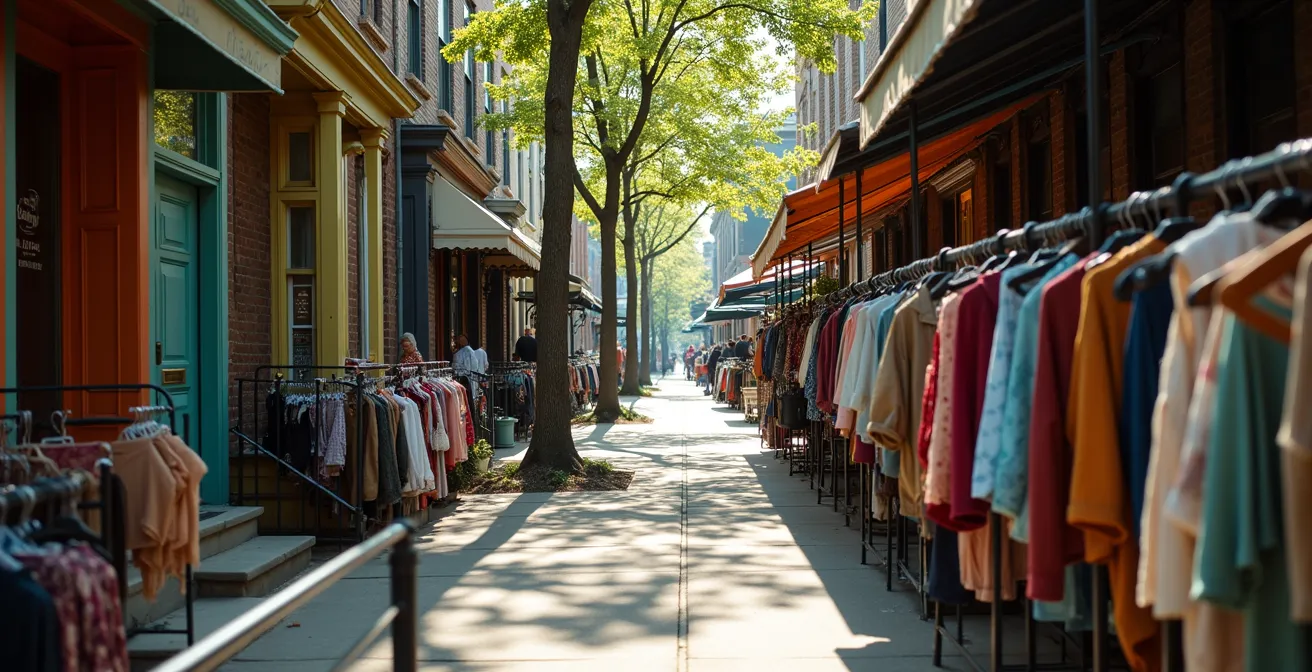
Scoring a true vintage gem in Kensington Market is less about luck and more about having the right strategy.
- Master the art of respectful haggling by knowing where—and how—it’s most effective.
- Develop “vintage literacy” to spot true, high-quality pieces versus overpriced modern “retro” items.
Recommendation: Visit on a Pedestrian Sunday for the ultimate vibe, but bring cash to snag the best deals from small vendors and fuel your hunt with epic street food.
So, you want to dive into the organized chaos of Kensington Market to hunt for vintage clothing. Dope. But let’s be real: stepping into the market can feel overwhelming. It’s a sensory explosion of sounds, smells, and a dizzying amount of stuff. Most guides will just tell you it’s a “vibrant, multicultural neighborhood” and point you toward the two most famous stores. That’s basic. You’re here because you don’t want to look like everyone else. You’re hunting for that one-of-a-kind piece, that fire leather jacket or perfect-fit 70s denim that tells a story.
The secret to Kensington isn’t just knowing *where* to go. It’s about knowing *how* to look. It’s a game, a treasure hunt. And the difference between going home with a legit vintage score and accidentally paying a premium for a 2005 fast-fashion top is all in the strategy. This isn’t just another shopping trip; it’s about developing your eye, understanding the culture of the market, and knowing the unwritten rules of the hunt. Forget the foodie blogs; this is your personal stylist’s playbook for conquering the racks and finding pieces that are pure gold.
This guide breaks down the essential strategies for a successful vintage hunt in Toronto’s most eclectic neighbourhood. From timing your visit for the best atmosphere to mastering the art of the deal and identifying authentic gems, you’ll get the insider intel needed to navigate the market like a seasoned pro.
Summary: The Ultimate Playbook for Vintage Shopping in Kensington Market
- Why Pedestrian Sundays Are the Best Time to Experience the Vibe?
- How to Haggle Respectfully in Kensington’s Vintage Shops?
- Courage My Love vs. Exile: Which Store Suits Your Retro Style?
- The “Vintage” Mistake That Costs You New Retail Prices
- How to Distinguish Licensed Performers from Random Noise?
- When to Visit Kensington Market for the Pedestrian Sunday Experience?
- Why You Must Carry Cash When Visiting Kensington Food Stalls?
- Eating Through Kensington Market: How to Taste Global Cuisines for Under $20?
Why Pedestrian Sundays Are the Best Time to Experience the Vibe?
If you want the full, undiluted Kensington Market experience, you have to go on a Pedestrian Sunday. This is when the market truly comes alive and the vibe is immaculate. On the last Sunday of each month from May to October, the main streets are shut down to cars, transforming the entire neighbourhood into a massive, sprawling street festival. For a vintage hunter, this is prime time. The energy is electric, with street performers, pop-up artisan stalls you won’t find any other day, and everyone showing off their best street style. It’s a living mood board.
The absence of traffic doesn’t just make it easier to wander; it changes the whole dynamic. Shops spill out onto the sidewalks, revealing hidden racks and bargain bins that are usually tucked away. It’s the perfect setting for a leisurely dig, allowing you to move freely between stores without dodging cars. The real pro move is to get there right when the streets close to get first dibs on the merchandise before the peak crowds hit in the mid-afternoon. This is your chance to feel the true pulse of the community and see the market at its most authentic and vibrant.
Your Strategic Timeline for Pedestrian Sunday Shopping
- Arrive by 12 PM: Get there as the streets officially close to traffic for easier navigation and first look at the goods.
- Shop Vintage (12-2 PM): Hit the vintage stores before the peak crowds descend, giving you space to properly dig through the racks.
- Refuel & Vibe (2-5 PM): Grab some street food and enjoy the live performances during the peak atmosphere.
- Explore Pop-Ups (All Day): Keep an eye out for the pop-up artisan vendors that only appear on these Sundays for truly unique finds.
- Wind Down (5-7 PM): As the festivities start to conclude, chill out in Bellevue Square Park and soak in the last of the day’s energy.
How to Haggle Respectfully in Kensington’s Vintage Shops?
Alright, let’s talk money. Haggling is part of the Kensington culture, but there’s a right way and a wrong way to do it. This isn’t a Moroccan souk; you can’t be aggressive. The key is respect. Remember, you’re in small, independent shops, often run by the owners who personally sourced the items. The vibe is more about finding a fair price together than winning a battle. Start by building a rapport—chat with the owner, compliment a piece you like. Never start with a lowball offer on a curated, high-value item.
The real opportunity for negotiation lies in bundling. If you’re buying multiple items, that’s your opening. Politely asking if there’s “any flexibility on the price” for a bundle is the classic Canadian approach. Some shops, like the legendary Courage My Love, have a clear pricing hierarchy; their famous $5 rack is fair game for deals, while their more curated pieces have less wiggle room. Cash can also be a powerful tool. Asking if there’s a better price for cash can sometimes knock a few bucks off, as it saves the vendor credit card processing fees. The goal is a win-win: you get a deal, and they make a sale without feeling disrespected. It’s a dance, not a fight.

As you can see, grouping items shows a genuine interest and creates a natural opening for negotiation. Many vendors are more willing to offer a discount on a multi-item purchase. A great way to initiate this is by using phrases that are collaborative rather than demanding, which is a method detailed in a guide to Kensington Market from Destination Toronto.
Case Study: Courage My Love’s Pricing Strategy
Courage My Love, a Kensington staple since 1975, perfectly illustrates the market’s pricing landscape. Their famous $5 rack is a treasure trove for budget shoppers and offers the best opportunities for haggling, especially on bulk purchases. In contrast, their curated vintage garments and unique up-cycled clothing have firmer prices. This two-tier system is a silent guide for shoppers, indicating where negotiation is welcome (bargain bins) and where it’s less appropriate (individually priced collector’s items).
Courage My Love vs. Exile: Which Store Suits Your Retro Style?
Walking into Kensington, you’ll hear two names over and over: Courage My Love and Exile. They’re the OG giants of the vintage scene, but they offer totally different experiences. Choosing where to focus your energy depends entirely on your style and your shopping mood. Think of it as choosing your own adventure: the chaotic treasure hunt versus the curated gallery.
Courage My Love is a digger’s paradise. It’s packed to the rafters with everything from Victorian-era fabrics and military surplus to endless bins of beads and buttons for DIY projects. It’s a place you need to roll up your sleeves and search. The reward for your effort can be huge, like scoring an amazing piece from their legendary $5 rack. It’s for the patient hunter who loves the thrill of the find. Exile, on the other hand, is for the focused buyer. It’s more organized and curated, specializing in high-quality pieces from the 1940s to the 60s, collectible band tees, and a massive selection of denim. You go to Exile when you know what you want. While their prices can be higher for rare items—like a pristine collectible t-shirt—they also have a bargain basement for those willing to do a little digging. Your choice depends on your mission: are you looking for inspiration, or are you hunting a specific grail?
This side-by-side comparison gives a clearer picture of where to direct your energy. A recent analysis of Toronto’s vintage stores breaks down the offerings even further.
| Store | Specialty | Price Range | Shopping Experience |
|---|---|---|---|
| Courage My Love | Victorian to grunge, beads, up-cycling, $5 rack | $5-$150+ | Treasure hunt required, dig through bins |
| Exile | 1940s-60s curated pieces, collectible tees, Levi’s | $30-$300+ | Pre-curated, ready-to-wear, bargain basement option |
| Sub-Rosa/Mirami & Micah | High-quality minimalist 90s, designer finds | $40-$200+ | Boutique atmosphere, carefully selected |
The “Vintage” Mistake That Costs You New Retail Prices
Here’s the deal: not everything in a vintage store is *true vintage*. The biggest mistake you can make is paying a premium for what is essentially a glorified second-hand item from a fast-fashion brand. The word “vintage” gets thrown around a lot, but to be a smart shopper, you need to develop what I call “vintage literacy.” This is the skill of distinguishing a genuinely old, well-made garment from a 2010s Zara top that’s just been styled to look retro. Real vintage pieces are priced based on their rarity, condition, historical significance, and quality of construction—not just because they’re old.
So, how do you spot the real deal? You have to become a detective. Start by touching the fabric. True vintage denim is noticeably heavier and more rigid than modern denim, which is often blended with stretch materials. Check the tags. A union tag, like the ILGWU (International Ladies’ Garment Workers’ Union) logo, is a dead giveaway that a piece was made in North America before the mid-1990s. Look at the construction. Single-stitch hems on t-shirts are a classic sign of a pre-90s piece. Metal zippers, especially from brands like YKK or Talon, often indicate an older, more durable garment. Learning these small details will protect your wallet and ensure your “vintage” find is actually the treasure you think it is.
As one local expert from the Everyday Allergen-Free Blog notes, pricing is a curated process:
Vintage shops tend to have a style identity and are curated assortments… The clothes are priced according to their level of nostalgia, style, condition, whether they are memorabilia, what decade they are from, and other factors
– Everyday Allergen-Free Blog, My Favorite Vintage Clothing Stores in Toronto
Your Checklist for Identifying True Vintage Quality
- Check for Union Tags: Look for logos like the ILGWU tag, which indicates pre-1990s North American manufacturing.
- Feel the Weight: True vintage denim is significantly heavier and more rigid than modern stretch-infused jeans.
- Look for Single-Stitch Hems: Examine the hems on t-shirt sleeves and bottoms; single-stitching is a hallmark of pre-1990s construction.
- Examine the Zippers: Older, quality pieces often feature sturdy metal zippers from brands like YKK or Talon.
- Avoid Fast Fashion Fakes: Be wary of early 2000s brands like H&M, Forever 21, or Zara being passed off as “vintage.”
How to Distinguish Licensed Performers from Random Noise?
Part of the magic of Kensington, especially on Pedestrian Sundays, is the soundtrack. The air is filled with music, from steel drums to folk singers to jazz trios. But for every incredible musician, there might be someone just making noise. Knowing how to spot the pros not only ensures you’re supporting legitimate artists but also enhances your whole experience. In Toronto, this is actually pretty straightforward, because the city has a system in place.
Legit street performers, or buskers, are required to have an official license from the City of Toronto. The key is to look for the laminated permit, which licensed performers are required to display visibly while they’re playing. This little piece of paper is your quality control. It means the performer has met the city’s standards and is a dedicated artist, not just someone who decided to try out their new amp on a busy corner. These are the people whose merch is worth buying and whose cases are worth dropping a “Toonie” ($2 coin) into—the unofficial currency of Toronto busker appreciation.
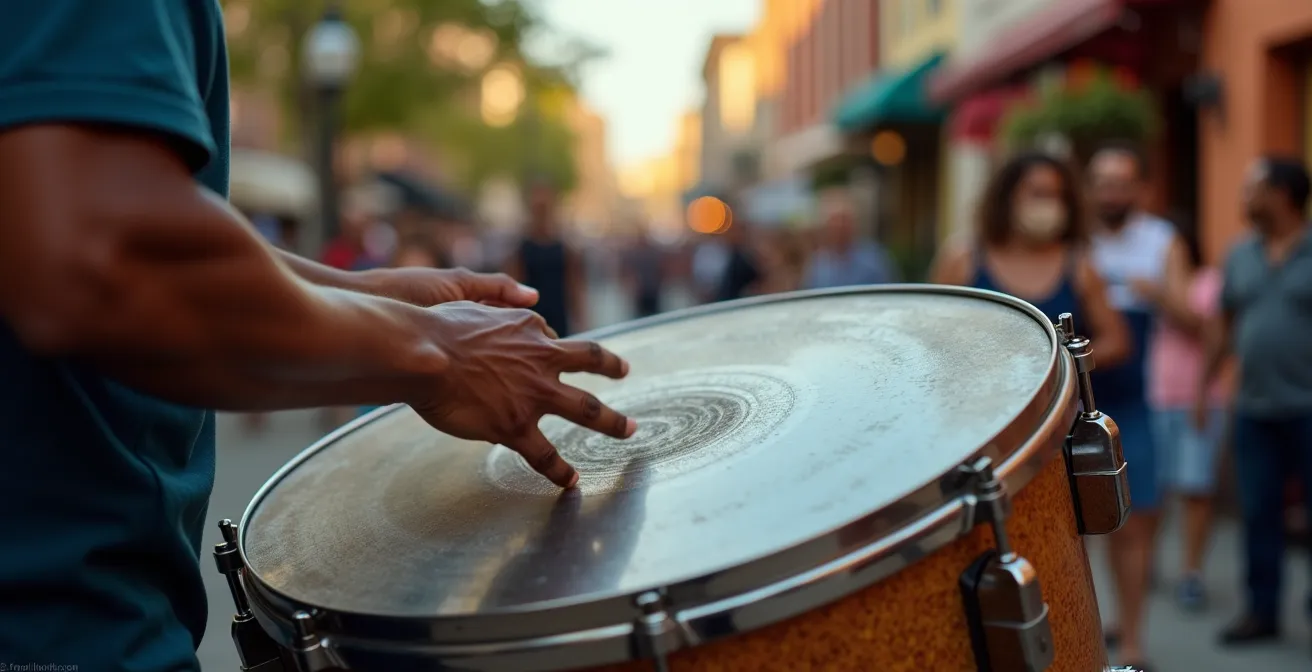
Supporting these licensed artists is supporting the creative soul of the market. They’ve gone through the official process and are a regulated, respected part of the city’s cultural fabric. When you see that permit, you know you’re listening to a professional who helps make the Kensington vibe what it is. It’s a simple way to separate the signal from the noise and invest your tips where they count.
Case Study: Toronto’s Official Busking License System
The City of Toronto operates an official busking license program that legitimate street performers must obtain. In Kensington Market, these licensed buskers are required to display their city-issued laminated permit visibly while performing. This system is especially crucial during Pedestrian Sundays, which see the highest concentration of street performances. It helps visitors easily identify professional performers who have been vetted, ensuring a higher quality of entertainment and maintaining a positive atmosphere throughout the neighbourhood.
When to Visit Kensington Market for the Pedestrian Sunday Experience?
Okay, so we’ve established that Pedestrian Sundays are the move. But let’s get even more granular. The experience changes hour by hour, and knowing the flow can make or break your day. The official hours are from noon to 7 PM, but the energy isn’t static. Arriving at 12 PM is for the strategic hunter: the crowds are lighter, the vendors are fresh, and you get first pick of the racks. This is your golden hour for serious shopping.
From about 2 PM to 5 PM, the market hits its peak. This is when the streets are packed, the music is at its loudest, and the energy is buzzing. This is less about focused shopping and more about soaking in the vibe. Grab some food, watch the performers, and people-watch. It’s a scene. However, the party doesn’t always stop at 7 PM. A pro tip for the 2024 season is that Augusta Avenue often stays closed to traffic until 10 PM between Oxford and College, allowing the festive atmosphere to continue into the evening, especially around the patios and food spots. The market is a living thing, constantly adapting. After some safety concerns, the BIA even trialed enhanced security for the June 2025 event, showing how the community works to preserve this beloved tradition while keeping everyone safe.
So, the “best” time depends on your mission. Do you want to shop? Go early. Do you want to party and soak in the culture? Go in the afternoon and stay late. Or, do both: shop early, then transition into vibe-mode as the day goes on. Planning your visit around these ebbs and flows is the key to a perfect day.
Why You Must Carry Cash When Visiting Kensington Food Stalls?
This might be the single most important piece of practical advice for Kensington Market: bring cash. While many of the established vintage stores will take cards, a huge part of the market—especially the small food stalls, pop-up vendors, and bargain tables—is cash-oriented. Relying solely on your credit or debit card is a rookie mistake that will limit your options and cause you to miss out on some of the best stuff.
Why the old-school approach? It’s simple economics. According to the Kensington Market BIA, many of these businesses are tiny, family-run operations with razor-thin margins. As noted in the Community Business Support Guidelines, avoiding credit card processing fees of 2-3% is a big deal for them. It helps them keep their prices low in an increasingly expensive city. By paying with cash, you’re directly supporting these micro-businesses and helping to preserve the independent spirit of the market. It’s a small gesture that has a real impact.
So, hit an ATM before you arrive. The major banks have machines along the market’s perimeter on Spadina Avenue and College Street. Grab a mix of small bills ($5s, $10s) and coins (Loonies and Toonies are perfect for tips and small purchases). Think of cash as your passport to the full, authentic Kensington experience. It opens doors that plastic just can’t.
These small, family-run businesses operate on thin margins. Avoiding credit card processing fees of 2-3% helps them keep their prices low and stay in business in an expensive city.
– Kensington Market Business Improvement Area, Community Business Support Guidelines
Key takeaways
- Kensington Market is a treasure hunt; success requires strategy, not just luck.
- Develop “vintage literacy” by checking for union tags, fabric weight, and single-stitching to identify true vintage quality.
- Visit on Pedestrian Sundays for the ultimate vibe, and bring cash to support small vendors and snag the best deals.
Eating Through Kensington Market: How to Taste Global Cuisines for Under $20?
A long day of vintage hunting requires fuel. But you’re a savvy shopper, and that extends to your food choices. You don’t need a fancy, sit-down meal that eats into your shopping time and budget. Kensington Market is one of the best places in Toronto to get incredible, authentic global street food for cheap. The mission: refuel with something amazing for under $20, so you can get right back to the racks.
Forget the trendy restaurants on the fringes. Dive into the heart of the market and look for the small, unassuming stalls and storefronts. This is where you’ll find the real gems. You can grab a couple of delicious Jamaican patties, a fresh-made empanada, or a life-changing taco from one of the many Latin American spots. These are the perfect handheld foods for a shopper on the move. Most of these iconic bites will only set you back a few dollars each, allowing you to sample multiple cuisines without breaking the bank. This is what we call strategic eating—maximum flavour and energy for a minimal price.
By sticking to the street food stalls, you’re not just saving money; you’re participating in the authentic culture of the market. You’re eating food made with passion by families who have been there for years. It’s the perfect complement to your vintage hunt—a search for authenticity, whether it’s in a leather jacket or a perfect churro. So, keep your eyes peeled, follow your nose, and use your cash to power your hunt with the world’s best shopping fuel.
You’ve got the playbook. Now, grab your tote bag, pull out some cash, and head down to Kensington Market to start your own treasure hunt. The perfect score is waiting for you.