In summary:
- Graffiti Alley is a legal street art hub in Toronto thanks to a 2011 municipal designation, distinguishing its art from vandalism.
- For the best photos, plan a walk during the “golden hour” starting at Spadina Ave and heading west towards Portland St.
- The alley is a living gallery; iconic pieces like Rick Mercer’s old backdrop coexist with fresh, ever-changing murals by new artists.
- While safe during the day, visiting at dusk requires awareness of your surroundings; for artists, weekends are prime time.
- Extend your visit by exploring Queen West’s live music venues and connecting with Toronto’s deeper Indigenous art scene.
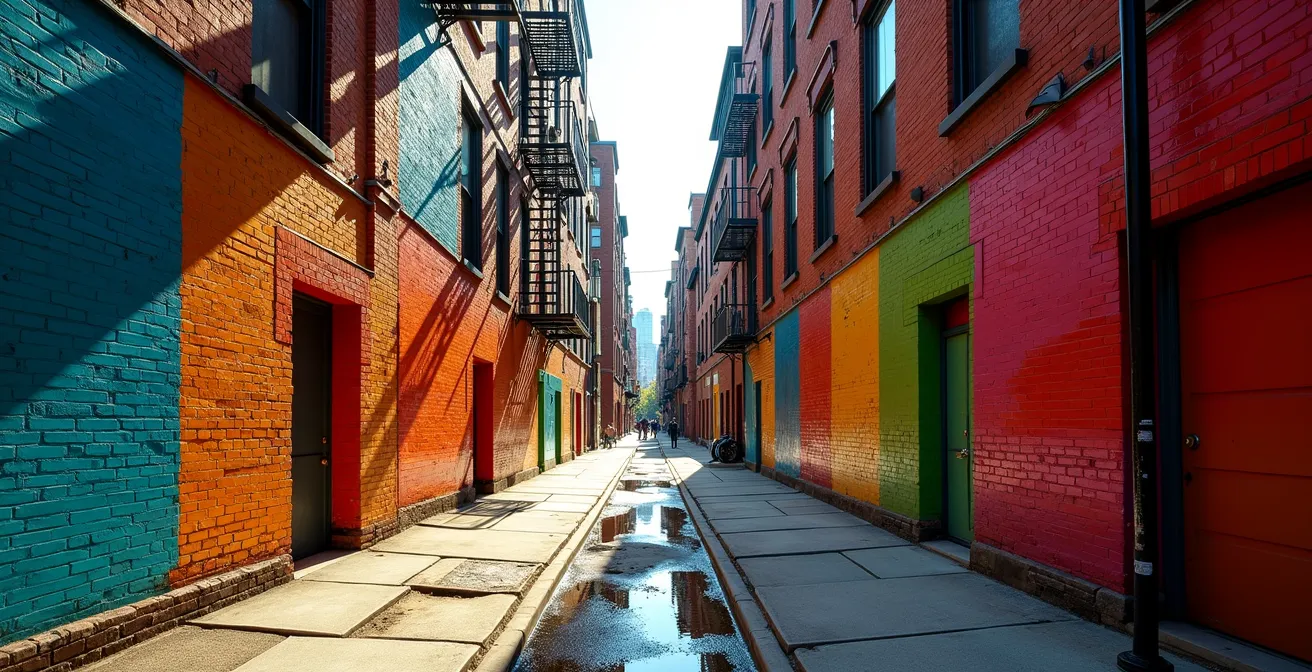
That explosion of colour you’ve seen all over Instagram? That’s Graffiti Alley. Tucked away just south of Queen Street West, this three-block stretch of raw creativity is Toronto’s most famous outdoor art gallery. Many visitors just wander through, snapping a few quick pictures for their feed. They see the vibrant walls but miss the story, the rhythm, and the unwritten rules of this dynamic space. They treat it like a static background, when in reality, it’s a living, breathing creature.
Most guides will tell you it’s on Rush Lane and that it’s a great spot for photos. That’s true, but it’s only the surface. But what if the key to capturing truly powerful images wasn’t just finding the brightest mural, but understanding the culture that creates them? This alley isn’t just a location; it’s a conversation between artists, layered over years. To get the most photogenic shots, you need to learn to read the walls, respect the code, and move with the visual flow of the street.
This guide will take you beyond a simple walk-through. We’ll explore why this specific alley is a legal haven for artists, lay out a strategic plan for a DIY photo walk, and help you understand the narrative layers of its most iconic walls. We’ll also cover how to stay safe, how to respectfully interact with artists, and how to connect your experience to the broader creative pulse of Queen West, from its fashion to its deep-rooted Indigenous art history. Get ready to see Graffiti Alley not just as a backdrop, but as the main event.
To help you navigate this unique urban landscape, this article breaks down everything you need to know. The following sections will guide you step-by-step, from the legal history of the alley to a deeper appreciation of the art and artists that make this place a Toronto icon.
Summary: Your Guide to Exploring Graffiti Alley
- Why Graffiti Is Legal in this Specific Alleyway?
- How to Plan a DIY Photo Walk from Spadina to Portland Street?
- Rick Mercer’s Spot vs. New Tags: Which Wall is Most Iconic?
- The Safety Precaution You Should Take When Visiting Alleys at Dusk
- How to Meet the Artists Painting Live on Weekends?
- Why Lineups Start at 9 PM on this Specific Street?
- Queen West vs. Eaton Centre: Which is Better for Fashion Finds?
- Indigenous Art in Toronto: How to Buy Authentic Works from First Nations Artists?
Why Graffiti Is Legal in this Specific Alleyway?
The first thing to understand about Graffiti Alley is that it’s not an act of rebellion; it’s a sanctioned cultural space. This isn’t just random tagging. The vibrant murals covering nearly every square inch of Rush Lane and its connecting alleys exist because of a deliberate decision to protect them. The key distinction lies in the City of Toronto’s forward-thinking approach to street art, which separates creative expression from simple vandalism. This legal status is what allows the alley to flourish as a safe and celebrated hub for artists and photographers alike.
The turning point came on July 12, 2011, when the Toronto City Council officially designated the area as one of “municipal significance.” This was the culmination of a dedicated effort led by the Queen Street West Business Improvement Association (BIA). As detailed in public records, the BIA campaigned to protect property owners who appreciated the art on their walls and were being unfairly ticketed for not removing it. This move effectively created a legal framework where graffiti art, created with permission, is recognized as a cultural asset rather than a nuisance.
So, while unauthorized tagging is still illegal elsewhere in the city, Graffiti Alley operates under a different set of rules. It’s a designated zone where the city’s Street Art Toronto (StART) program often supports and commissions works. This official recognition has transformed the alley from a grey-area canvas into a premier destination for public art, ensuring its legacy and continuous evolution. It’s a testament to how a community can work with the city to preserve a unique cultural landscape. This legal foundation is the bedrock upon which the alley’s entire creative ecosystem is built.
How to Plan a DIY Photo Walk from Spadina to Portland Street?
To capture the best of Graffiti Alley, you need a plan. Simply wandering in won’t do justice to the visual feast. A successful photo walk is about timing, light, and route. The alley runs east-west, making it a perfect channel for the dramatic, angular light of “golden hour”—the hour after sunrise and before sunset. This is when the colours pop, the textures of the brick and spray paint are highlighted, and the long shadows add depth and drama to your shots. Avoid midday, when the high sun flattens everything out.
The best way to structure your walk is to treat it as a linear journey from east to west. This allows you to follow the light and experience the alley as a progressive reveal. Here is a proven route for a perfect golden hour photo walk:
- Start at Le Gourmand: Grab a coffee (and one of Toronto’s most famous chocolate chip cookies) at the café on the corner of Spadina and Queen. This is your staging ground.
- Enter from the East: Walk south on Spadina just a few steps and enter Graffiti Alley at its easternmost point. The official “Graffiti Alley” street sign here makes for a great establishing shot.
- Walk West Slowly: The magic of the alley unfolds as you move deeper. The first section has some great pieces, but the larger, more complex murals tend to appear as you approach the block between Augusta and Portland.
- Stop at Intersections: The points where north-south alleys intersect Rush Lane offer unique lighting and compositional opportunities. Use these breaks to capture different angles and perspectives.
- End at Portland Street: Once you reach the western end at Portland, your walk isn’t over. For a different perspective, loop back by walking north to Richmond Street and heading east, peeking down the alleys from the other side.
This path is more than just a route; it’s a framework for storytelling. Your camera is your tool to document this living gallery, a place so integral to Toronto’s identity that companies like Tour Guys have built entire businesses around guiding people through its narrative layers. For the DIY photographer, this route is your script.
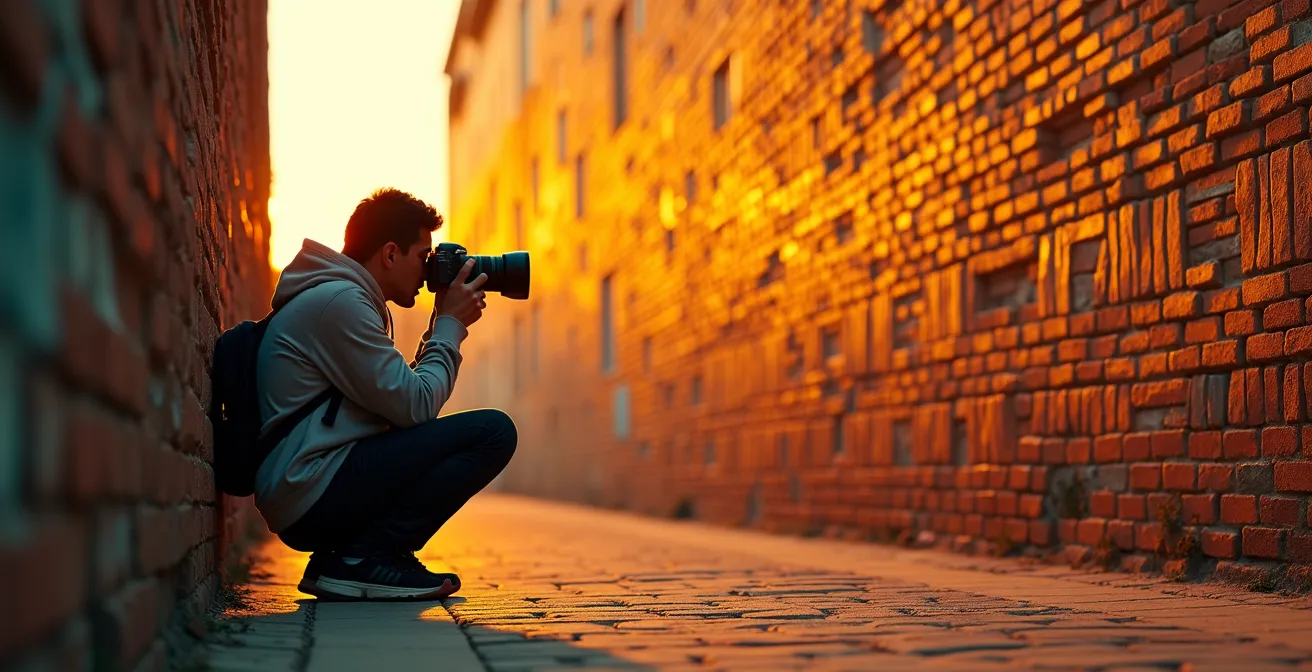
As you can see, positioning yourself to use the light is key. A low angle during golden hour can make the murals feel monumental. Remember to look for small details, too—a single sticker, a tiny stencil, or a layered tag can tell as much of a story as a wall-sized masterpiece. Be patient, observe the flow of people, and wait for moments when you have a clean shot. The alley has a rhythm, and your best photos will come when you sync up with it.
Rick Mercer’s Spot vs. New Tags: Which Wall is Most Iconic?
Asking which wall in Graffiti Alley is “most iconic” is like asking which wave in the ocean is the most important. The answer changes with the tide. This is the core of the alley’s identity: it is a living gallery, a constant battle and conversation between permanence and impermanence. On one hand, you have the historical layers known to millions; on the other, you have fresh paint that might only last a week. The true icon is the alley itself, a space that holds both history and the present moment in a vibrant, chaotic balance.
The area’s cultural significance is undeniable. Its cool factor was cemented when, in September 2015, Vogue Magazine cited Queen West as the second coolest neighbourhood in the world, with Graffiti Alley as one of its prime exhibits. This international recognition put it on the map for a global audience, but locals know the icons run deeper. For years, the alley was famously the backdrop for comedian Rick Mercer’s rants on the CBC, making certain walls instantly recognizable to a generation of Canadians. These sections carry a nostalgic weight, documented on national television.
However, the spirit of street art is evolution. While Mercer’s spot is a piece of Canadian pop-culture history, the most “Instagram-famous” wall today might be a brand-new, jaw-dropping piece by a local legend like Elicser or an evolving tribute by Uber5000. This constant renewal is the pulse of the alley. The following table breaks down this dynamic:
| Permanent Icons | Ephemeral New Works |
|---|---|
| Rick Mercer’s Rant backdrop walls | Uber5000’s evolving Toronto tributes |
| Recognized by national TV audiences | Instagram-famous rotating murals |
| Historical significance since 2000s | Fresh works by Elicser, Skam, Poser |
| Protected by media documentation | Constantly painted over and renewed |
Ultimately, the most iconic wall is a matter of personal perspective. Is it the one with historical significance, or the one that’s fresh, vibrant, and speaks to the now? The beauty is that you don’t have to choose. A great photo series from the alley will capture both: the faded layers of the past and the bold, saturated colours of the present. That’s how you tell the complete story of this incredible place.
The Safety Precaution You Should Take When Visiting Alleys at Dusk
For any urban explorer, safety is a valid concern, especially when navigating narrow alleyways. The good news is that Graffiti Alley is widely considered safe, particularly during the day. Its popularity means there’s a constant stream of foot traffic, from tourists and photographers to locals using it as a shortcut. This high visibility is a natural deterrent to crime. In fact, the feeling of safety is a common theme among visitors.
As one solo female traveler noted in her blog, the experience is overwhelmingly positive. Her account helps to reassure anyone feeling hesitant:
Like most of Toronto, it’s completely safe to visit during the day, even if you’re by yourself. As a female, I felt perfectly safe and comfortable walking around Graffiti Alley on my own.
– Lauren, Justin Plus Lauren
However, as daylight fades, the atmosphere changes. While still generally safe, visiting at dusk or in the evening requires a bit more awareness. The crowds thin out, and the lower light can obscure potential hazards. The main precaution is simply to be aware of your surroundings. Pay attention to who is around you, be mindful of your equipment, and trust your instincts. If a situation feels uncomfortable, simply walk back out to the well-lit and busy Queen Street West.
Here are a few practical safety tips to keep in mind for an evening or late-afternoon visit:
- Visit during peak hours: If you’re concerned, stick to daytime or early evening when there are plenty of other people around.
- Watch your step: The pavement can be uneven. In low light, it’s easy to trip over potholes or debris, so keep an eye on the ground.
- Look out for vehicles: The alley is used for deliveries to Queen West businesses. Be alert for cars or trucks, especially around back entrances.
- Respect residents: People live in apartments overlooking the alley. Avoid making loud noises, and never point your camera directly into windows.
- Consider a tour after dark: If you really want to experience the alley at night, joining a guided tour like those offered by Tour Guys provides the added security of being in a group.
How to Meet the Artists Painting Live on Weekends?
One of the most thrilling experiences in Graffiti Alley is catching an artist in the act. Witnessing a mural come to life, from the first outline to the final highlight, connects you to the art in a profound way. While it’s largely a matter of luck, you can increase your chances by visiting on weekend afternoons, especially when the weather is good. This is prime time for artists to work on larger, more intricate pieces that require hours of daylight.
You might also get lucky during special events. The annual Queen West Art Crawl in September, for example, often features live painting sessions, turning the entire neighborhood into a creative hotspot. During these times, you’re not just hoping to see an artist; you’re practically guaranteed to. It’s an opportunity to see masters of can control create striking portraits and complex designs right before your eyes. But even on a regular Saturday, a slow, observant walk can lead you to a work in progress.
If you do find an artist at work, approaching them requires a level of respect and understanding of street art etiquette. They are in their creative zone, and interrupting them improperly is a major faux pas. Remember, you are a guest in their outdoor studio. Following a simple code of conduct will ensure a positive interaction for both you and the artist.
Your Action Plan: Street Art Etiquette for Approaching Artists
- Wait for a natural break: Don’t interrupt them mid-line. Wait until they step back to look at their work or change cans.
- Offer a gesture of goodwill: A simple “Hey, that looks amazing,” goes a long way. Offering to buy them a coffee or a drink is a classic icebreaker.
- Ask permission to photograph: Always ask before taking photos or videos of them working. Most are fine with it, but asking is a sign of respect.
- Don’t touch their supplies: Their spray cans and other tools are their livelihood. Never touch them without explicit permission.
- Respect their personal space: Give them room to work. Be mindful not to stand in their light or block their view of the wall.
And the golden rule: never, ever ask, “Is this legal?” In a sanctioned space like Graffiti Alley, it’s safe to assume they have the necessary permissions. The question can come across as ignorant or accusatory. Instead, ask them about their piece, their technique, or what inspires them. A respectful and genuine interest is the best way to connect with the creators behind the art.
Why Lineups Start at 9 PM on this Specific Street?
As the sun sets on Graffiti Alley, the creative energy of Queen West doesn’t fade—it just shifts venues. The same street that buzzes with photographers and art lovers by day transforms into a hotspot for Toronto’s nightlife. The lineups you see forming around 9 PM are not for a secret art show, but for the legendary music venues that are as much a part of the neighborhood’s DNA as the murals themselves. This transition from street art to stage is a natural progression for an evening in Queen West.
Two of the most famous doors you’ll see people queuing for are The Horseshoe Tavern and The Cameron House. These are not trendy nightclubs; they are iconic, gritty, and beloved institutions. The Cameron House, in particular, is a perfect extension of the alley’s vibe. Described as heavy on boho and light on chic, it’s a dive bar that champions live, local music. Its exterior is even a famous photo op, featuring the “This is Paradise” mural, a popular selfie backdrop that bridges the worlds of street art and live performance.
This flow from the visual to the auditory is the perfect way to round out a day of creative exploration. You can spend the golden hour capturing the art, grab dinner at one of Queen West’s countless trendy restaurants, and then slide right into the evening’s main event. It’s a seamless experience that showcases the neighborhood’s multifaceted personality. A perfect evening itinerary might look something like this:
- 4:00 PM: Begin your photo walk in Graffiti Alley to catch the best golden hour light.
- 6:00 PM: Enjoy dinner at a restaurant on Queen Street West.
- 8:00 PM: Take one last, atmospheric stroll through the alley as it quiets down.
- 9:00 PM: Pick your venue and join the lineup at The Horseshoe Tavern or The Cameron House.
- 10:00 PM: Immerse yourself in Toronto’s live music scene.
The lineups are a sign that the second act of Queen West’s daily performance is about to begin. For visitors, it’s a chance to experience the full spectrum of the area’s artistic soul, from the paint on the walls to the notes in the air.
Queen West vs. Eaton Centre: Which is Better for Fashion Finds?
After immersing yourself in the visual culture of Graffiti Alley, you might be inspired to find a look that matches its creative energy. This brings up a classic Toronto shopping dilemma: should you stick to the independent boutiques of Queen West or head to the massive, mainstream Eaton Centre? For anyone seeking unique fashion finds that resonate with the street-style aesthetic of the alley, the answer is clear: stay on Queen West.
Graffiti Alley is located directly within Toronto’s Fashion District, and that’s no coincidence. The area has long been a hub for local designers, vintage curators, and avant-garde fashion. The shops lining Queen Street West are a direct reflection of the alley’s artistic spirit: they are independent, edgy, and one-of-a-kind. This is where you’ll find pieces that you won’t see anywhere else, often made by the city’s own creative talent. It’s about supporting local and curating a personal style, not just buying a brand.
The Eaton Centre, while a fantastic shopping destination in its own right, offers a completely different experience. It’s a world of global chains, international brands, and the convenience of a one-stop-shop mall. It’s perfect if you need something specific from a major retailer, but it lacks the element of discovery and local flavor that makes Queen West special. The choice really comes down to what you’re looking for.
| Queen West Fashion District | Eaton Centre |
|---|---|
| Independent local designers and vintage shops | Global chain stores and international brands |
| Street-style aesthetic matching Graffiti Alley vibe | Mainstream fashion and mall atmosphere |
| Located steps from Graffiti Alley | Downtown core, subway accessible |
| Unique, one-of-a-kind pieces | Consistent sizing and availability |
| Supports local Toronto creativity | Convenient one-stop shopping |
In short, if your visit to Graffiti Alley has you feeling inspired by authenticity, creativity, and local expression, the surrounding fashion district is your playground. The Eaton Centre is about convenience; Queen West is about connection and character. For a true fashion find, the choice is easy.
Key takeaways
- Graffiti Alley’s legality is a key part of its story; it’s a sanctioned space for art, not vandalism.
- Plan your photo walk for golden hour, moving from east (Spadina) to west (Portland) to best capture the light and layers.
- Respect the culture: approach artists with etiquette, understand that art is ephemeral, and be aware of your surroundings, especially at dusk.
Indigenous Art in Toronto: How to Buy Authentic Works from First Nations Artists?
While exploring the vibrant, contemporary art of Graffiti Alley, it’s crucial to acknowledge the deeper artistic and cultural history of the land you’re standing on. The area, like all of Toronto, is the traditional territory of many nations, including the Mississaugas of the Credit, the Anishnabeg, the Chippewa, the Haudenosaunee, and the Wendat peoples. Engaging with this history can and should be part of your artistic journey in the city. After celebrating the new, take the time to connect with the original.
This connection isn’t just abstract. Indigenous art is a living, breathing part of Toronto’s contemporary art scene. You can even find murals by Indigenous artists within the city’s StART program. One powerful example nearby is a large mural of birds in flight by Montreal artist Annie Hamel on Vanauley Street, which tells the story of the various peoples who have lived on this land. Moving beyond observation to support is the next logical step. Buying authentic art from First Nations, Inuit, and Métis artists is a meaningful way to honour this legacy, but it’s important to do so ethically and directly.
To continue your art tour with a focus on Indigenous works, here is a path to guide you from appreciation to authentic support:
- Start with Acknowledgment: Before anything else, recognize that Graffiti Alley and Queen West exist on traditional Indigenous territory. This context is fundamental.
- Visit On-Site Gallery: Located at OCAD University, just a short walk away, this gallery often features powerful contemporary works by Indigenous artists and curators.
- Explore Bay of Spirits Gallery: This gallery is dedicated to authentic, high-quality First Nations art, providing a trusted place for you to see and purchase works.
- Support the Indigenous Arts Market: When it runs, this market at the Fort York National Historic Site offers a chance to buy directly from artists, ensuring they receive the full benefit of their work.
- Learn at the Woodland Cultural Centre: While a day trip from Toronto (located in Brantford), visiting this centre is an immersive way to learn about the art, history, and culture of the Haudenosaunee people of the Great Lakes region.
By taking these steps, you transform your visit from a simple photo-op into a more conscious and respectful engagement with the full, rich tapestry of Toronto’s art scene—past, present, and future.
Now that you’re equipped with the knowledge to see Graffiti Alley through the eyes of an insider, your next visit will be about more than just pictures. It’s your chance to capture the narrative, respect the code, and connect with the creative pulse of Toronto in a truly meaningful way.