In summary:
- Bring cash ($40-$60 in small bills) to support vendors and speed up transactions.
- Dodge the infamous Seven Lives taco line by visiting on a weekday between 2:30-4:00 PM.
- Share larger items like arepas and empanadas to sample more food from different countries.
- Trust the green “Pass” signs; all vendors are inspected for hygiene by Toronto Public Health.
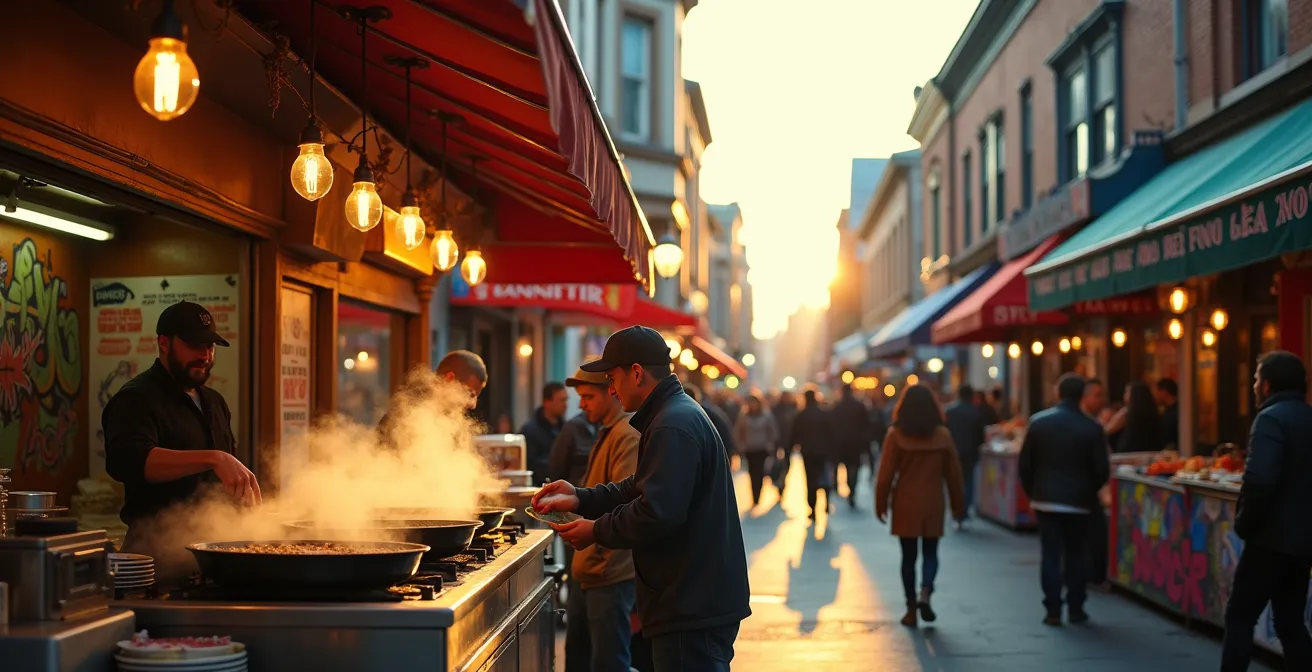
The second you step into Kensington Market, your senses are under siege. The sizzle of frying plantains, the sweet aroma of churros, the vibrant beats of a distant steel drum—it’s a dizzying, delicious chaos. For any foodie, it’s a paradise of choice. For the budget traveler, it can feel like a minefield of temptation, where a $20 bill can vanish in a single block. You’ve probably heard the standard advice: “You have to try the tacos,” or “It’s so diverse.” But these are observations, not a strategy. They don’t tell you how to navigate the delicious labyrinth without breaking the bank.
But what if conquering Kensington’s food scene on a budget is actually a delicious game you can win? It’s not about luck; it’s about a specific set of street-smart tactics. It’s about understanding the market’s unique “food-onomics,” where your choices about when you go, how you pay, and how you eat can transform your experience from a quick snack to a global feast. This isn’t just a list of cheap stalls; it’s a playbook for eating authentically, affordably, and abundantly.
This guide will equip you with that exact playbook. We’ll break down the art of timing your visit to legendary spots, the economic wisdom behind carrying cash, the strategy of “portion hacking” to maximize variety, and how to see the market not just as a collection of restaurants, but as a culinary ecosystem you can master.
In this guide, we’ll walk through the essential strategies to master Kensington Market’s food scene on a budget. The following sections provide a clear roadmap to eating more for less, turning your visit into a true international tasting adventure.
Summary: A Foodie’s Strategic Guide to Kensington Market
- Why You Must Carry Cash When Visiting Kensington Food Stalls?
- How to Time Your Visit to Seven Lives Tacos to Avoid the Line?
- Chilean Empanadas or Jamaican Patties: Which Snack Fuels Your Walk Better?
- The Hygiene Misconception That Stops Tourists from Trying Best Eats
- How to Share Portions to Try 5 Different Countries’ Food?
- Credit Card vs. Cash: Which Is Better for Small Vendors?
- Why Pedestrian Sundays Are the Best Time to Experience the Vibe?
- Toronto’s Food Scene: How to Navigate the City’s Explosion of International Food Halls?
Why You Must Carry Cash When Visiting Kensington Food Stalls?
In an increasingly digital world, walking into Kensington Market feels like a step back in time, and that extends to how you pay. While some vendors have adapted to card payments, cash is still king in this bohemian enclave. Relying solely on your credit card isn’t just inconvenient; it’s a strategic error. Many of the market’s most authentic and affordable gems—the small food stalls, the pop-up carts, the family-run bakeries—operate on a cash-only or cash-preferred basis. Being unprepared means you might miss out on the best beef patty or the freshest arepa simply because you can’t pay.
Beyond access, cash is about speed and courtesy. During a hectic lunch rush, fumbling with a card machine slows down the line for everyone. Paying with exact change or small bills is a sign of respect for the vendor’s time and helps them avoid accumulating large bills. It’s a small gesture that aligns you with the rhythm of the market. To do it right, you need a plan before you even arrive.
Your Kensington Market Cash Strategy
- Use ATMs from major Canadian banks (RBC, TD, CIBC) on Spadina or College Street before entering the market to avoid high-fee independent ATMs inside Kensington.
- Withdraw $40-60 for a full food tour; this allows sampling from 4-6 vendors without worry.
- Bring small bills, as many vendors prefer exact change for items under $10 and may not be able to break a $50.
- Keep cash in an easy-access pocket to speed up transactions during busy lunch rushes.
- Ask vendors if they accept Interac Debit as a backup; it often has lower fees for them than credit cards.
How to Time Your Visit to Seven Lives Tacos to Avoid the Line?
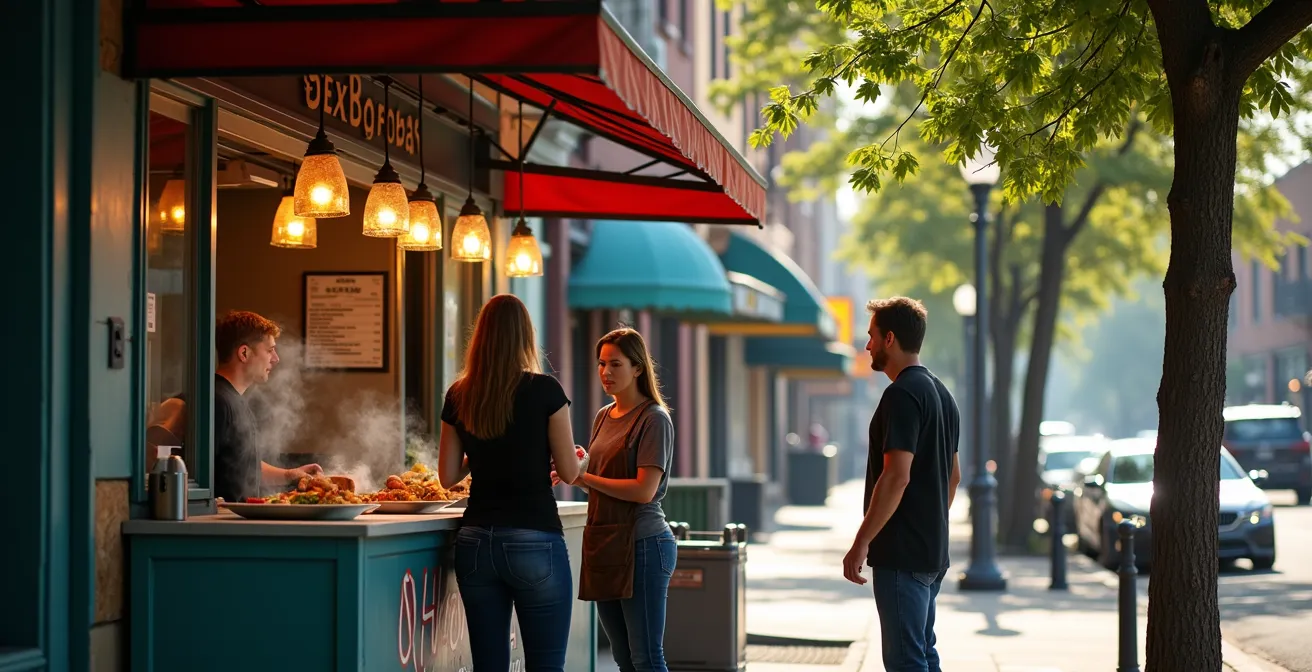
Seven Lives Tacos Y Mariscos is a Kensington Market institution, and so is its line. On a sunny Saturday, the queue for their legendary Baja fish tacos can snake around the corner, creating a 30-minute test of patience. For the uninitiated, this wait can eat up precious time and energy. But for the savvy food explorer, this is a classic case of line arbitrage—the art of trading time for tacos. The secret isn’t *if* you should go, but *when*.
The vast majority of visitors flock to the market between 12:00 PM and 2:00 PM on weekends. By simply avoiding this peak window, you can transform a frustrating wait into a breezy transaction. The “golden hour” for Seven Lives is a quiet period when the lunch rush has subsided, but before the after-work crowd arrives. This is your opportunity to not only get your food quickly but also to enjoy it without feeling rushed.
The real pros even use the weather to their advantage. A slightly drizzly Tuesday afternoon can mean virtually no wait at all, offering the same world-class taco with zero hassle. Here are the key timing strategies to remember:
- The Golden Hour: Aim for weekdays between 2:30 PM and 4:00 PM for the shortest possible wait.
- The Dead Zone: Absolutely avoid Saturdays from 12:00 PM to 2:00 PM unless you enjoy long lines.
- The Weather Hack: A little rain is your best friend. Crowds disappear on drizzly afternoons.
- The Scout Method: If you arrive and the line is long, grab a snack elsewhere and circle back in 20-30 minutes. The line moves in waves.
Chilean Empanadas or Jamaican Patties: Which Snack Fuels Your Walk Better?
As you wander through Kensington, you’ll need culinary fuel to keep you going. Two of the market’s most iconic and portable snacks are the Jamaican patty from places like Golden Patty and the Chilean empanada from Jumbo Empanadas. The choice between them isn’t just about flavor; it’s a strategic decision about what kind of energy you need. Are you looking for a quick, one-handed bite to eat while you browse vintage shops, or do you need a more substantial snack that demands a brief pause?
The Jamaican patty is the ultimate walking food. Its flaky, contained pastry makes it a low-mess, one-handed affair. It’s a light but satisfying snack that provides a quick burst of energy. The empanada, especially a “jumbo” one, is a different beast. It’s a mini-meal, dense and packed with filling. It often requires two hands and a couple of napkins, making it better suited for a 5-minute break on a bench. Understanding this functional difference is key to planning your tasting tour. For a side-by-side breakdown, this comparison is essential, based on data from a recent analysis of local food tour favorites.
| Criteria | Jamaican Patty (Golden Patty) | Chilean Empanada (Jumbo Empanadas) |
|---|---|---|
| Price | $3-4 | $5 jumbo / $1.50 mini |
| Portability Score | 9/10 | 6/10 |
| Messiness Factor | 2/10 (flaky but contained) | 5/10 (filling spillage risk) |
| Walking Comfort | One-handed eating | Requires both hands/napkins |
| Satiation Level | Light snack (200-250 cal) | Mini-meal (400-500 cal) |
| Best For | Quick energy while exploring | Sit-down 5-minute break |
The Jamaican patty isn’t just a snack; it’s a piece of Toronto’s history, a symbol of cultural identity that locals fought to protect. This adds another layer of meaning to your choice.
By 1985, Jamaican-Canadians fought and won against federal food regulators who insisted Jamaican beef patties must be sold as ‘pies.’ The Jamaican patty has since become a Toronto food staple.
– Destination Toronto, Take a Self-Guided Walking Tour of Kensington Market’s History
The Hygiene Misconception That Stops Tourists from Trying Best Eats
For some first-time visitors, the gritty, bohemian charm of Kensington Market’s food stalls can trigger a flicker of concern about hygiene. The open-air kitchens, the bustling crowds, the visible-from-the-street cooking—it’s a world away from sterile, enclosed restaurant kitchens. This appearance can unfortunately lead to a major misconception that stops tourists from trying some of the market’s most delicious and authentic food. However, this fear is largely unfounded and ignores the robust system in place to protect consumers.
The truth is, food safety in Kensington is not left to chance. Every single food vendor operates under the watchful eye of Toronto Public Health. A crucial piece of information for any skeptical visitor is that 100% of Kensington Market food vendors are legally required to be inspected and to prominently display their green ‘Pass’ certificate from the DineSafe program. This green sign is your guarantee that the vendor has met or exceeded the city’s rigorous food safety standards. Looking for this pass is the smartest way to reassure yourself.
Furthermore, seasoned foodies and locals know that the very nature of these stalls is often a better indicator of freshness. The high customer turnover means ingredients are constantly being replenished, not sitting around. You can often see your food being cooked to order right in front of you, a level of transparency you rarely get in a traditional restaurant. Rather than a sign of risk, the visible, fast-paced environment is actually a mark of quality and freshness.
How to Share Portions to Try 5 Different Countries’ Food?
The ultimate goal of a Kensington food tour is variety. But with so many tempting options, how do you sample flavors from Venezuela, Mexico, Chile, and Portugal without feeling stuffed after two stops and blowing your $20 budget? The answer is the single most important strategy for budget foodies: portion hacking. This means teaming up with a friend and agreeing to split everything. It’s the established culture of the market and the secret to turning a few individual meals into a multi-course international feast.
Instead of one person buying one large item, you collectively buy one item at each stop and share it. This immediately doubles the number of places you can try for the same price. One person can queue up and buy the food while the other scouts for a nearby bench or standing spot, then you swap roles at the next vendor. This “divide and conquer” approach is efficient and lets you cover more ground. The concept is proven by local food tours, which demonstrate that sharing small portions across multiple vendors is the most effective way to experience the market’s diversity.
A well-planned route is essential. By mapping your stops, you can create a logical tasting path that minimizes backtracking and maximizes flavor diversity. Here is a sample tasting route for two people, designed to hit multiple countries for under $20 total:
- Start on Augusta Ave: Split a half-arepa from a Venezuelan vendor (Approx. $5).
- Walk to Baldwin St: Share one legendary fish taco from Seven Lives (Approx. $6).
- Circle to Kensington Ave: Split one jumbo beef empanada from Jumbo Empanadas (Approx. $5).
- End on Nassau St: Share a sweet Portuguese pastry or a hot churro (Approx. $3.50).
This strategy allows you both to taste four distinct dishes from four different countries for about $10 per person, leaving room for a drink or another small snack.
Credit Card vs. Cash: Which Is Better for Small Vendors?
From a customer’s perspective, the cash vs. credit card debate is about convenience. From a vendor’s perspective, it’s about survival. While a previous section highlighted why you *need* cash to access all the market has to offer, this is about understanding *why* your choice of payment matters so much to the small, independent businesses that make Kensington special. This is the heart of the market’s “food-onomics.”
While digital payments offer speed and security, they come at a significant cost. For every transaction made with a credit card, vendors lose a percentage to processing fees. While it may seem small, this adds up. An industry analysis of Canadian street vendors shows that these credit card fees of 2-3% can cost vendors $2000+ annually. In a business with razor-thin margins, that $2000 is not trivial. It’s the difference between hiring an extra helper for the summer, upgrading a worn-out grill, or being forced to raise the price of that taco you love.
The Economic Ripple Effect of Your Payment Choice
Kensington Market is home to over 240 independent businesses, forming a fragile ecosystem built on direct vendor-customer relationships. This model supports an informal economy that prioritizes small-scale trade. When customers choose to pay with cash or, as a second choice, debit (which has lower fees), the money saved on credit card processing fees stays within the community. That $2000 saved annually per vendor, as estimated by community economic impact studies, can be reinvested directly into the business, helping it thrive and maintain its unique character without passing costs onto you.
When you pay with cash, you are not just buying food; you are casting a vote for the economic sustainability of the market. You are ensuring that 100% of your money goes to the person who prepared your meal, supporting their family and their craft directly.
Why Pedestrian Sundays Are the Best Time to Experience the Vibe?
If you want to see Kensington Market in its most vibrant, celebratory form, you have to experience a Pedestrian Sunday. These events transform the neighborhood from a bustling market into a full-blown street festival. The energy is electric, the streets are filled with music, and the entire community comes out to play. It’s the absolute best time to soak in the market’s unique, free-spirited vibe.
According to official Kensington Market records, Pedestrian Sundays have been a beloved tradition since 2004. They typically take place on the last Sunday of every month from May to October, when parts of Augusta Ave., Baldwin St., and Kensington Ave. are closed to all motorized traffic. This simple act of removing cars unlocks a new dimension of the market. Street musicians set up on corners, artisans display their crafts on the pavement, and food vendors roll out special pop-up stalls with items you won’t find on a regular Tuesday.
However, the best vibe comes with a trade-off: the biggest crowds. For a purely food-focused mission on a tight budget, the extra people and longer lines might be a downside. But if your goal is a complete sensory experience, it’s unparalleled. To make the most of it, a little planning goes a long way:
- Arrive before noon to see the temporary food stalls setting up and to snag unique items before they sell out.
- Bring extra cash, as many of the temporary pop-up vendors are cash-only.
- Follow the official Kensington Market BIA on social media for schedules of special performances.
- If you hate crowds, this is your signal to visit on a weekday instead for a more efficient tasting tour.
- Stay into the evening, when the car-free streets create an immersive atmosphere for enjoying your food to the sound of live music.
Key takeaways
- Strategic Eating: Eating well in Kensington Market for under $20 is a solvable puzzle, not a matter of luck.
- Cash is Crucial: Carrying cash, especially small bills, gives you access to all vendors and directly supports the local economy.
- Timing and Sharing: Avoiding peak hours and sharing portions are the two most powerful tactics to maximize the variety of foods you can taste.
Toronto’s Food Scene: How to Navigate the City’s Explosion of International Food Halls?
Kensington Market is a crown jewel, but it exists within Toronto’s larger, ever-evolving food landscape. The city has seen an explosion of modern, curated food halls like The Well and the revamped Union Station, offering trendy and convenient international options. So, in this new landscape, where does Kensington fit? Understanding its unique place helps you appreciate its value even more. It’s not just another food court; it’s an antidote to the polished, modern food hall experience.
While new food halls offer convenience and a certain Instagram-worthy aesthetic, Kensington offers something they cannot: grit, authenticity, and true affordability. It’s a chaotic, organic ecosystem that has grown over decades, not a top-down, planned development. The vendors are independent entrepreneurs, not curated tenants. The price point reflects this direct-to-consumer model, making it one of the last places in downtown Toronto where you can have a truly global culinary adventure on a shoestring budget. This comparison from the Culinary Adventure Co., praised by FORBES, puts it in perfect perspective.
| Food Hub | Best For | Price Range | Atmosphere |
|---|---|---|---|
| Kensington Market | Gritty, authentic, budget adventure | $5-15 per meal | Bohemian, outdoor, chaotic |
| St. Lawrence Market | Historic, artisanal, Canadian-focused | $10-25 per meal | Traditional, organized, tourist-friendly |
| The Well Food Hall | Curated, trendy, convenient | $15-30 per meal | Modern, polished, Instagram-worthy |
| Union Station Foodie Aisle | Quick transit meals | $12-20 per meal | Convenient but less authentic |
Choosing Kensington is choosing an adventure. It is, as the Culinary Adventure Co. notes, a place “filled with stories, history and the most multicultural bites Toronto has to offer.” Designated a National Historic Site of Canada, it represents a living, breathing piece of the city’s soul. The new food halls are exciting additions, but Kensington Market remains the irreplaceable heart of Toronto’s authentic, grassroots food scene.
Armed with these strategies, you’re no longer just a tourist; you’re a player in the delicious game of Kensington Market. Go forth, be strategic, and eat the world for under $20.