Accommodations & Travel Tips
Toronto presents unique challenges that catch even experienced travelers off guard. The city’s extreme seasonal swings—from humid 35°C summers to -20°C winters with wind chill—demand preparation that goes far beyond typical travel planning. Add to this a sprawling urban geography where “downtown” means different things to different people, a modern payment ecosystem that’s rapidly moving beyond cash, and accommodation options ranging from luxury Yorkville suites to cozy Annex guesthouses, and you’ll understand why successful Toronto visits require more than booking a hotel and packing a suitcase.
Whether you’re planning a week-long exploration or maximizing a brief layover at Pearson Airport, understanding the practical realities of Toronto travel transforms potential frustrations into confident navigation. This resource connects the essential knowledge areas that matter most: choosing accommodations that align with your itinerary, surviving weather extremes with the right gear, managing money without losing value to fees, and leveraging technology that locals take for granted. Each topic builds on real challenges visitors face, offering the context you need to make informed decisions before you arrive.
Choosing the Right Accommodation for Your Toronto Stay
Toronto’s accommodation landscape reflects the city’s geographic sprawl and diverse neighborhoods, each offering distinct advantages depending on your travel priorities. The fundamental challenge isn’t finding a place to sleep—options abound across all price points—but rather matching your accommodation’s location and type to your specific itinerary and travel style.
Location Strategy and Neighborhood Selection
The concept of “downtown Toronto” confuses many visitors because it lacks precise boundaries. Locals might refer to the Financial District, Entertainment District, Yorkville, or even parts of The Annex as downtown depending on context. This ambiguity matters when booking accommodations, because a hotel advertised as “downtown” could be a 30-minute subway ride from your planned activities. Smart location strategy starts with plotting your must-see destinations on a map, then identifying accommodations within reasonable transit distance—typically one or two subway stops or a 20-minute walk.
Different neighborhoods serve different needs. Yorkville and the Financial District offer luxury hotels with premium amenities, appealing to business travelers and those seeking high-end experiences. The Annex provides charm and value, particularly through guesthouses and bed-and-breakfasts where shared bathrooms are common but rates drop significantly. Areas near major event venues (Rogers Centre, Scotiabank Arena) see dramatic price increases during concerts, games, and conventions, making booking timing as critical as location choice.
Understanding Accommodation Types and Booking Timing
Toronto’s rental market includes traditional hotels, short-term apartment rentals, guesthouses, and hybrid options, each with distinct fee structures that affect final costs. Hidden fees frequently appear at checkout: resort fees (even in city hotels), parking charges that can reach $40-50 per night downtown, and cleaning fees for apartment rentals that sometimes exceed one night’s base rate. Comparing accommodation types requires calculating total out-the-door costs, not just advertised nightly rates.
Booking timing significantly impacts both availability and pricing. For major events—Toronto International Film Festival, Caribbean Carnival, playoff games—accommodations within convenient proximity fill up months ahead, with prices climbing as availability shrinks. Conversely, booking too far in advance for regular periods can mean missing last-minute deals, particularly during Toronto’s shoulder seasons (April-May, October-November) when weather uncertainty keeps some travelers away. The sweet spot for standard bookings typically falls 6-8 weeks before arrival, balancing selection with reasonable pricing.
Navigating Toronto’s Extreme Weather Conditions
Toronto’s continental climate creates seasonal extremes that rank among the most dramatic of any major North American city. Temperature swings of 50°C between summer highs and winter lows aren’t theoretical—they’re annual reality. Visitors unprepared for these conditions experience more than discomfort; they face genuine health risks, limited mobility, and significantly restricted enjoyment of outdoor attractions.
Winter Survival Essentials
Toronto winters extend roughly from December through March, with February typically delivering the harshest conditions. The challenge isn’t just cold temperatures—it’s wind chill that can push perceived temperatures to -30°C or lower, creating frostbite risk within 10-15 minutes of exposed skin. Understanding wind chill helps you time outdoor activities appropriately and recognize when indoor route planning becomes necessary. The PATH system, an underground walkway network spanning 30+ kilometers beneath downtown, allows movement between major buildings, transit stations, and shopping areas without surface exposure.
Skin protection requires more than standard moisturizer. The combination of harsh outdoor cold and indoor heating creates extreme dryness, making heavy-duty barrier creams and lip balm with SPF essential daily items. Daylight timing also affects winter planning significantly—sunset occurs around 5:00 PM in December and January, meaning outdoor photography, walking tours, and park visits need morning or early afternoon scheduling to avoid darkness.
Summer Heat and Humidity Management
Toronto’s summers surprise visitors expecting mild Canadian weather. July and August regularly deliver humidex values exceeding 40, where humidity amplifies the felt temperature well above actual air temperature. This oppressive combination creates conditions where even short outdoor walks produce heavy sweating, making fabric choice and activity timing critical considerations.
Successful summer packing prioritizes moisture-wicking fabrics over cotton, which retains sweat and stays damp. Lightweight, breathable materials in loose fits allow air circulation while protecting skin from intense UV exposure. Cooling accessories—portable fans, cooling towels, wide-brimmed hats—transform from luxury items to practical necessities. Timing outdoor activities for early morning (before 10 AM) or evening (after 6 PM) avoids peak heat and sun intensity, particularly important for activities like walking tours, outdoor markets, or Toronto Islands visits.
Seasonal Gear and Footwear
Toronto’s winter footwear requirements differ substantially from typical cold-weather destinations due to the slush factor—the persistent combination of snow, ice, salt, and water that dominates sidewalks and streets from December through March. Regular winter boots prove inadequate; you need waterproof construction, insulation rated to -30°C, and aggressive tread patterns that grip ice. Brands like Sorel, Baffin, and Kamik dominate local preferences because they’re specifically designed for these conditions.
Salt stains from road de-icing chemicals appear almost immediately on footwear and pants, requiring daily cleaning to prevent permanent damage to leather and fabric. The cleaning process—wiping with a vinegar-water solution or specialized salt removers—becomes part of your evening routine during winter visits. Slip accidents on icy surfaces send thousands to Toronto emergency rooms each winter, making proper footwear not just comfort-related but safety-critical. Purchasing winter boots after arrival makes sense for extended stays; local retailers stock appropriate options and sales often run in January-February, but selection peaks in October-November.
Money Management and Payment Systems
Toronto’s financial landscape combines traditional currency exchange challenges with rapidly evolving digital payment infrastructure that increasingly dominates local transactions. Understanding both elements prevents unnecessary fees while ensuring you can actually pay for goods and services in the ways businesses expect.
Currency Exchange and Banking
The Canadian dollar fluctuates against major currencies, with exchange rates varying significantly between different conversion methods. Airport exchange counters consistently offer the worst rates, typically 5-8% below mid-market rates, while adding flat fees. Bank ATMs provide better rates but charge foreign transaction fees ($3-5) plus whatever your home bank adds. The optimal approach for most visitors involves withdrawing larger amounts less frequently from bank-affiliated ATMs (avoiding independent ATMs in convenience stores, which charge premium fees) and using credit cards with no foreign transaction fees for most purchases.
Payment method comparison reveals surprising cost differences. Cash provides anonymity and works everywhere but loses value in exchange fees and offers no fraud protection. Debit cards work but trigger foreign transaction fees on every purchase. Credit cards with no foreign transaction fees offer the best combination of favorable exchange rates, fraud protection, and rewards earning, making them the primary payment method for savvy visitors. Tipping culture in Toronto follows North American norms—15-20% for table service, $1-2 per drink at bars, 10-15% for taxis—and increasingly occurs through digital payment prompts rather than cash.
Modern Payment Methods and Tipping Culture
Toronto has rapidly adopted tap-to-pay technology across virtually all retail and transit applications. The TTC (Toronto Transit Commission) accepts contactless payment directly at fare gates and on buses, eliminating the need for PRESTO cards for short visits. You simply tap your credit card, debit card, or phone loaded with Apple Pay or Google Wallet. However, understanding the fare-capping limits matters: currently, you can’t exceed the cost of a day pass when making multiple trips within a single day using the same payment method.
Mobile wallet adoption among Toronto merchants approaches near-universal acceptance at major retailers, restaurants, and services. Battery anxiety becomes a legitimate concern when your phone serves as your payment method, transit fare, map, and communication device simultaneously. Smart visitors carry a physical backup payment card and maintain awareness of charging opportunities—libraries, shopping centers, and many coffee shops offer accessible outlets. Digital tipping now appears on virtually every card reader in Toronto, with suggested percentages often starting at 18% for services where 15% was previously standard, requiring attention to avoid accidentally over-tipping on pre-tax amounts.
Maximizing Short Stays and Layovers
Pearson International Airport sits approximately 30 kilometers northwest of downtown Toronto, creating specific challenges and opportunities for travelers with layovers ranging from 6-12 hours. The fundamental question—leave the airport or stay put—depends on your safety margin calculation: how much buffer time you need for security re-entry, potential traffic delays, and unexpected complications.
The UP Express train provides the most reliable airport-to-downtown connection, making the trip in 25 minutes to Union Station on a dedicated track with service every 15 minutes. This predictability lets you plan more aggressively than when depending on taxis or ride-shares subject to highway traffic. For a 10-hour layover, you could realistically spend 4-5 hours in the city—accounting for 25 minutes each way on the train, 30-45 minutes for airport exit/re-entry, and a 2-hour security buffer before your next flight.
Single-activity focus makes short visits successful. Attempting multiple destinations across the city inevitably fails—transit takes longer than maps suggest, and rushing eliminates enjoyment. Better to choose one meaningful experience: walk through St. Lawrence Market, visit the CN Tower, explore the Distillery District, or grab authentic dim sum in Chinatown. Luggage storage at Union Station (approximately $8-12 per bag) frees you from carrying belongings. Alternatively, staying near the airport in hotels offering day rooms or lounge access provides rest and basic amenities without the stress of downtown expeditions, sometimes the wiser choice when dealing with overnight layovers or weather extremes.
Successfully navigating Toronto requires connecting these practical elements—accommodation selection, weather preparation, payment systems, and time management—into a coherent plan that matches your specific travel circumstances. The city rewards visitors who understand that comfort and efficiency come not from following generic advice, but from applying detailed local knowledge to their particular itinerary, budget, and tolerance for seasonal extremes. Whether you’re experiencing luxury amenities in a Yorkville hotel or walking PATH tunnels in proper winter boots while tapping your phone to pay for transit, these interconnected skills transform Toronto from potentially overwhelming to genuinely accessible.

Winter Footwear Guide: How to Choose Boots That Survive Toronto Slush?
The standard advice to buy ‘waterproof’ and ‘warm’ boots is a costly mistake for a Toronto winter; survival depends on a footwear system built to defeat corrosive salt slush. Most “water-resistant” materials fail under Toronto’s freeze-thaw cycles and aggressive calcium…
Read more
Summer Style in the City: How to Stay Cool During a Toronto Heatwave?
The secret to surviving a Toronto summer isn’t wearing ‘breathable’ cotton; it’s mastering moisture-wicking fabrics and using the city’s unique layout to your advantage. Cotton acts like a sponge in high humidity, trapping sweat and making you feel hotter and…
Read more
Toronto Weather Planning: How to Pack for a City with Four Distinct Seasons?
Packing for Toronto is less about the clothes you bring and more about mastering the city’s unique climate psychology. Humidity, not just heat, dictates summer comfort. A 30°C day can feel like 40°C due to the humidex. Spring and fall…
Read more
Going Cashless in Toronto: How to Pay for Everything with Your Phone?
In summary: Your phone (Apple/Google Pay) works for almost all purchases, including the TTC, but be aware of the $250 tap limit. Use Express Mode on your iPhone for seamless TTC access without unlocking your device, even if the battery…
Read more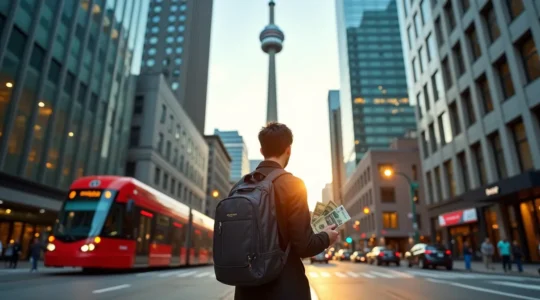
Canadian Currency Guide: How to Manage Money in Toronto & Avoid High Fees
In summary: Never pay directly with USD cash; you’ll lose money on poor exchange rates set by merchants. Use credit cards widely, but always choose to pay in Canadian Dollars (CAD) at the terminal to avoid high conversion fees. Find…
Read more
Pearson Layover Guide: How to See the CN Tower on a 7-Hour Stopover?
Executing a downtown Toronto trip on a 7-hour layover is a high-risk operation, not a casual tour. Success hinges on a rigid, pre-planned timeline. The mission’s viability depends on a non-negotiable 3-hour return security buffer at Pearson. Your only viable…
Read more
Winter in Toronto: How to Enjoy the City When It Feels Like -20°C?
Most visitors believe a Toronto winter is about enduring the cold or hiding indoors. That’s a mistake. The key to truly enjoying the city isn’t avoiding the frigid temperatures, but mastering the physics of warmth. This guide teaches you how…
Read more
Staying in The Annex: How to Find Victorian Charm for a Mid-Range Budget?
Choosing a guesthouse in The Annex is an architectural negotiation, not just a booking. The key is understanding and embracing the charming trade-offs of heritage living. Authentic Victorian guesthouses are rare due to strict residential zoning, making them prized finds….
Read more
Luxury Stays in Toronto: Which High-Rise Hotel Offers the Best Butler Service?
True Toronto luxury is not defined by ostentatious displays but by a quiet, anticipatory intelligence and an insider’s understanding of the city’s unique urban pressures. A hotel’s 5-star rating is merely the starting point; Toronto’s elite service culture prioritizes discretion…
Read more
Toronto Hotel Planning: How to Choose a Location That Saves 5 Hours of Transit?
The biggest mistake in Toronto hotel planning is choosing a location based on map proximity instead of its logistical efficiency. A hotel listed as “near downtown” can cost you over 90 minutes of round-trip commute time due to transit bottlenecks….
Read more